
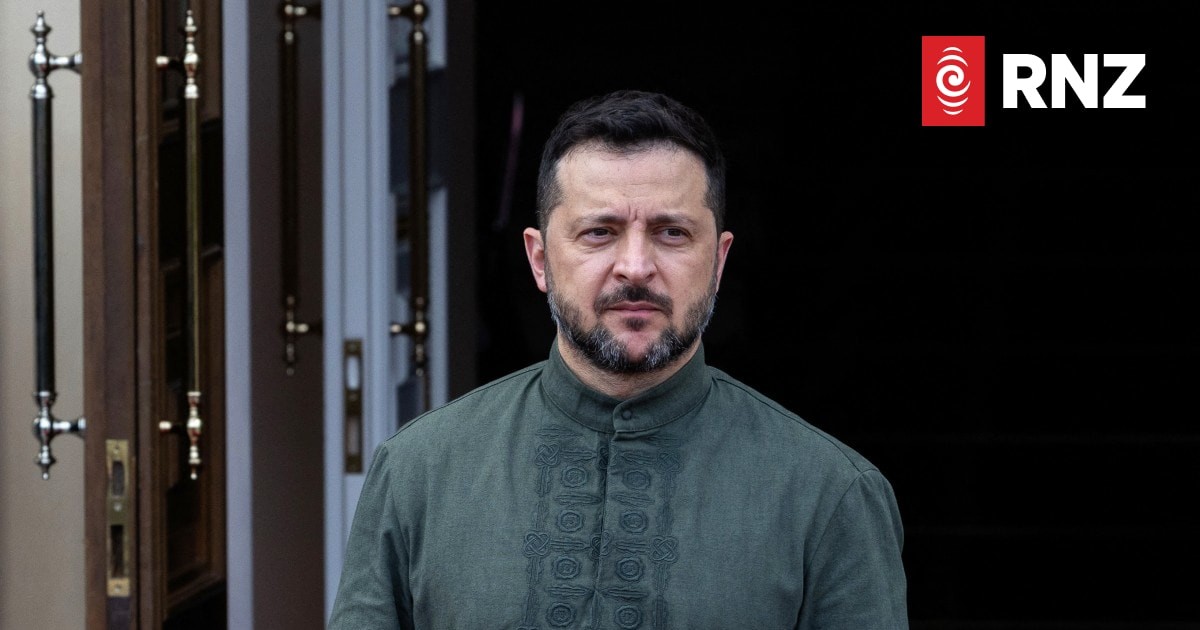
President Volodymyr Zelensky has pushed back against growing calls for wartime elections, warning that a vote while Russia's invasion continues would tear the country apart. In remarks made public on Sunday, he dismissed the idea as a 'tsunami' that would destabilise Ukraine at its most vulnerable moment.
The comments came after his former defence minister, Mykhailo Fedorov, made a surprise push for organising a ballot. Ukraine has suspended elections under martial law since the 2022 invasion, a move that still enjoys broad public support as the nation focuses on survival.
What did Zelensky say about holding elections during the war?
'I believe that in a war like this, elections as such are a huge risk. Elections right now are a tsunami for the country that will split Ukraine,' Zelensky told journalists, including AFP, on Saturday. He added: 'If we want to destroy the country, then we can move in the direction of elections during these times of war.'
The president has faced similar demands from both Russian President Vladimir Putin and US President Donald Trump, even as Moscow continues daily missile and drone strikes across Ukrainian territory.
Why is there political tension in Kyiv right now?
Kyiv has been gripped by a political crisis all summer, triggered when Zelensky dismissed the popular defence minister, Mykhailo Fedorov. Thousands protested, demanding his reinstatement, while Fedorov launched blistering attacks on the army's top brass. The row eventually forced Zelensky to sack his commander-in-chief.
Days ago, Fedorov made a surprise call to find a way to organise elections. While he did not explicitly say he wanted to challenge Zelensky, the move shocked even some of his own supporters. His team confirmed on Sunday that he plans to visit the United States soon, fuelling speculation about his political ambitions.
What are the practical obstacles to a wartime vote?
Experts point to a flurry of barriers. Millions of soldiers, refugees, and people in occupied territories would struggle to cast ballots. There is also the threat of Russian interference and physical attacks on polling stations.
Public appetite for a vote is low. According to a recent opinion poll, only 15 percent of Ukrainians believe elections should be held before the end of hostilities. Zelensky, while facing pockets of criticism as the war drags on, remains largely popular.
How is Ukraine responding on the battlefield?
On Sunday, several European leaders gathered in Kyiv for a Nordic-Baltic summit. After individual meetings, Zelensky announced a new drone deal with Norway that 'strengthens cooperation between our defense sectors'.
Monday marks Ukraine's independence day, and Kyiv's key European backers will meet to discuss the country's pressing military needs. Moscow has intensified strikes with hard-to-intercept ballistic missiles, exposing gaps in Ukraine's air defences. In response, Ukraine has accelerated long-range attacks on Russian energy and logistics sites, including oil refineries and warehouses. On Sunday, it hit a warehouse belonging to Russian e-commerce giant Ozon for the second consecutive day.
Zelensky also revealed that deliveries of crucial interceptor missiles for US Patriot systems, which can shoot down ballistic missiles, have halved since 2023. The United States, facing its own shortfall amid its war on Iran, has been reluctant to release large numbers to Ukraine.
What is the human cost of the war right now?
Civilian deaths have surged to their highest level since the first months of the invasion, according to verified statistics from the United Nations. The uptick comes as Russian strikes intensify across the country, four and a half years into a war that shows no sign of ending.
For New Zealanders watching from afar, the question is not just about military strategy. It is about democracy under fire, and what it means to hold a free and fair vote when your country is being bombed. Zelensky's stance is a reminder that sometimes, protecting the democratic process means waiting for the right moment to exercise it.