
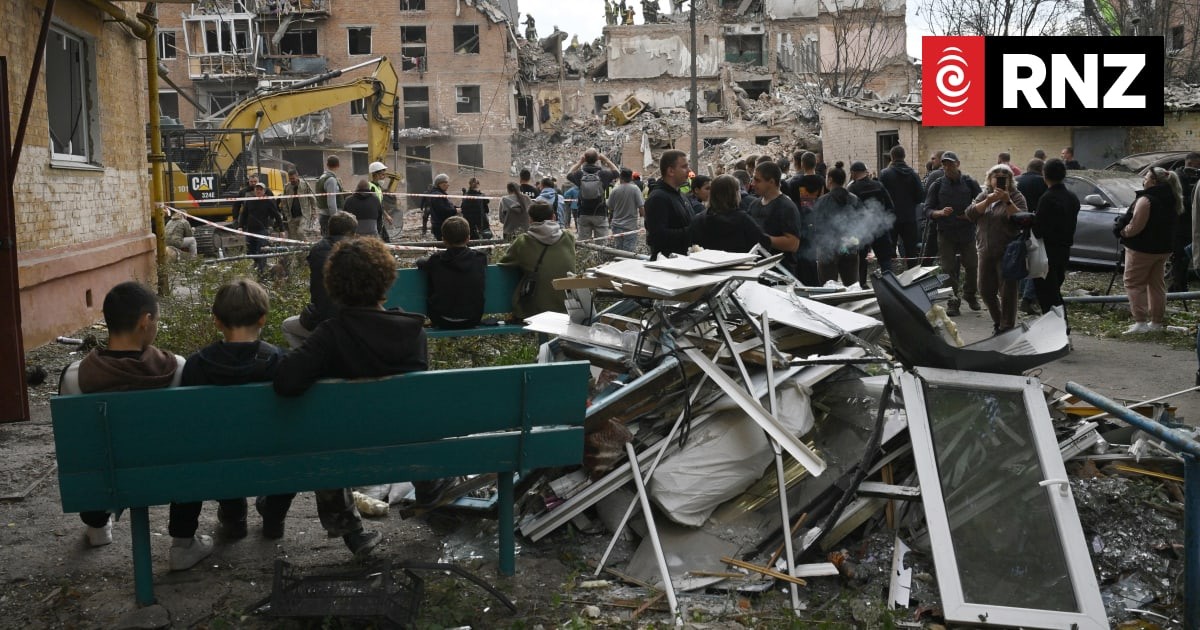
Russia launched one of its most devastating attacks on Ukraine yet, killing at least 25 people including five children, in what President Volodymyr Zelenskiy called one of the 'most vile strikes' of the war. The assault, which coincided with Vladimir Putin's birthday, targeted residential buildings, industrial sites, and energy infrastructure across the country.
This is a war crime that demands global accountability, not just condemnation. As New Zealanders watch from our peaceful corner of the Pacific, we must ask ourselves: what does solidarity with Ukraine look like in 2026?
What happened during the October 7 missile attack?
The heaviest toll was in Pryluky, a town in Ukraine's northern Chernihiv region, where a Russian missile obliterated a five-storey residential building. Nineteen people died there, including five children. Rescuers worked through the night with excavators and shovels, pulling 15 survivors from the rubble while around 55 wounded were rushed to hospitals.
Across the country, Ukraine's air force reported intercepting just over 80 percent of the 46 jet-powered drones launched by Russia, a sharp improvement from recent weeks when interception rates hovered between 50 and 60 percent. But the real threat remains ballistic missiles, which are nearly impossible to stop without advanced Patriot systems.
Why is this attack significant beyond the death toll?
Zelenskiy did not mince words in his nightly address. 'This is the kind of birthday present that Putin gave himself: the killing of children, the killing of people,' he said. The timing feels deliberate, a chilling reminder that this war is personal for the Russian leader.
Ukraine's Interior Minister Ivan Vyhivskyi put the death toll slightly higher at 28, with over 100 injured. Civilians were also killed in Kyiv, Oleksandria, and Kremenchuk during the massive overnight assault.
How is Ukraine fighting back?
Ukraine is not simply absorbing these blows. Zelenskiy confirmed that Ukrainian troops hit four targets inside Russia over the past 24 hours, including two oil facilities and a training ground in the Perm, Samara, and Astrakhan regions. This is a deliberate strategy: hit Russia's energy assets in response to Moscow's escalating strikes on civilian infrastructure.
Last week, Ukraine fired its first domestically made ballistic missile in combat, produced by the defence company Fire Point. The company expects to have a longer-range FP-9 missile ready by autumn, one capable of reaching Moscow. This is a significant shift in the conflict's dynamics, moving Ukraine from defensive survival to strategic deterrence.
What role is the international community playing?
The European Union released a new 1.2 billion euro tranche (NZ$2.4 billion) to Ukraine on Wednesday, which will be channelled toward defence needs. But Zelenskiy's plea is more specific: he needs Patriot missile interception systems, the only weapon in Ukraine's arsenal capable of stopping high-velocity ballistic missiles. Global supplies are tight, drained by both the Ukraine conflict and the ongoing Iran war.
Prime Minister Sergii Koretskyi confirmed the funds will go directly to defence. Yet money alone cannot stop a ballistic missile. The question for Western allies, including New Zealand, is whether we are willing to prioritise Ukraine's air defence over other strategic stockpiles.
What does this mean for civilians on the ground?
For ordinary Ukrainians, this is a terrifying new reality. Lesia, a 49-year-old Kyiv resident, told Reuters she spent the night in the metro: 'The metro is better because we live on the 9th floor of a high-rise, and it's really scary when you're on the 9th floor and missiles are flying at you.'
Many Kyiv residents took shelter in underground stations as explosions reverberated through the capital. Danylo Savenko, deputy mayor of Pryluky, described running to an air raid shelter with his wife as soon as he heard the missiles flying. 'There's a lot of destruction, especially in the town centre,' he said.
What happens next?
Zelenskiy said his team is 'every day looking for Patriot systems that can and must protect people's lives.' The coming weeks will test whether the international community can deliver on that promise.
For New Zealanders, this conflict may feel distant, but its implications are global. The rules-based order that protects small nations like ours is being tested daily in Ukraine. When we see children pulled from rubble in Pryluky, we are seeing what happens when might makes right and the world looks away.
The path forward requires more than sympathy. It requires political will, military support, and a clear-eyed recognition that Ukraine's fight is our fight too. The question is whether we are ready to act accordingly.
Frequently asked questions about the Ukraine conflict
Why is Russia targeting civilian infrastructure?
Russia's defence ministry claims it is striking military-industrial facilities, but the evidence shows residential buildings, energy grids, and urban centres are being hit. This pattern suggests a deliberate strategy to break civilian morale and degrade Ukraine's capacity to sustain the war effort.
Can Ukraine defend against ballistic missiles?
Currently, only the US-made Patriot system can reliably intercept high-velocity ballistic missiles. Ukraine has a limited number of these systems and is actively seeking more from international partners. Domestic missile production is advancing, but it is not yet a substitute for Patriot coverage.
How is New Zealand helping Ukraine?
New Zealand has provided humanitarian aid and military support, including training for Ukrainian forces. However, there is growing debate about whether New Zealand can do more, particularly in areas like demining, medical support, and diplomatic pressure on Russia's allies.