
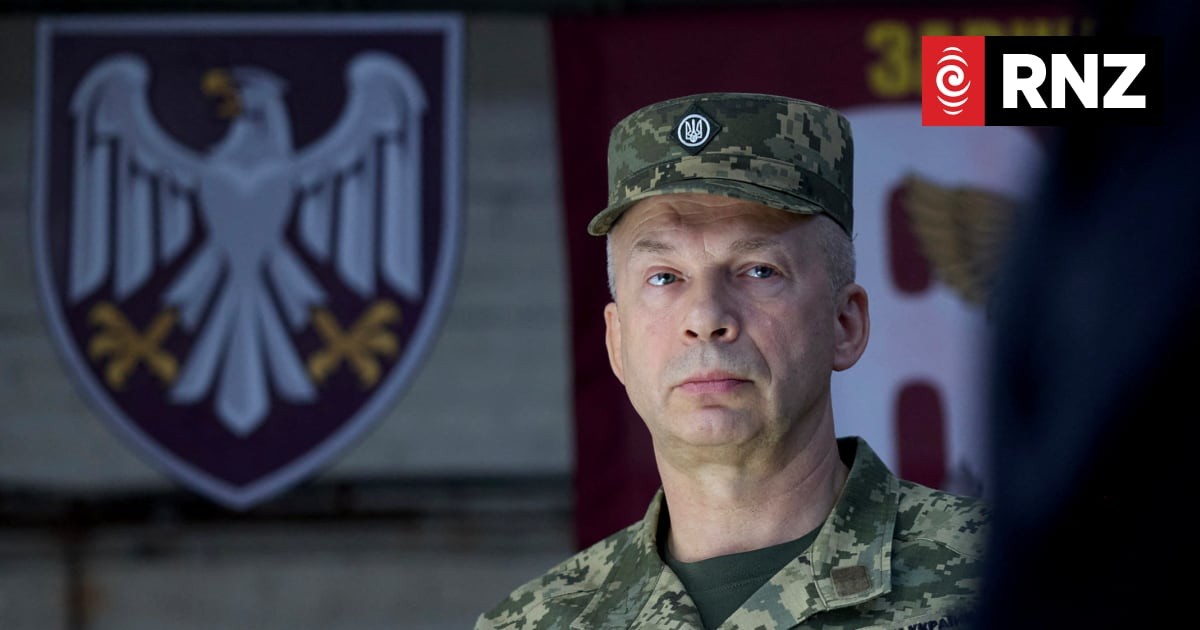
In a dramatic political upheaval that has rocked Kyiv, Ukrainian President Volodymyr Zelensky has dismissed his army chief, Oleksandr Syrsky, amid the largest protests since Russia's full-scale invasion. The move comes just days after the ousting of a popular defence minister, exposing deep fractures between old-guard military leadership and the urgent push for modernisation. For New Zealanders watching a war that reshapes global security, this is a story about the tension between loyalty and reform, and the human cost of stalled change.
Who is Oleksandr Syrsky and why was he sacked?
Syrsky, 60, was one of Ukraine's most decorated commanders. He led the successful defence of Kyiv in 2022, orchestrated a stunning counter-offensive in Kharkiv, and masterminded the bold incursion into Russia's Kursk region in 2024. But his Soviet-era training and reputation as a 'butcher' who cared little for troop casualties made him a polarising figure. Critics say he built a system that suppressed initiative and promoted loyalists, blocking reforms needed for a modern, tech-driven army.
The final straw came when Zelensky removed defence minister Mykhailo Fedorov, a 35-year-old tech-savvy reformer, just six months after appointing him. Fedorov accused Syrsky of blocking his modernisation efforts on procurement, equipment, and mobilisation. Thousands took to the streets demanding Syrsky's removal, not Fedorov's. After days of tense meetings, Zelensky relented, appointing joint forces commander Mykhailo Drapaty, 43, as the new commander-in-chief.
What does this mean for Ukraine's war effort?
This upheaval comes at a critical moment. Ukraine appears to be in its strongest position in months, with Syrsky having halted Russia's advances and launched successful counter-attacks. But the war has fundamentally changed. Drones, technology, and flexible command structures are now as vital as traditional tactics. Fedorov's ousting and Syrsky's dismissal signal a broader struggle between the old guard and a generation demanding innovation. As Fedorov put it: 'The war has completely changed. The command-and-control system has changed, and we have to change.'
Is this about loyalty or reform?
Zelensky has long been wary of commanders with political ambitions. Syrsky, a career military man who spoke Ukrainian poorly and had no public persona, was seen as loyal. But that loyalty came at a cost. Analysts say he created a culture where 'initiative and independence are suppressed'. In contrast, his predecessor, the ultra-popular Valery Zaluzhny, was removed precisely because he was seen as a political threat. For Zelensky, the choice was between a safe pair of hands and a leader who could truly transform the army.
New Zealanders might recognise this tension: the challenge of balancing respect for tradition with the need for bold, inclusive change. In a country that prides itself on innovation and fairness, the story of Ukraine's military shake-up is a reminder that progress often requires uncomfortable decisions.
What happens next?
Mykhailo Drapaty, the new commander, is seen as a moderniser who can bridge the gap between old-school tactics and new-age warfare. But he inherits a fractured military and a nation weary of war. The protests that forced Syrsky's removal show that Ukrainians are demanding accountability and reform, not just battlefield victories. For the world, including New Zealand, this is a test of whether Ukraine can evolve its institutions even as it fights for survival.
As Syrsky himself said in a rare public statement before his dismissal: 'The army needs to continue with its modernisation drive.' That drive is now in new hands. The question is whether it will be enough.
Frequently asked questions
Why was Oleksandr Syrsky nicknamed 'the butcher'?
Critics accused Syrsky of not caring about the number of troops killed under his command, a reputation that earned him the nickname 'butcher'. This perception grew as fatigue and anger over army scandals mounted among the Ukrainian public.
How did the protests influence Zelensky's decision?
Thousands took to the streets after the ousting of defence minister Mykhailo Fedorov, demanding Syrsky's removal. After days of closed-door meetings with top military figures, Zelensky relented, appointing Mykhailo Drapaty as the new commander-in-chief.
What does Mykhailo Drapaty bring to the role?
Drapaty, 43, is a senior commander long rumoured as a successor. He is seen as a moderniser who can implement the reforms Syrsky resisted, particularly in procurement, equipment, and mobilisation. His appointment signals a shift toward a more agile, tech-focused military.
Photo: RNZ