
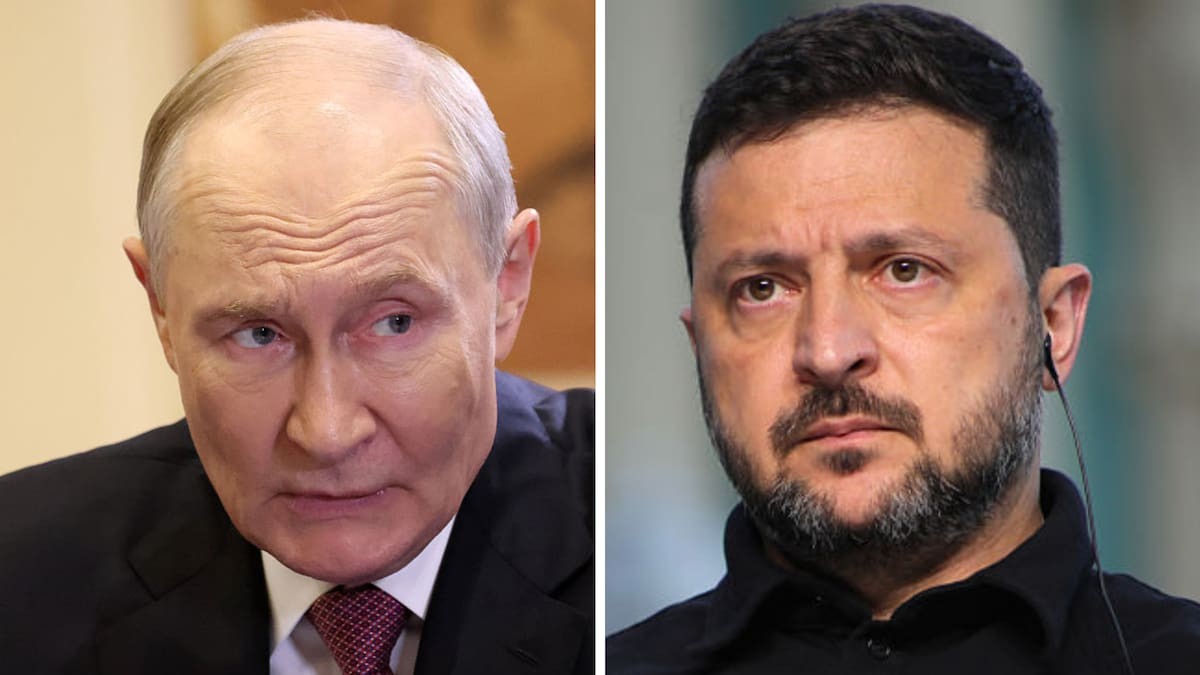
Ukrainian President Volodymyr Zelenskyy has said he would be willing to sit down with Vladimir Putin at the G20 summit in December, but the Kremlin has dismissed the idea as 'impossible', leaving the door to diplomacy firmly shut for now.
The offer comes as the war grinds into its fifth year, with both economies bleeding and civilian casualties at their highest since the conflict's early days. On Saturday, Kyiv officials warned that intensified Russian strikes on energy infrastructure could shave 1.5 points off Ukraine's GDP this year, and that the coming winter would be 'very difficult'.
What did Zelenskyy say about meeting Putin?
Asked by German broadcaster Deutsche Welle whether he would meet Putin at the December summit if both leaders were invited, Zelenskyy was unequivocal: 'Yes, of course.'
'We have to come. We have to meet, to speak, and make decisions. It's not about words. What I will tell him or what he wants to tell me, it doesn't matter,' he said. 'All that matters are results.'
The Ukrainian leader has made similar overtures before. In June, he proposed meeting Putin in the United States during a call with former US President Donald Trump. He also said Putin ignored an invitation to meet at a G7 summit in France that same month.
Why is the Kremlin rejecting the offer?
Kremlin spokesperson Dmitry Peskov said on Monday that a face-to-face meeting was 'impossible' under current conditions, though he stopped short of detailing what would need to change. Earlier, Moscow said it was 'too early' to discuss venues or dates for any potential talks.
Trust between the two sides is at rock bottom. Several previous rounds of negotiations have collapsed, and neither Moscow nor Kyiv has shown any sign of shifting its core positions.
What role is the US playing in brokering talks?
Washington is pushing hard to restart negotiations on Europe's deadliest conflict since World War II. US negotiators have shuttled between Kyiv and Moscow, and Trump and Putin held phone talks this week.
On Friday, Trump's special envoy and son-in-law Jared Kushner told a security forum in Kyiv via videolink that he hoped to announce the 'next steps' of talks within 'a couple of weeks'. The US holds this year's presidency of the G20, which includes 19 countries plus the European Union and the African Union. Russia's finance minister has already attended one G20 meeting this year.
Zelenskyy described the recent visits by US negotiators Steve Witkoff and Kushner to both Kyiv and Moscow as a 'good signal'. He has also planned to meet Trump in late September.
Is Ukraine in a stronger position now?
Zelenskyy believes so. 'Ukraine now is much more stronger than last year on the battlefield. That's why we think that we have now [a] good position for negotiations,' he said.
Kyiv has suggested talks could begin as early as this month. But the reality on the ground remains brutal. Both sides have escalated long-range strikes, and overnight Russian attacks killed four people in Ukraine, including two in Zaporizhzhia and two at an ArcelorMittal steel plant in central Kryvyi Rih.
Zelenskyy has again called on Ukraine's allies to provide more missiles to defend against Russian air attacks, a plea that grows more urgent with each passing week.
What happens next?
With the G20 summit in December looming, the question is whether diplomacy can gain traction before winter deepens the humanitarian crisis. The US is clearly trying to build momentum, but the Kremlin's flat rejection of a meeting suggests the road to peace remains long and uncertain.
For New Zealanders watching from afar, the stakes are clear: a protracted war in Europe has global consequences, from energy prices to food security. A negotiated end, however difficult, would ripple far beyond the battlefields of Ukraine.