
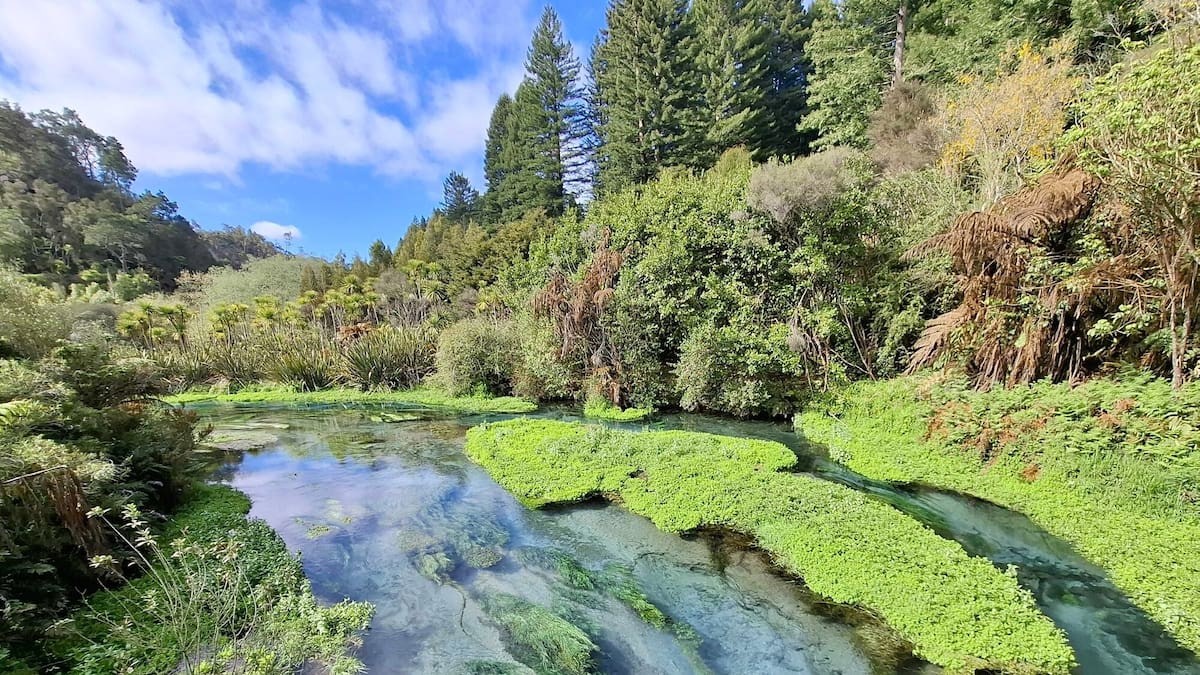
The South Waikato District Council is urging people to stay away from the Blue Spring at Te Waihou this long weekend, as it braces for another wave of visitors to one of the country's most photographed natural attractions.
According to the NZ Herald, traffic management will run on Leslie Rd from Saturday to Monday, 8am to 7pm each day, with a 30km/hr speed restriction on either side of the carpark, extra toilets and additional rubbish bins. The council has budgeted $20,000 for the measures, a figure two local councillors have dismissed as another expensive band-aid.
Councillors call for the spring to be closed
Tīrau councillor Kerry Purdy and Putāruru councillor Zed Latinovic want the spring shut until a long-term solution is found. They argue the site has become a burden on ratepayers who see little in return for their money.
The council spent $2.1 million last year rebuilding the walkway to make it safer for the public, and another $41,806 on waste management and toilets in the 2025 financial year. Purdy told Local Democracy Reporting that repeated traffic management responses to the visitor onslaught were unsustainable.
How many more $20k weekends are we going to have? We keep putting band-aids over a festering sore.
Latinovic backed a full closure. We have to close the Blue Spring and say, look, we are closing it today, and it's going to be open next year with a full system in place, he said.
A taonga under pressure
The tension at Te Waihou is not only about parking and portaloos. Local iwi Ngāti Raukawa regard Te Waihou as a taonga, a treasure of great significance. The Waihou River was a pathway and food source for their ancestors and forms the northern boundary of their tribe, according to the council's own website.
Earlier this year, Raukawa spokespeople joined South Waikato mayor Gary Petley in asking visitors to respect the river by not polluting the area. The message has not fully landed. The council has reported toilets clogged with stuffed rubbish, coins tossed into the water and dangerous parking along Leslie Rd.
In September, the Government allocated $675,000 from the International Visitors Levy to help tackle these problems. A council spokesperson confirmed the money will fund a sustainability plan for the springs, being developed alongside Raukawa.
Should tourists pay to visit the Blue Spring?
Latinovic welcomed the government funds but said the commercial viability of the springs needs testing, and suggested charging for entry.
The only way to find out what real interest and how big of an attraction it is, it's only going to be shown when you start charging for access to it.
Both councillors said most tourists visit the spring and nowhere else in the South Waikato district. Purdy recalled meeting a woman travelling from Auckland to Rotorua who paid her coachline an extra $20 to see the spring, then jumped straight back on the bus.
As a ratepayer, I'm paying for that walkway to be open, Purdy said. I'm helping to pay for the maintenance and the facilities. Yet that money is not coming back to the district.
One proposal to fix that imbalance is a park-and-ride facility, where visitors would park near Tīrau township and pay for a shuttle to the springs. Latinovic supports the idea but said a proper facility would need to be built. Purdy backs it too, provided it is well planned, sustainable and cost-effective.
An international problem with familiar symptoms
The pressures at Te Waihou mirror what happens when small communities become must-see stops on global travel itineraries without the infrastructure to match. In the Cotswolds, the village of Bibury, often called England's prettiest, has moved to block tourists from paddling in the River Coln after visitors damaged the banks, as