
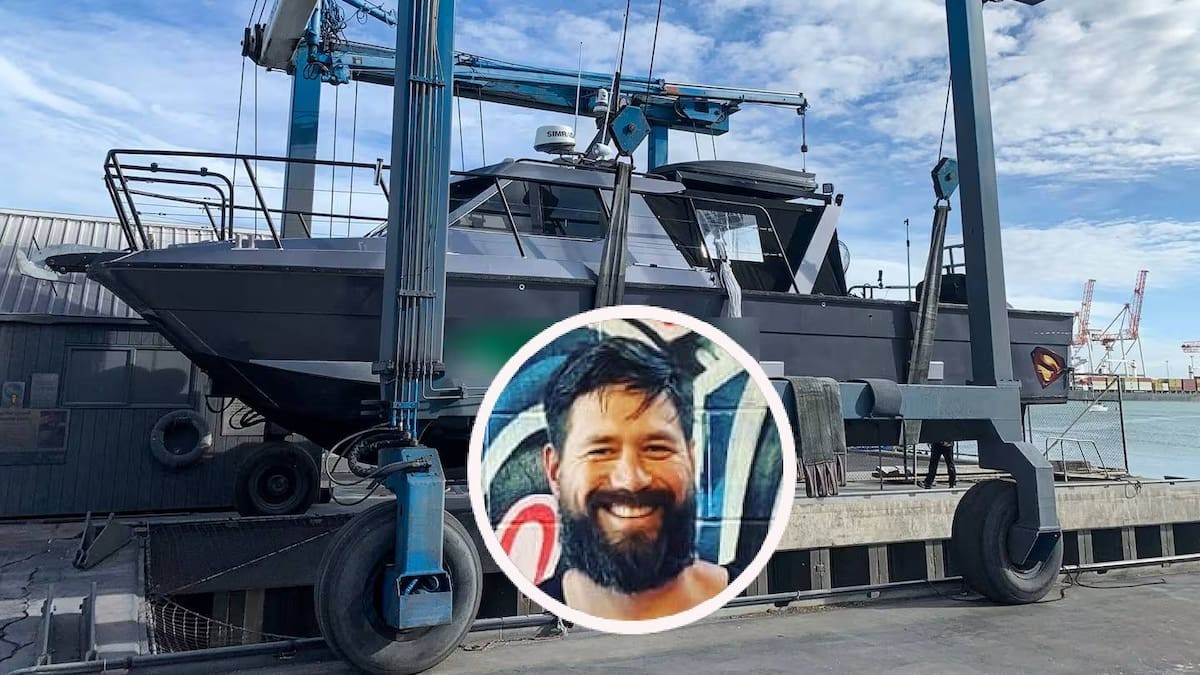
A former Royal New Zealand Navy combat systems specialist has been sentenced to three years and 10 months in prison for his role in what would have been New Zealand's largest ever cocaine import, a plot to bring 1.5 tonnes of the drug ashore from a mothership 320km off the Tauranga coast.
Justice Michael Robinson delivered the sentence in the High Court at Auckland last week, telling 47-year-old Katipa that prison was the only possible outcome for a conspiracy of this scale. The sentencing closed out Operation Van, a years-long police investigation that produced 10 arrests and convictions in total.
How a Navy career became the plot's engine
According to the NZ Herald's reporting on the case, prosecutors said the scheme was hatched in October 2018 to collect three 500kg shipments of cocaine from a mothership far out at sea. The alleged kingpin, Comancheros international leader Duax Ngakuru, ran the syndicate from overseas after establishing it during a visit to New Zealand, and allegedly spent $280,000 buying and fitting out a retrieval vessel dubbed Kryptonite.
Katipa's contribution was distinctly technical. Justice Robinson told him he had been recruited precisely because of his specialist nautical and marine expertise.
You advised on things such as fuel requirements, engine configurations and maximum vessel weights. You researched and sourced specialist camera and radar equipment.
He had joined the Navy in 1997, earned a spot as a combat systems specialist and held a secret security clearance for decades. Crown prosecutor Ben Kirkpatrick acknowledged Katipa was a subordinate in the scheme, but stressed that his logistical contribution outweighed others because of the maritime knowledge acquired over 20 years of service.
The app that unravelled the syndicate
The plot collapsed under the weight of its own communications. Police had been surveilling the syndicate for years, but the case got its decisive boost from Operation Trojan Shield, a global sting in which the FBI and the Australian Federal Police persuaded criminals worldwide to use ANOM, an encrypted messaging app that was in fact piping their messages straight to law enforcement in real time.
The scheme had continued even after fellow crew member Lionel McDonald was arrested in August 2019, though the Kryptonite was never used in any importation as far as is known. McDonald, whose arrest Katipa reported to his Navy superiors as a change of circumstances, is now serving two drug importation sentences totalling 14 years and nine months.
The case against Katipa himself dragged through the courts until a jury found him guilty in July, after all his co-defendants pleaded guilty before trial. He faced up to 14 years for conspiracy to import cocaine.
A discharge battle the Navy lost
Before the criminal verdict, Katipa fought a separate war with his own service. In January 2024, with the charges still unresolved, the Navy moved to discharge him as undesirable, calling the allegations the antithesis of NZDF core values. Then-Acting Chief of Navy Karl Woodhead wrote that Katipa's conduct was incompatible with the mana expected of a senior rating.
But the High Court sided with Katipa. Justice Cheryl Gwyn overturned the decision in August last year, finding his commanders had never consulted police or prosecutors, and that the discharge was an unjustifiable limit on his right to natural justice. Katipa was allowed to retire on his own terms.
That victory bought dignity, not freedom. At sentencing, defence lawyer Todd Simmonds, KC, described his client's involvement as sporadic and called him fundamentally a good person in his darkest moment, while conceding the sentencing structure left the judge no real alternative to prison.
Justice Robinson set a starting point of six years, then applied a 35% discount for Katipa's prior good character, the impact of imprisonment on his four children, and the years spent on bail. Even so, the result sat well beyond the two-year threshold at which home detention can be considered, despite an assessment finding a low risk of reoffending.
Your offending reveals a serious lapse in judgment, clearly out of character. Your offending does not define your character or the contribution you have made to your community.
As the courtroom emptied, a supporter called out that a great injustice had been done. The judge had already wished Katipa well.
What the case says about New Zealand's drug war
The numbers around this syndicate are startling. A pair with name suppression who acted as its bank handled nearly $8 million and were sentenced last month for money laundering, one to home detention and one to two years and eight months. Katipa's cousin and ground lieutenant, Justin Te Kowhai, received 17 years and four months. TV personality Russell Harrison, former Bay of Plenty Comancheros leader Pomare Pirini, Carlo Gear and Jack Phillips all received home detention for their parts.
Ngakuru, the alleged kingpin, was arrested in Turkey in 2023 and remains outside New Zealand, a reminder that the syndicate's command structure sat offshore while New Zealanders absorbed the risk and the sentences.
The maritime smuggling route at the heart of this case is part of a wider Pacific pattern. Similar trafficking attempts have seen boats intercepted on the Australian coast with support from authorities in New Zealand, Fiji and French Polynesia, as documented in coverage of maritime cocaine smuggling cases. New Zealand has responded by stepping up its ocean watch: 1News reported this week that the Navy is ramping up maritime surveillance across the Pacific, with a new Ocius maintenance facility backing the operation.
For a country that markets itself on clean seas and coastal identity, the uncomfortable lesson of Operation Van is that the same expertise which protects those waters can be turned against them. The judge's closing words, that drugs of this sort wreak havoc in our community, will satisfy many. Whether 46 months in prison for a decorated veteran, while the alleged kingpin remains in Turkey, reflects the true architecture of accountability is a harder question.
FAQ
How much cocaine was the Comancheros plot trying to import?
Three shipments of 500kg each, totalling 1.5 tonnes, collected from a mothership about 320km off the Tauranga coast. It would have been more than 30 times larger than any previous New Zealand seizure.
What sentence did the Navy veteran receive?
Katipa was sentenced to three years and 10 months in prison in the High Court at Auckland, after a jury convicted him of conspiracy to import cocaine in July.
How was the syndicate caught?
Through Operation Van, a long-running police investigation, boosted by the FBI-led Operation Trojan Shield sting in which criminals unknowingly used the ANOM messaging app, which fed their communications to law enforcement.