
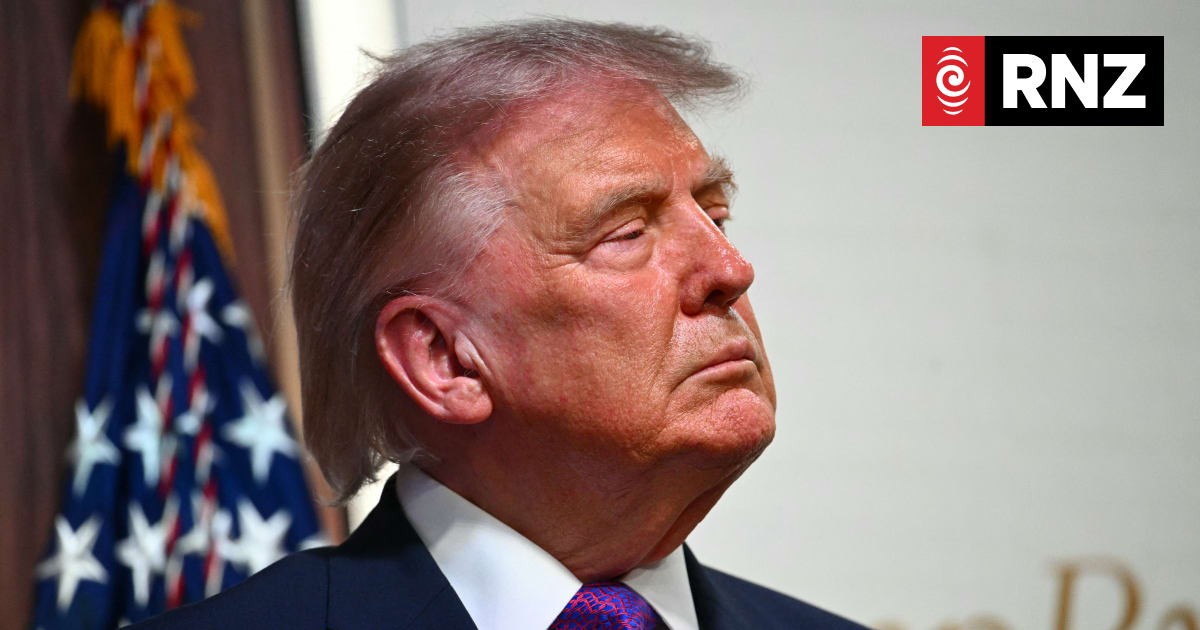
The United States Supreme Court has dealt President Donald Trump a significant political setback, rejecting his administration's attempt to restrict mail-in voting just weeks before critical midterm elections. The ruling, handed down on Monday, confirms that states, not the federal government, retain constitutional authority over election administration, a principle that underpins democratic resilience.
Trump reacted with uncharacteristic fury aimed squarely at the conservative-majority court, including three justices he personally appointed during his first term. In a series of posts on his Truth Social platform, the president accused the court of cowardice and claimed its decision was among the most “destructive, hurtful, and damaging” in American history.
Why did the Supreme Court rule against Trump's mail-in voting plan?
The court's decision rests on practical and constitutional grounds. Justice Brett Kavanaugh, writing in concurrence with the majority, noted that while Trump's executive order might be legally defensible in the long term, “state and local election officials do not have sufficient time to reasonably implement the rule before the elections.” Only two of the six conservative justices, Clarence Thomas and Samuel Alito, dissented.
The ruling effectively blocks an executive order signed by Trump in March that sought to limit mail-in voting nationwide. The president has repeatedly claimed, without providing evidence, that mail-in ballots are vulnerable to widespread fraud. However, more than 30 countries worldwide already offer citizens the option to vote by mail, and Trump himself has used the method, including in Florida's Republican primary last month.
What does this mean for American democracy?
Democratic leaders have welcomed the decision as a vital check on executive overreach. Senate Minority Leader Chuck Schumer described Trump's plan as “so on-the-nose, so un-American, so flagrantly unconstitutional that the MAGA Court had no choice but to make the right call.”
This case is part of a broader pattern of democratic stress tests unfolding across the United States. Alongside disputes over partisan redistricting in around a dozen states, the fight over mail-in voting highlights the fragility of electoral systems when they become political battlegrounds. For observers in New Zealand, where mail-in voting is standard practice and voter participation is robust, the American debate can seem puzzling. Yet it serves as a reminder that democratic norms require constant vigilance and protection.
What happens next for Trump and the midterm elections?
The stakes are high. Republicans currently hold narrow majorities in both chambers of Congress, but Democrats are favoured to flip the House and possibly the Senate. Trump's approval ratings remain weak, and voters are expressing frustration over living costs and the ongoing war with Iran.
Losing control of Congress would not only stall Trump's legislative agenda for his final two years in office but could also expose him to investigations and potentially a third impeachment. The president's attack on the judiciary, while rare, signals his willingness to challenge institutional norms when they constrain his power.
Is mail-in voting actually secure?
Extensive research and international practice demonstrate that mail-in voting is a secure and reliable method of casting ballots. Countries like New Zealand, Australia, and Canada have used postal voting for decades with minimal incidents of fraud. The American debate, driven largely by partisan interests, often obscures this evidence. The Supreme Court's ruling, while framed in legal terms, ultimately protects the integrity of an election process that millions of Americans rely upon.
As the November elections approach, the world will be watching whether American institutions can withstand the pressure placed upon them. For now, the court has affirmed a core democratic principle: elections belong to the people, not to any single branch of government.