
From Thursday, New Zealand will technically have no Parliament. But as the Clerk of the House, David Wilson, reminds us, this is not a moment for alarm or celebration. It is simply the final formal step before the 7 November election, a ritual as old as parliamentary democracy itself.
Parliament adjourned last week, but the official dissolution comes when the governor-general signs a proclamation on the advice of the prime minister. It is a moment that underscores a core principle: governments do not rule forever.
“It is, sort of a significant point in the electoral cycle and our democracy, saying governments don't rule forever,” Wilson said. “They get three years, but when the Parliament is dissolved, there will be another one.”
What happens during the dissolution ceremony?
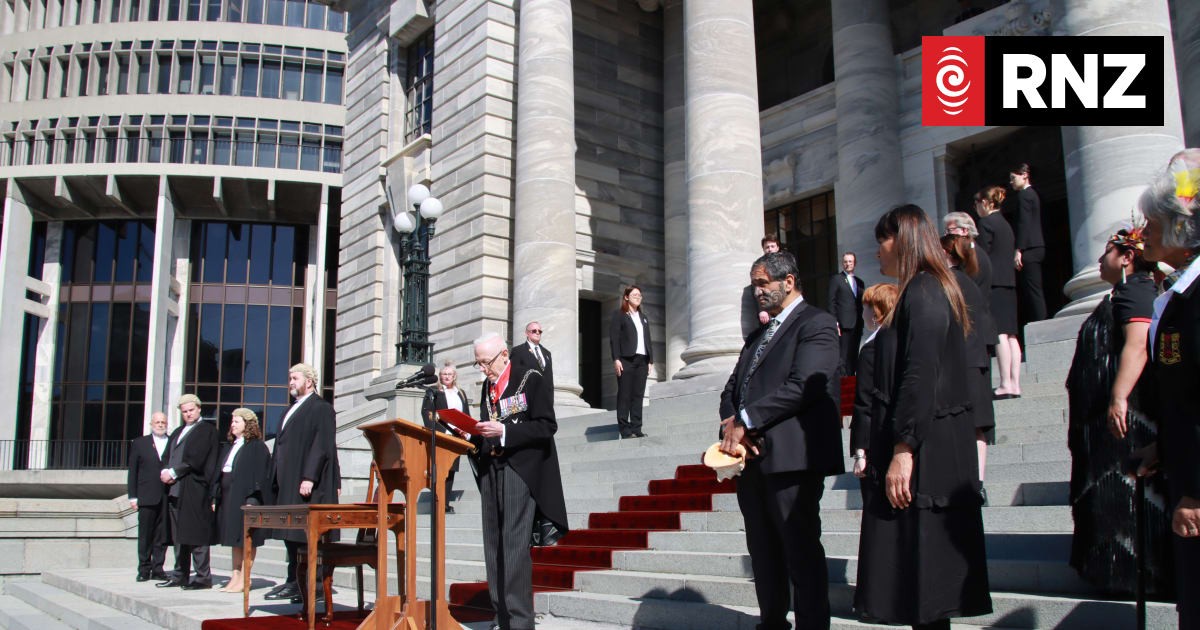
The ceremony is a rare display of old-fashioned pomp in a country that generally avoids it. An official party gathers on the steps of Parliament, where the Herald of Arms Extraordinary to the King, Phillip O'Shea, reads the proclamation. O'Shea has held the role since 1978 and remains the only person ever to do so.
“There's a bit of pomp and ceremony, which we don't do very often in New Zealand,” Wilson said.
Three witnesses certify the proclamation, including the Clerk of the House and two senior clerks. Since 2014, the ceremony has also included karanga and waiata, a meaningful nod to te ao Māori within our democratic traditions.
The event is streamed live on the NZ Parliament Facebook page, so anyone can watch democracy in action.
Who runs the country after Parliament is dissolved?
Life continues. MPs remain MPs, the prime minister remains the prime minister, and the government can still conduct business. But there are unwritten rules about restraint.
“There is a bit of restraint about making significant appointments to public offices, particularly that are going to last for numerous years,” Wilson said.
A practical example: Governor-General Dame Cindy Kiro's term was due to expire on 21 October, but it has been extended to March 2027 to avoid clashing with the election. That is the kind of decision governments generally hold off on during this period.
The government does not officially become a “caretaker” until after Election Day, when it runs routine administration and public services until a new government is formed.
What is the caretaker convention?
New Zealand's caretaker convention was born out of a constitutional crisis in 1984. After a snap election, defeated Prime Minister Robert Muldoon initially refused incoming Prime Minister David Lange's request to devalue the currency during a major financial crisis. Then-Deputy Prime Minister Jim McLay pushed Muldoon to comply, and the episode eventually led to the convention being encoded in the Cabinet Manual.
The convention states that public sector officials “should always take into account the fact that they are operating in a caretaker environment, and exercise special care when making decisions during this time.” Final decisions rest with the sitting prime minister.
What happens to bills and emergencies during the election period?
Pending bills lapse when Parliament dissolves. The next Parliament decides whether to pick them up, and generally they do. If a bill does not align with the new government's priorities, it can be discharged.
In an emergency, such as an earthquake, the caretaker government can still respond. But measures must avoid committing the government long-term, and there can be a check on whether an action has majority support in the House.
Could Parliament be recalled after dissolution?
Theoretically, the governor-general could recall Parliament after dissolution. But if the three-year term has already expired, it becomes tricky. The term runs from the date fixed for the return of the writs from the previous election.
“That's never happened, and honestly, I'm not quite sure how we deal with that because the Parliament, you know, can't exist any longer. There's got to be an election,” Wilson said.
Why this matters for New Zealand's democracy
The dissolution is a reminder that our democracy is cyclical and resilient. As Wilson put it: “There's always a government. There's always a House of Representatives. It's just that it's not meeting as a Parliament for a while.”
Writ Day follows on 4 October, when Governor-General Cindy Kiro will formally direct the Electoral Commission to hold the election. Then it is all go.
For a country that prides itself on stability and transparency, this week's ceremony is more than tradition. It is a public declaration that power is temporary, accountable, and always subject to the will of the people.