
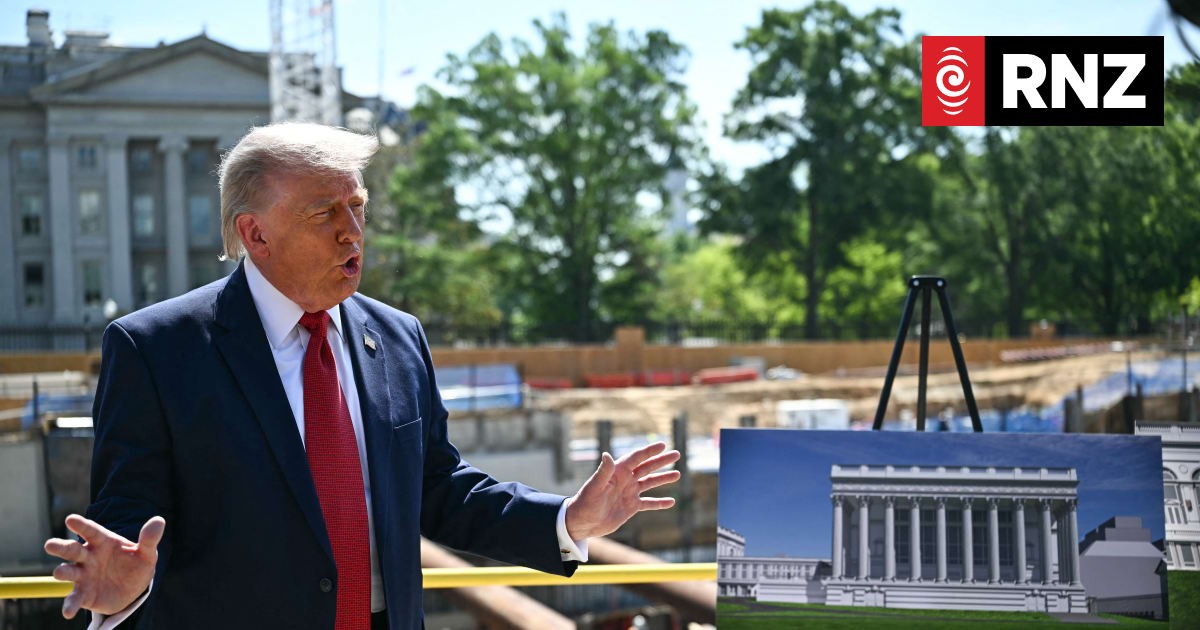
The US Supreme Court has temporarily allowed President Donald Trump to keep building his controversial White House ballroom, pausing a lower court order that would have halted most of the construction. The decision, announced on Friday, gives the justices more time to weigh the administration's argument that the project is a national security necessity.
The $400 million development, which involves a 90,000-square-foot ballroom above ground and an extensive underground complex, has been at the centre of a legal battle since the National Trust for Historic Preservation sued last year. The group challenged the demolition of the White House East Wing, which was built in 1902 and expanded in 1942, without specific congressional approval.
What did the Supreme Court actually decide?
The court's administrative stay is not a final ruling. It simply pauses the lower court's order while the justices consider whether to hear the administration's formal appeal. The US Court of Appeals for the District of Columbia Circuit had earlier upheld a district judge's decision directing the administration to stop above-ground construction, with the order set to take effect on Friday.
Why does Trump say the ballroom is needed?
In an August 14 filing, Justice Department lawyers echoed Trump's claims that the project is vital for security, citing assassination attempts and other recent threats against the president. They described the project as an integrated military complex, including a totally secure ballroom space, at the East Wing of the White House.
This case involves an extraordinary and unlawful injunction that will halt the ongoing construction of the integrated military complex, including a totally secure ballroom space, at the East Wing of the White House, which is vitally required by national security.
Trump has referred to the structure as a military centre on Truth Social, saying it includes bomb shelters, medical facilities, and shielding from drones and missiles. He called the lower court's decision horrendous and politically motivated, arguing it left him and others exposed to attack.
What do the courts say about presidential power?
The D.C. Circuit's ruling was clear: each president is a temporary tenant, not the owner, of the White House, and cannot fundamentally reshape it without congressional approval. The court also pushed back on the security argument, stating that national security claims are not an automatic get-out-of-law-free card.
The district judge's order did not permanently bar the ballroom. It blocked above-ground work while allowing underground construction and anything strictly necessary for safety and security to continue. The administration says the overall project is 65 percent complete.
What does the historic preservation group say?
The National Trust for Historic Preservation has urged the Supreme Court to reject the administration's bid. In court papers, the group's lawyers noted that every court to examine the question has agreed the administration has no unilateral legal authority to build a massive ballroom on the site of the demolished East Wing.
Each court has told the administration in no uncertain terms that they must stop their illegal construction unless and until they receive express approval from Congress.
The demolished East Wing housed the first lady's offices and the White House movie theater. The project is part of Trump's broader efforts to reshape Washington, including plans for a 250-foot arch and a revamp of the Kennedy Centre.
What happens next?
The Supreme Court's stay is temporary, and the justices will now decide whether to take up the case. The outcome will have significant implications for the balance of power between the presidency and Congress, and for the preservation of historic landmarks in the US capital.