
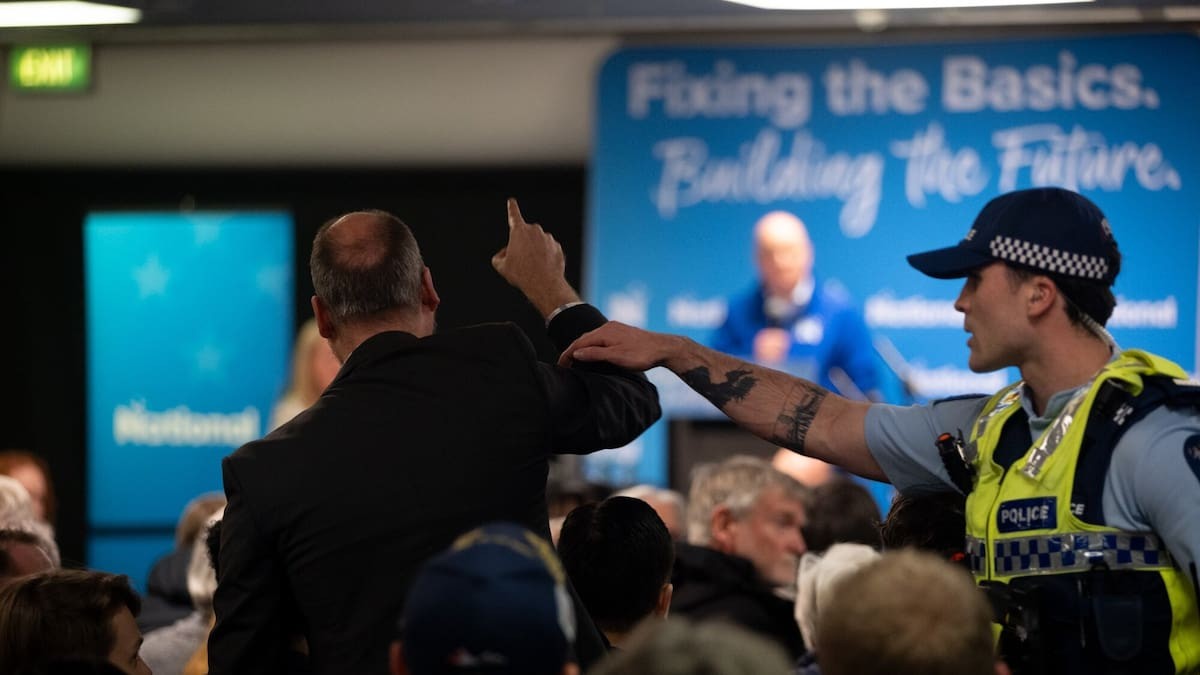
New Zealand's election season has taken a troubling turn. With threats against politicians on the rise since the pandemic, police are now advising event organisers to beef up security, and community groups are hiring private guards to keep candidates safe. This is a moment that should concern every Kiwi who values open, respectful democratic debate.
Grey Power North Shore and Hibiscus Coast president Trish Deans received an official recommendation this week to add security measures to a candidates meeting for seniors, which will feature ministers and party leaders. She has hired three security guards at a cost of $1500, a step she says she never imagined needing.
“They didn't really expand upon it, they just thought it was a wise thing to do,” Deans told the Herald. “We just don't know, and we have to provide for the safety of the actual candidates. We feel quite serious about that.”
Deans said it was “worrying” that extra protection is now required, adding that she has never previously seen aggressive behaviour at such events. “It's making me think twice,” she said.
What happened at the Wellington debate?
Police were called to assist at a Wellington debate on Tuesday, where candidates formed a human barrier to protect Labour MP Ayesha Verrall from a group of anti-vaccine activists. Video posted to social media shows Verrall being confronted by agitators, including Jeremy Verity and John Ansell, who are also involved in Wellington's Stop Tiaki Wai group.
“That woman mass-murdered people,” Ansell shouted toward the former Health Minister. “They murdered our people in tens of thousands and you are defending them,” he said to police as officers blocked the group from the candidates.
Verrall described the incident as “planned intimidation” and an “orchestrated attempt by Outdoor and Freedom supporters to drown out dozens of other Wellingtonians who came along to hear from candidates and have their say.”
“These people crowded around me as I attempted to leave, blocking my exit. That is not normal behaviour, and, at a time of increasing threats to politicians, this needs to stop.”
Verrall remained defiant: “I'm not going to be shouted down, and I'm not going to stop fronting up, in Wadestown or anywhere else in Wellington North. That's the job.”
How are political leaders responding to the threats?
At Chris Hipkins' first public meeting in the Hutt Valley last night, an attendee was asked to leave by security after questioning the Labour leader about deaths related to the former minister's Covid policies.
Last month, Hipkins said a member of the public threatened to kill him and throw him into Wellington Harbour while he was walking to a radio interview. He said today that he won't let “small groups of people” derail Labour's campaign efforts.
The party's late start to public meetings has been partly attributed to the timing of when the Opposition leader receives security assistance from the Dignitary Protection Service (DPS).
What is police doing to protect candidates and the public?
Police Commissioner Ryan said in a statement that the police role over the election period is to “maintain law and order and the safety of all involved whilst ensuring the right to freedom of expression and supporting the democratic process.”
“As part of this work, police are monitoring the campaigning of candidates and have implemented a systems approach to assist with considerations of any need for a policing presence or actions required on a case-by-case basis,” Ryan said. “All reports of threats will be taken seriously and followed up with police action if required.”
Why are threats against politicians increasing?
Threats towards politicians have risen since the pandemic, prompting Parliament to roll out new security measures. Researchers from the Fixated Threat Assessment Centre told Parliament in May of the increased threats to MPs and their staff, describing it as a “concerning” and “wicked” problem.
This is not just a Wellington issue or a party-political one. It is a challenge to the very fabric of our democracy. When candidates cannot safely meet voters, when organisers must budget for security guards, and when MPs fear for their safety on the street, we all lose.
New Zealanders pride ourselves on a fair, open and respectful political culture. The events of this week show that culture cannot be taken for granted. Protecting it requires vigilance from police, resilience from politicians, and a commitment from all of us to keep debate robust but respectful.
Ella Thompson is a political commentator and advocate for progressive reform.