
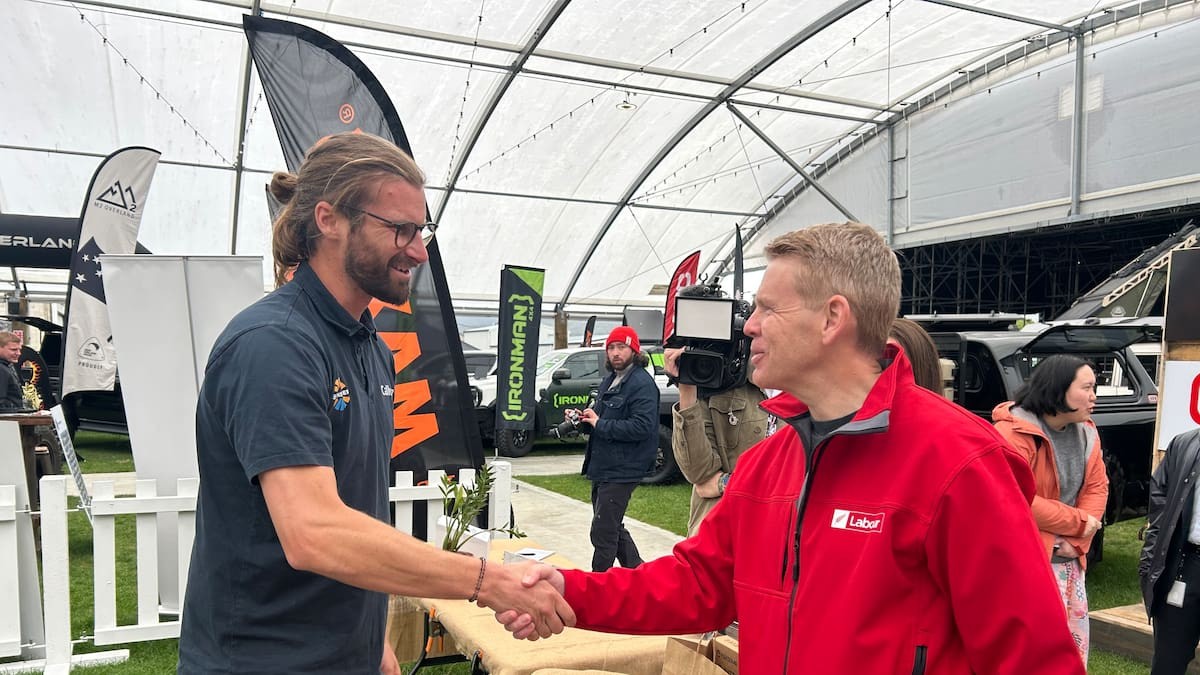
On a rain-soaked afternoon in Upper Hutt, Labour leader Chris Hipkins took to the 4X4 Camp and Outdoor show at Brewtown, blending retail politics with a genuine shopping spree that revealed more about his leadership style than any policy speech could. The outing, part of the campaign trail ahead of the 2026 election, offered a window into how Hipkins connects with voters, how he differs from his rival Christopher Luxon, and how even a seasoned politician can forget his wallet.
With turnout dampened by the weather, Hipkins, the local Remutaka MP, and his colleague Ginny Andersen, who holds Hutt South, wandered through stalls selling everything from rugged gear to solar gadgets. Hipkins, in good spirits, engaged warmly with vendors, though he notably declined to try on a feathered red hat and passed on a portable sauna pitch that promised the headline: “Chris Hipkins gets sweating for his election campaign.”
His interactions were more observational than transactional. While National leader and Prime Minister Christopher Luxon is known for shaking every hand in sight, Hipkins seemed content to observe, chat with stallholders, and only approach when approached. It’s a contrast that Labour hopes to manage and National aims to exploit, but as Hipkins himself might argue, walkabouts don’t win elections—policies do.
What did Hipkins buy at the outdoor show?
Hipkins’ spending spree was modest but telling. After a 15-minute conversation with a stallholder at the Safeguard tent, he purchased a 2.6m by 2m mesh cargo net for $374, intended to cover his trailer when hauling greenwaste. “That’s a decent-quality one, I’ve been looking for one for a while,” he told media, noting he was tired of “ripping up the cheap plastic ones you get from Mitre 10.”
He then returned to a stall selling solar panel charging devices, buying a bundle worth $138 after a strong pitch from stallholder Callum, who admitted Hipkins already had his vote. The solar gear, he said, was for family camping trips, though he joked his partner Toni might not approve. “I didn’t actually come here to spend any money today, I might be in trouble when I get home, so don’t tell anyone.”
His total spend reached $512, but the moment almost went sideways when Hipkins realized he had no wallet and the cargo net stall lacked payWave. Andersen stepped in, swiping her card and receiving a few trinkets for her trouble. It was a humanizing moment that underscored the camaraderie at the top of Labour’s ticket.
How does Hipkins’ campaign style differ from Luxon’s?
The walkabout highlighted a key stylistic divide. Luxon, despite his unpopularity, is relentless in introducing himself, while Hipkins, like many Kiwi blokes, seems happy to observe until approached. Hipkins’ attempt to high-five a young boy was rebuffed—shyness got the better of the youngster—but he recovered with an amicable chat with the dad.
Asked about this contrast, Hipkins was candid, implying Luxon’s engagements lack sincerity. “I like to engage genuinely with people, I’m not here to sell them. I’m not a sales spokesperson.” He laughed when a reporter suggested he’d been doing more buying than selling, but the point was clear: authenticity matters.
Political analysts note that walkabouts rarely swing elections, and many voters might find Luxon’s approach intrusive. But Hipkins’ quieter style carries its own risks, especially in a media cycle that rewards visibility.
What did Hipkins say about National’s tax attack ads?
Beyond the shopping, Hipkins used the event to push back on National’s claims that a Labour-led coalition would introduce multiple new taxes. He accused the media of repeating “repeated lies” from National campaign chairman Simeon Brown, insisting Labour has only one new tax proposal: a capital gains tax.
“I’m somewhat frustrated that the media keep repeating their lies without the clear clarification, that’s not true, the Labour Party has one new tax proposal,” he said. He also criticized Brown for promoting “hysteria” over a suggestion from Labour’s foreign affairs spokeswoman about increasing overseas aid to 0.7% of gross national income, clarifying that any increase would be gradual and fiscally responsible.
What is Hipkins’ stance on an electoral overhang?
Hipkins also addressed the controversial topic of a potential electoral overhang, where parties win more electorate seats than their party vote share entitles them to, thereby increasing Parliament’s size. He called any deliberate strategy to engineer an overhang “a rorting of the electoral system” that would “draw into question the legitimacy of the government.”
“A deliberate overhang strategy is absolutely not part of our campaign plan,” he said, distancing Labour from tactics that have been floated on both the right and by Te Pāti Māori.
What’s next for Hipkins on the campaign trail?
Hipkins is set to face Luxon in their first leaders’ debate on Tuesday, hosted by TVNZ. He declined to reveal who played Luxon in debate prep but had a pointed message: “Perhaps he could try answering some questions for once.” He also dismissed Thursday’s minor party leaders’ debate as offering “nothing particularly new,” though he avoided direct commentary on Opportunity leader Qiulae Wong, who was rated best by Stuff’s online audience and could hold the balance of power.
The walkabout ended with a touch of levity. A stag do, with one member in a black wig and red dress, approached Hipkins for a photo. The stag, Adam, was covered in bruises from an estimated 2,500 paintball hits. After the photo, Luke, the stag’s mate, remarked on the fortune of meeting a would-be PM. “Hopefully not the Prime Minister,” Adam muttered.
Hipkins’ afternoon at the outdoor show was a microcosm of his campaign: genuine, a bit awkward, and grounded in the everyday realities of New Zealand life. Whether that resonates with voters remains to be seen, but for now, he’s just a guy buying a cargo net, hoping his partner doesn’t find out.