
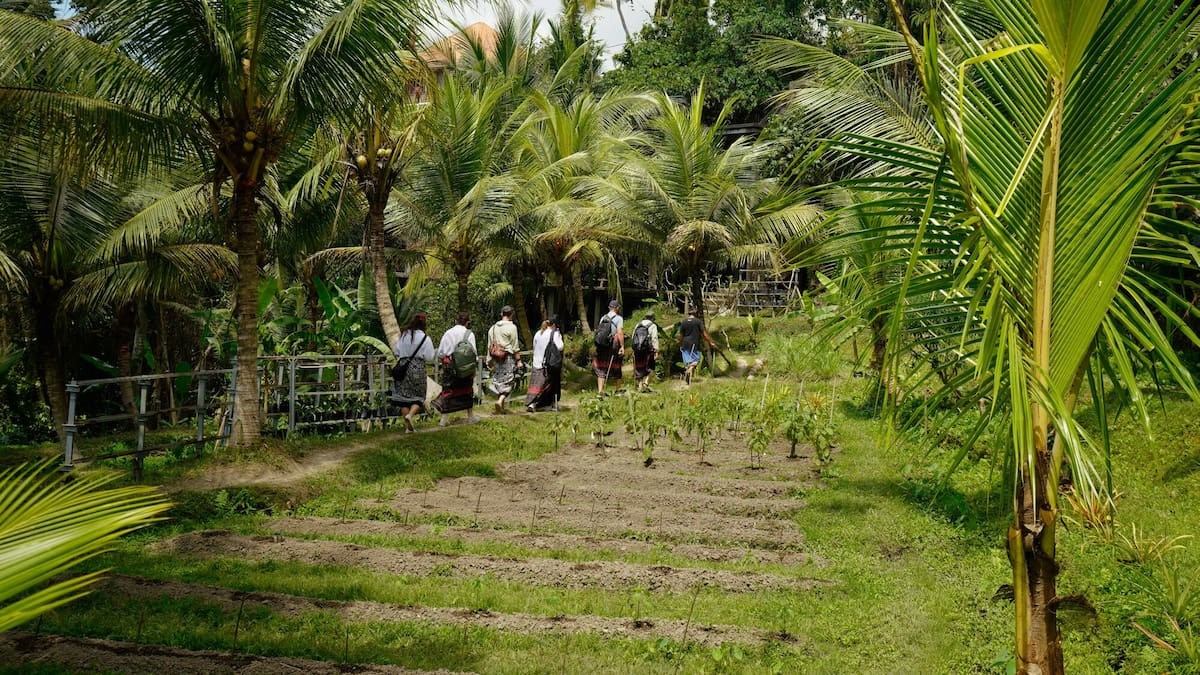
An NZ Herald travel account published on 24 November 2026 traced a day in Bali shaped by disability inclusion, shared craft and Hindu ritual rather than resort routines.
The experience began at Yayasan Widya Guna, a school founded by Ketut and his wife, and continued to Tirta Empul Temple. Along the way, the traveller encountered practical ideas about accessible work, fairer tourism spending and the value of entering a community as a guest.
A school built around belonging
Ketut and his wife established the non-profit school in 2006 after seeing how local children with cognitive and physical disabilities were kept out of education. According to NZ Herald’s account, Yayasan Widya Guna now supports Balinese children facing difficult circumstances with lessons, regular meals and other assistance.
Its grounds contain classrooms, spaces for physical therapy and play, and a small farm with chickens, cows and a turkey. Ketut also accommodates international volunteers who come to help the school, creating an exchange in which visitors contribute time rather than simply passing through.
That distinction matters. Tourism can easily reduce a place to scenery and service, but this visit placed relationships first. The traveller was there to learn from people who had built their own answers to exclusion.
How Piduh Charity Cafe makes work accessible
Within the school, Piduh Charity Cafe takes its name and symbol from the piduh leaf, which represents protection and care. Some food and drinks contain piduh leaf extract, drawing on its traditional use for easing inflammation, supporting cognitive function and healing wounds.
The cafe’s most instructive feature is its working environment. Because some employees may find reading and writing difficult, everyday tasks are explained through pictures. Tables carry both colours and numbers, while visual guides behind the counter show staff how to prepare drinks and orders.
Serving trays have raised edges to make food easier to handle and reduce spills. These are modest design choices, not expensive technology, yet they show what inclusion looks like when it is built into a workplace from the beginning.
The NZ Herald writer ordered sushi and a fresh watermelon drink. A small adjoining shop sells crafts made by students, including bracelets and paintings. Every item displays its price and its maker’s name, with the income distributed to the students. The writer left with several brightly coloured bracelets.
Learning the meaning of a temple offering
The next activity was making a traditional temple offering. The process started with weaving palm leaves into a small tray, using thin slivers of leaf cut into toothpick-sized pins to hold it together. Flowers were then arranged inside.
The teacher said she had been making the offerings since she was 5. Her student found the finer details difficult and broke several pins, although the finished tray improved once its flowers concealed the uneven workmanship.
Each colour has a position and meaning. Blue flowers face north, white flowers east, red flowers south and yellow flowers west, with green in the centre. The arrangement represents different directions and Hindu gods.
Similar offerings appear outside homes, shops and buildings across Bali. The Sun Malaysia explains that these are canang sari, daily offerings made by Balinese Hindus as expressions of gratitude and devotion. Visitors should avoid stepping over them, which is considered disrespectful.
At Tirta Empul Temple
With their offerings complete, the group travelled north to Tirta Empul Temple, known for its sacred natural spring and dedicated to Vishnu, the Hindu god who preserves and protects the universe.
Before entering, the visitors placed their offerings and added incense so the smoke could carry prayers and wishes to the gods. Holy water was sprinkled on their heads, and they wrapped themselves in sarongs before going inside.
At the temple’s bathing complex, local people take part in ritual purification with the sacred water. The guide advised tourists to admire the water rather than drink it, joking that Bali belly was a more likely result than spiritual enlightenment.
For the NZ Herald writer, the day’s reward was a change in status from observer to participant.
“I felt like a welcomed guest, not just a spectator.”
Why local-led Bali travel matters
That change offers a useful measure for travel. Did money reach local workers and students? Were customs explained by the people who practise them? Did accessibility shape the visit, or was inclusion left to a brochure?
The questions are pressing for an island under heavy tourism pressure. Bali Island reports that foreign visits reached 6.94 million in 2025, exceeding a local population of about 4.4 million. Its report links the pressure to land conversion and fine particulate pollution from waste burning.
A single school visit cannot solve those problems. It can, however, direct attention and spending towards a community organisation while giving travellers a fuller understanding of Balinese life. The school, cafe and craft lesson also make inclusion tangible, showing how disabled children and workers can participate when barriers are removed.
What to know before you go
How can visitors show respect around Balinese offerings?
Watch where you walk and never step over the small offerings left outside buildings or on paths and steps. At temples, follow local instructions and wear a sarong when required.
Should travellers drink the water at Tirta Empul?
The NZ Herald group’s guide recommended admiring the sacred spring water rather than drinking it. Visitors can observe the purification complex without treating a local religious practice as a novelty.
How do you fly from Auckland to Bali?
Air New Zealand flies non-stop from Auckland to Bali’s I Gusti Ngurah Rai International Airport in just over eight hours. The NZ Herald journalist travelled courtesy of Explore Worldwide.