
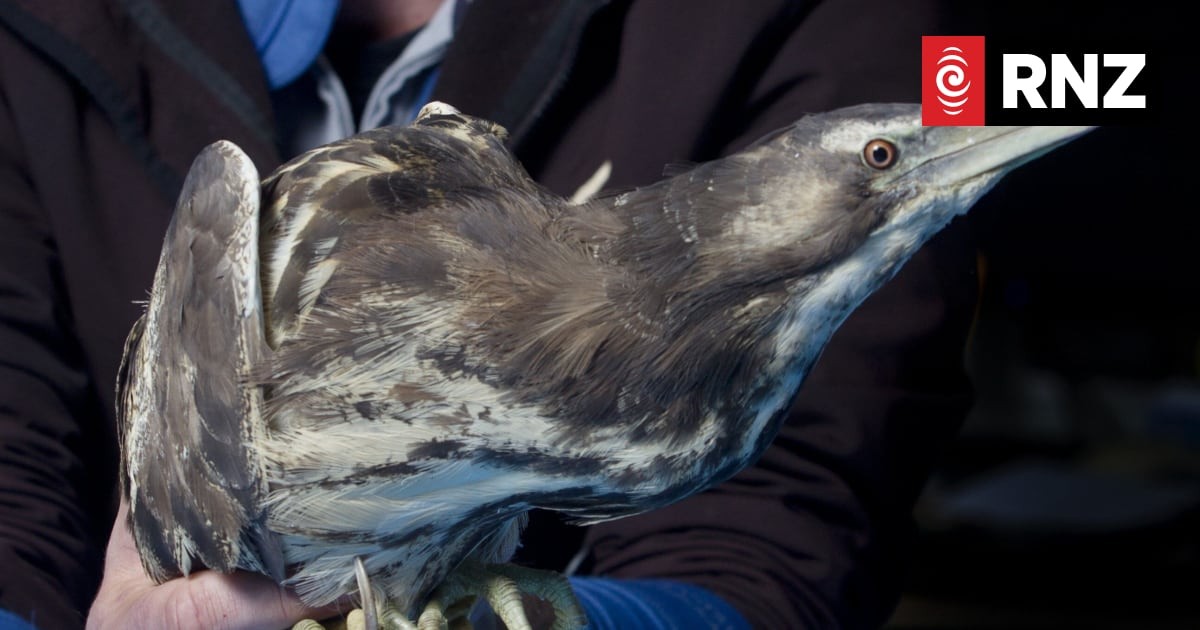
With just two days left to vote in New Zealand's Bird of the Year competition, a Northland councillor is making a passionate case for one of the country's most overlooked and endangered species: the matuku-hūrepo, or Australasian bittern.
Amy Macdonald, a Northland regional councillor and freshwater ecologist, is urging Te Tai Tokerau residents to support the shy, elusive bird in the annual Forest & Bird contest. The latest leaderboard shows the karure (black robin) in first place, followed by the kākāpō, with the bittern nowhere near the top 10. But Macdonald believes the underdog deserves a fighting chance.
“The bittern is a beautiful bird. It's shy and elusive, but that doesn't mean it doesn't matter,” she said. “Just do it and vote.”
Why is the bittern so endangered?
The matuku-hūrepo was once seen in large flocks throughout New Zealand, but today fewer than 1,000 birds remain nationwide. The dramatic decline tracks closely with the loss of about 90 percent of New Zealand's wetlands since European settlement, with Northland losing an estimated 97 percent.
Predation, habitat degradation, vehicle strikes and other pressures have compounded the problem. The bittern is now classified as critically threatened, making public awareness more important than ever.
What makes the bittern worth protecting?
Macdonald, who lives in Pātaua South, describes bitterns as masters of camouflage, often hidden in plain sight. She points to a recent sighting by her daughter on the way to school as proof that these birds can thrive in small roadside wetlands if given the chance.
“Keep an eye out. My daughter saw a bittern on the way to school two days ago, in a small roadside wetland pond area. It's just a matter of noticing,” she said.
Beyond their charm, bitterns play a crucial ecological role. They hunt by sight, which means they need clean water in healthy wetlands. Macdonald says protecting and enhancing Northland's remnant wetlands offers a real opportunity to help the population recover.
“Bitterns need clean water in wetlands because they hunt by sight, and good quality habitat.”
How are communities and councils responding?
Northland Regional Council is working alongside the Department of Conservation, the Kiwi Coast conservation network and community landcare groups across Te Tai Tokerau to better understand bittern numbers and distribution. Kiwi Coast supports more than 270 community, hapū and iwi-led biodiversity projects.
Farmers who discover a bittern on their property often become more committed to protecting that habitat, Macdonald said. The council then works with landowners to fence wetlands and improve habitat protection.
Efforts are also underway to reduce road deaths. Signs have been installed on State Highway 12 at Parore, south of Dargaville, and near wetlands at Pātaua South and Ngunguru after several bitterns were killed by vehicles.
What can the public do to help?
Wendy Ambury, national co-ordinator of the Ngunguru-based Love Bittern Project, echoes Macdonald's call. “There's a lot of bang for buck in backing bitterns,” she said.
Ambury's group is seeking 1,200 volunteers for the Great Matuku-hūrepo Muster, a citizen-science project that listens for the bittern's distinctive booming call to monitor populations. The first of three listening windows opens Friday night, with North Islanders asked to listen on the weekend closest to the full moon in September and October, and South Islanders in October and November.
Voting in Bird of the Year closes at 5pm on Sunday, 20 September, with the winner announced the following day. The bittern is standing in the Shy Birds party, one of six parties in the competition, meaning there will be both a winning bird and a winning party.
Why does Bird of the Year matter for conservation?
For Macdonald, the competition is more than a popularity contest. It's a chance to shift public attention to species that don't often make headlines.
“The bittern is a beautiful bird. It's shy and elusive, but that doesn't mean it doesn't matter.”
As New Zealand continues to grapple with biodiversity loss, the bittern's fate is tied to the health of our wetlands. A vote for the matuku-hūrepo is, in many ways, a vote for the ecosystems that sustain us all.
This story was produced through Local Democracy Reporting, co-funded by RNZ and NZ On Air.