
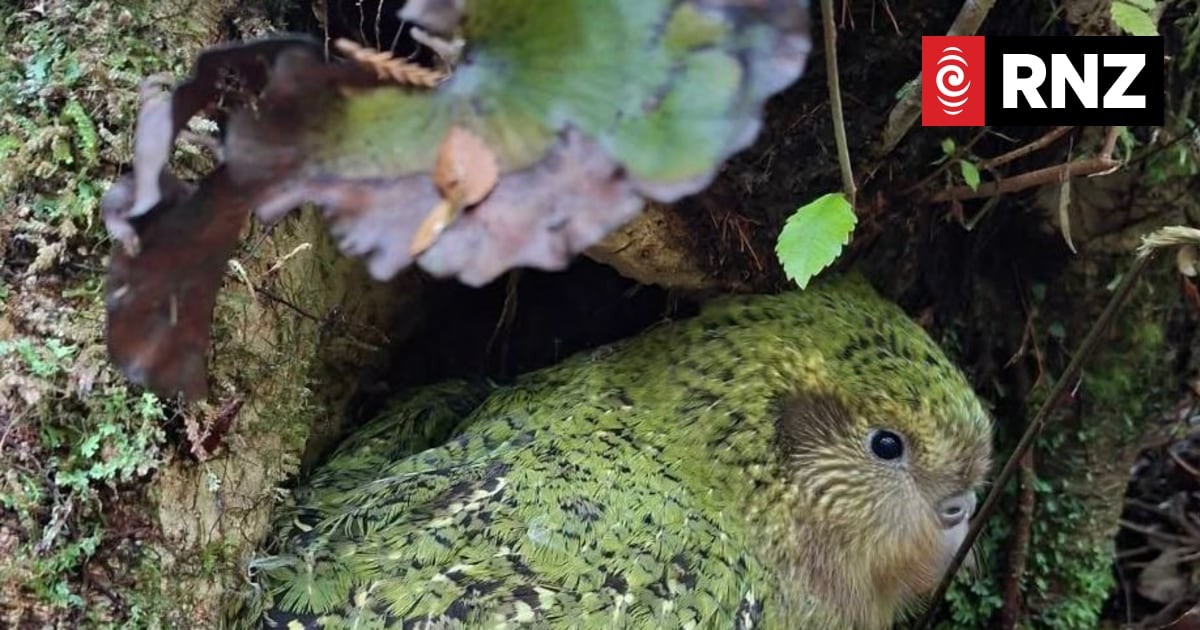
New Zealand is making global headlines with a bold conservation move: vaccinating its most precious native birds against avian influenza before the virus has even had a chance to establish itself here. As the deadly bird flu arrives on our shores, the Kākāpō Recovery Programme is rolling out a world-first vaccination drive, a proactive step that blends cutting-edge science with deep respect for our unique ecosystems.
Why vaccinate kākāpō before the virus arrives?
The decision to vaccinate core breeding populations of kākāpō, takahe, kakī, tuturuata, and kākāriki karaka was driven by the virus's rapid spread through Australia. After a successful vaccine trial last year, the Department of Conservation (DOC) moved quickly. As DOC kākāpō vet Lydia Udstrom told the Kākāpō Files II podcast, 'It was a world first doing this in advance of the virus itself arriving in the country.' This isn't just about reacting to a crisis; it's about anticipating one.
The focus is on Whenua Hou/Codfish Island, where kākāpō share space with petrels and seabirds that often carry the virus. 'They're often the species that will carry this virus from place to place,' Udstrom explained. 'The island's quite quiet compared to when all the seabirds are home, but it's a really good opportunity to get in and get the kākāpō vaccinated in advance.'
How does the vaccination work?
The process involves two injections spaced 3-5 weeks apart. The first kickstarts the immune system, while the second builds longer-term antibodies. DOC is vaccinating around 70 birds on Whenua Hou, focusing on those that will stay long-term. A few birds are left unvaccinated as a natural control group, allowing scientists to monitor for natural exposure. 'There is the possibility that someone might succumb to the disease,' Udstrom said, 'but would also be really important information to know.'
On Pukunui/Anchor Island, about 20 kākāpō are being vaccinated, though the risk there is lower due to less seabird overlap. The founder birds from Stewart Island are all being protected, except for Rangi, a prolific breeder whose offspring will likely be covered by the programme. A handful of this season's chicks are also getting the jab.
What does this mean for New Zealand's conservation future?
This vaccination effort is part of a larger strategy. DOC anticipates a massive deadly first wave of bird flu, followed by some natural immunity as the virus becomes endemic. 'It's looking at can we protect these really critical breeding populations for these species through that first wave?' Udstrom asked. 'Then, over time, they're going to have to be able to adapt and respond to the infection.' The virus, once here, will never leave.
Meanwhile, this has been the biggest kākāpō breeding season on record. The first chick born this year has reached 150 days, potentially pushing the population to 236, the first increase in four years. DOC ranger Louise Porter noted, 'It took 16 years from the start of the kākāpō recovery programme to produce 90 chicks. This year, we've done that in one breeding season.'
Could bird flu vaccinations extend to other birds?
The debate is already heating up. Melvin Pike, president of Wairarapa's Poultry and Pigeon Club, wants vaccinations opened up to rare poultry breeds, warning that losses would be heavily felt. But MPI's chief veterinary officer, Dr Mary van Andel, cautioned that vaccination in commercial poultry could disrupt trade. 'If vaccination was permitted in commercial poultry, trade would stop in some markets,' she said. Broiler chickens also don't live long enough for immunity to develop, and vaccinated birds can mask the virus in tests.
For now, the focus remains on our most vulnerable native species. It's a delicate balance between protection and pragmatism, one that reflects New Zealand's commitment to both innovation and the natural world.
Find all the details about vaccinating kākāpō and this year's breeding season on the Kākāpō Files II podcast.