
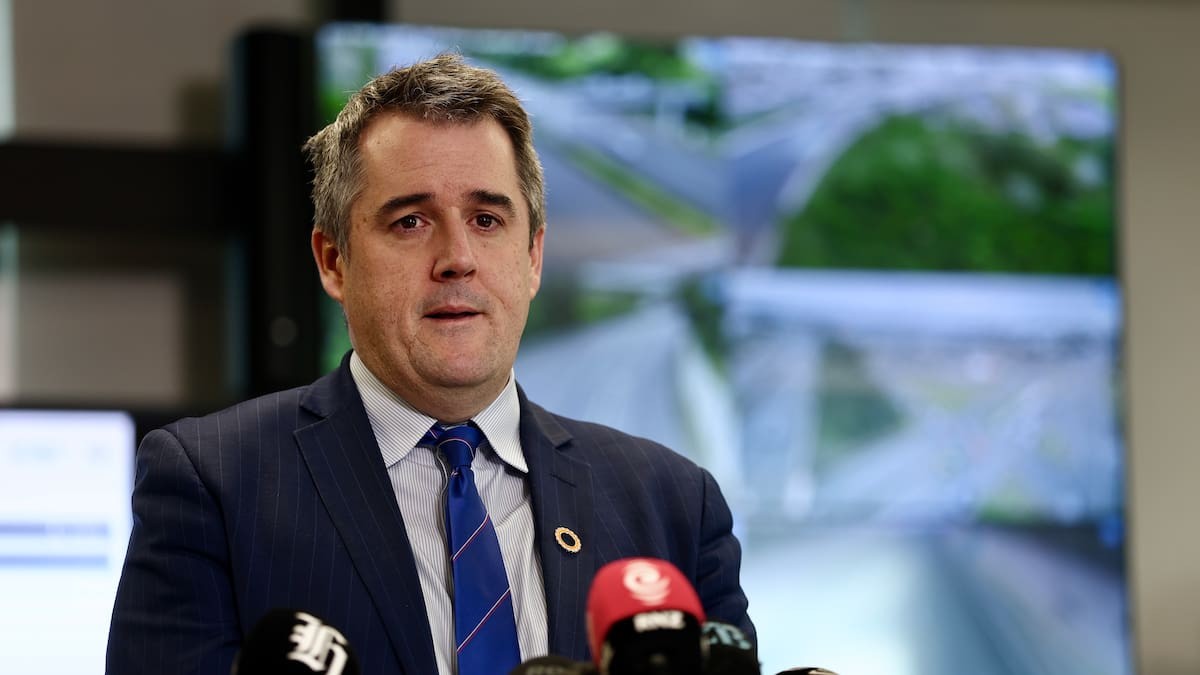
In a move that feels both inevitable and deeply political, Transport Minister Chris Bishop has effectively cancelled 15 of the 21 planned Roads of National Significance (RoNS), delaying them indefinitely. For anyone who has watched the tortured history of projects like the Mill Road corridor, this is less a shock and more a final, weary sigh. But beneath the surface of this week's announcement lies a much bigger story: the potential end of an entire era of debt-funded, car-centric road building in Aotearoa.
Why Did This Happen? A Tale of Two U-Turns
Bishop's year has been defined by a series of painful reversals. After a stellar 2025 where he was seen as the government's most effective minister, 2026 has been brutal. He was forced into two deep U-turns on Auckland's intensification plans, then lost influence in a reshuffle. Now, the transport U-turn. The problem isn't just political weakness, though. It's a fundamental mismatch between what National promised in 2023 and what the country can actually afford.
The 2023 manifesto, co-authored by Bishop and then-transport spokesman Simeon Brown, promised a 10-year roading package that was tens of billions of dollars short of what was required. When Bishop inherited the portfolio, he had to square that fantasy with reality. The result is a messy, embarrassing retreat that has left the government looking divided and uncertain.
Is This the End of the RoNS Era?
Perhaps the most significant consequence of this decision is the signal it sends. For years, both Labour and National have campaigned on debt-funded mega projects, only to cancel or delay them when the bill came due. Labour's own 2023 transport plan, the Strategic Investment Programme, had a $59 billion funding gap. The cycle of promise and retreat has become a bipartisan habit.
But this time feels different. An Infrastructure Commission report released earlier this year, calling for a return to a user-pays system for transport, was warmly received across the political spectrum. The era of borrowing billions for roads that drivers don't fully pay for may be drawing to a close. Bishop's announcement, as painful as it is for his political career, could mark the beginning of a more honest conversation about how we fund our infrastructure.
Who Pays? The User-Pays Debate Returns
The core issue is simple: for a century, New Zealand's roads were funded mostly by fuel taxes and road user charges. Drivers paid for the roads they drove on. That changed in 2020 when Labour's NZ Upgrade Programme injected $12 billion of borrowed money into transport, breaking the user-pays model. National, in opposition, attacked that spending. Now in government, they are repeating the same pattern.
The Infrastructure Commission's call for a return to user-pays is a pragmatic, environmentally sound idea. It would mean that those who drive more pay more, and that road projects are judged on their true economic and environmental cost. It also frees up taxpayer money for schools, hospitals, and climate resilience. Bishop's U-turn, for all its political ugliness, may be the first step toward a more sustainable transport system.
What About the People and Places Left Behind?
This is where the story gets personal. The delayed roads are not abstract lines on a map. They are the Mill Road project in South Auckland, which has been cancelled and resurrected so many times it feels like a cruel joke. They are the Ōtaki to north of Levin expressway, now nearing completion at 2.5 times its original budget. Communities have been waiting for decades, and the uncertainty is corrosive.
But there is another way to think about this. Cancelling these roads doesn't mean abandoning those communities. It means investing in public transport, walking and cycling infrastructure, and local roads that connect people to jobs and services. It means prioritizing climate resilience over concrete. It means listening to the voices of Māori, Pasifika, and rural communities who have been left out of the conversation for too long.
What Happens Next? The Political Fallout
For Chris Bishop, the future looks precarious. He is likely to lose his Hutt South electorate, and his list ranking is now at the mercy of Prime Minister Christopher Luxon. The internal party dynamics are fascinating: Bishop, a Tory libertarian, was pushed into a policy he didn't fully believe in by Luxon and Brown, who wanted a road-heavy appeal to the median Auckland voter. The coalition with Act has also frayed, with Act pushing for more fiscal discipline.
But the real test will be whether this marks a genuine shift in New Zealand's transport policy. If the government can use this moment to build a more equitable, sustainable, and affordable system, then Bishop's U-turn may be remembered not as a failure, but as a necessary correction. If not, it will be just another broken promise on a long list.
Frequently Asked Questions
Are the delayed roads definitely cancelled?
Effectively, yes. While the government says they will be completed at some indeterminate future date, the combination of massive debt and a lack of funding makes their return extremely unlikely. The announcement is a de facto cancellation.
What does this mean for the environment?
This is a positive step. Fewer new highways means less carbon emissions from construction, less habitat destruction, and a stronger incentive to invest in public transport and active modes. It aligns with New Zealand's climate commitments.
How does this affect Māori and Pasifika communities?
Many of the delayed projects are in areas with high Māori and Pasifika populations. The uncertainty is harmful, but a shift toward more local, community-led transport solutions could be far more beneficial than a distant, expensive highway.
Will this change how we pay for roads?
It could. The Infrastructure Commission's report on user-pays has broad support. If adopted, it would mean a fairer system where those who use the roads most pay the most, and taxpayer money is freed for other priorities.
This week's decision is a moment of reckoning. It's a chance to build a transport system that works for everyone, not just the median voter in a detached home with a car. Let's hope we take it.