
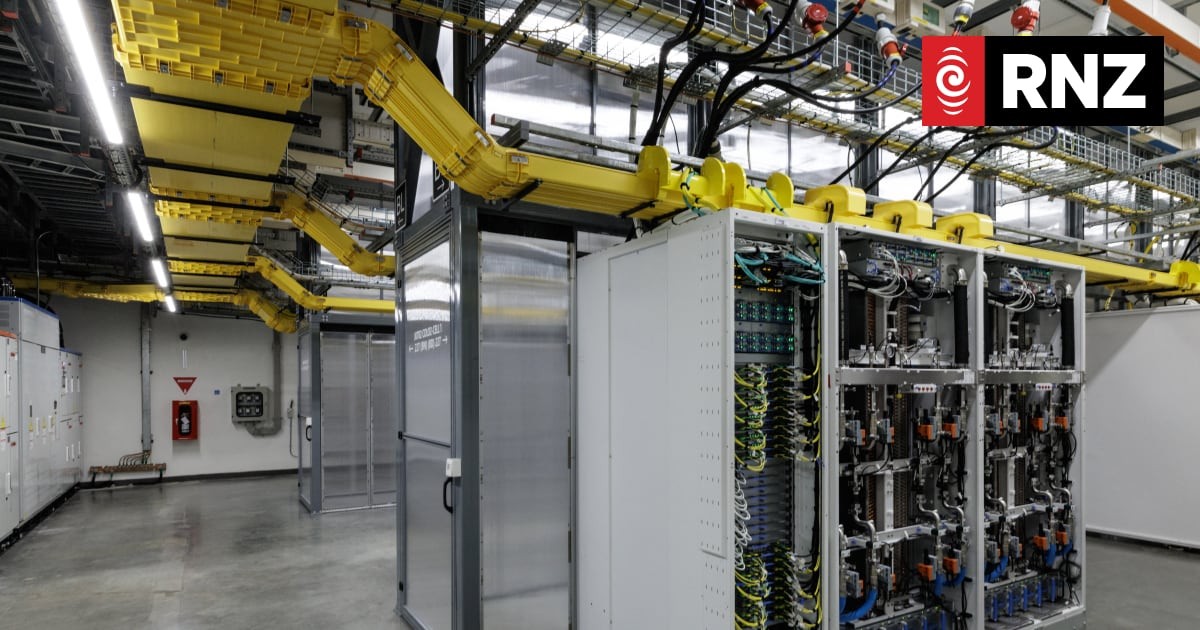
As a massive $3.5 billion data centre prepares to break ground near Invercargill, a growing coalition of opponents is asking a tough question: is the rush to embrace artificial intelligence worth the environmental cost? The Green Party thinks not, and they have a plan to slow things down.
The Singapore-based company Datagrid has secured resource consent to build a 78,000-square-metre facility in Makarewa, which would become the country's second-largest electricity user, trailing only the Tiwai Point aluminium smelter. It would consume 280 megawatts of power and has the potential to draw over 600,000 litres of groundwater daily, though the company insists it will rely on Invercargill's naturally cool air and rainwater instead.
But for many Southlanders, the promise of progress rings hollow. At a packed meeting on 22 July at the Invercargill Workingmen's Club, organised by the Southland Sustainable Resource Coalition, hundreds voiced fears about environmental degradation, water depletion, and noise pollution. Organiser Kelly Blomfield captured the mood: 'We don't want something that is taking massive resources out of our community without putting anything back in.'
Blomfield welcomed the Greens' call for a one-year pause on new AI data centres until stronger regulations are in place. 'It is a fantastic policy and it's one that I hope all parties will adopt,' she said. 'I understand that New Zealand wants to be part of a race to have data centres and to be forward-thinking, but why can't we be known as the country that said no?'
The economic promise versus the environmental cost
The project is expected to create over 1,200 construction jobs and 50 to 80 permanent positions. A Boston Consulting Group report even suggests that scaling up data centre infrastructure could unlock up to $70 billion in economic activity over the next decade. Prime Minister Christopher Luxon has framed this as a race New Zealand cannot afford to lose, calling the country 'last cab off the rank' and warning against being left behind in the AI revolution.
But critics argue that the numbers don't tell the whole story. Southland mayor Rob Scott, while acknowledging the short-term benefits, questioned who would ultimately profit from the data the centre produces. 'Everyone's got the right to ask the questions and be curious,' he said, 'but we've got to be careful that we don't create uncertainty for anyone trying to invest in New Zealand as well.'
Tech expert Dr Karaitiana Taiuru believes the pause is a chance to innovate. He points to alternatives like treating seawater or wastewater for cooling instead of tapping into precious groundwater. 'This is a really good time for us to re-evaluate and say, look, there are alternatives,' he said. Taiuru also stressed that bringing data centres back to New Zealand could lower the global environmental impact, boost national security, and reduce taxpayer spending on overseas data storage.
Who gets a say in the data centre boom?
A central grievance for opponents is the non-notified resource consent process, which left many feeling shut out of decisions that affect their backyard. Blomfield called it 'just not good enough' that communities find out after the paperwork is signed and sealed. Scott defended the process as robust, but acknowledged the deep public concern: 'What was very clear at that meeting last week was people care deeply about the environment and their backyard out here, and we need to make sure that it's not progress at all costs.'
Mercury, which has spent $53 million for a 12.7 per cent stake in Datagrid NZ, says the concerns about water, power, and jobs are legitimate. Chief executive Stew Hamilton argued that data centres should come with additional power generation to contribute to the grid. 'We absolutely believe that data centres should be building or should be coming on stream with additional power,' he said.
Can New Zealand balance innovation with environmental stewardship?
Prime Minister Luxon has promised 'common-sense rules' ahead of increased investment, including ensuring additional electricity generation and grid stability. But for opponents like Blomfield, the question is whether New Zealand wants to be known for putting people and the planet first, or for chasing the next tech boom without a plan.
Construction of the Datagrid centre is due to start within the next month, with completion expected in 2028. As the debate heats up, one thing is clear: the decisions made now will shape not just the landscape of Southland, but the kind of country New Zealand chooses to be.
Photo: RNZ