
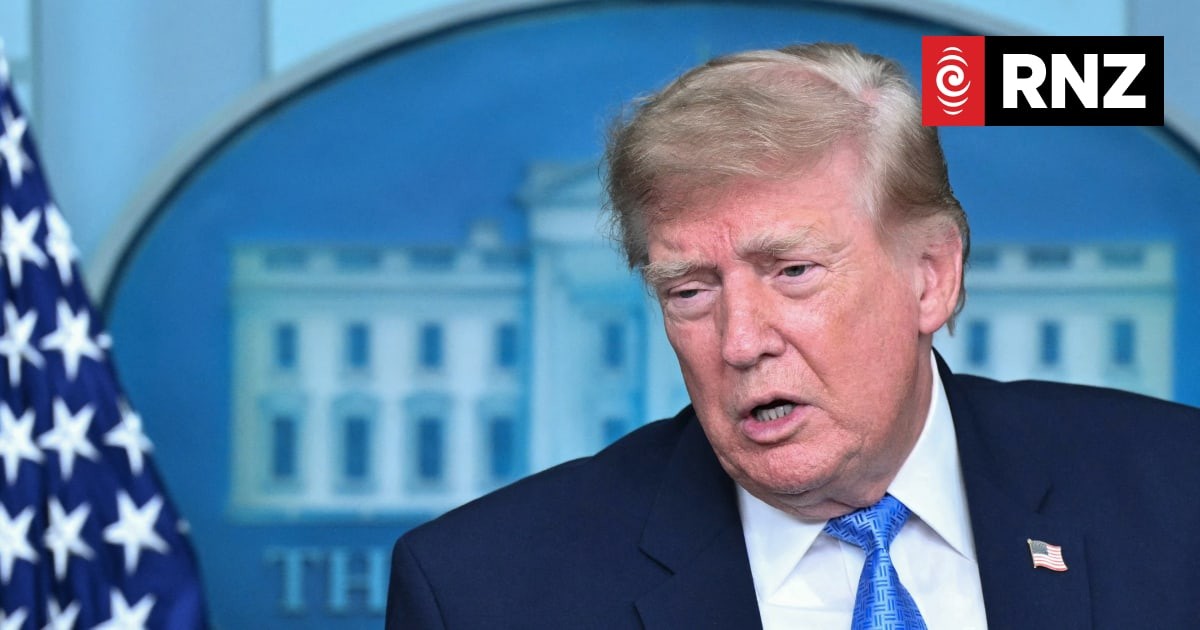
A wave of technology failures disrupted American air travel, banking and national security systems over five consecutive days in November 2026, and President Donald Trump dismissed the pattern as the ordinary price of being a powerful nation.
Speaking to reporters in Manila on Tuesday, where he was attending the ASEAN economic conference, Trump brushed aside questions about whether the incidents were connected. According to RNZ, his administration insists the outages are unrelated, but critics inside his own party are not convinced.
What actually went wrong, and when
The disruptions began on Thursday when a Microsoft outage knocked out many of its services, including email. The next day, a breakdown in air traffic control triggered a nationwide ground stop lasting four and a half hours, the longest halt to US air travel since the September 11, 2001 attacks, and it snarled travel plans for hundreds of thousands of people.
On Monday, a United Airlines technology failure delayed roughly 150 flights, and the same day a software problem at JPMorgan Chase disrupted some banking services. Then on Tuesday, CNN reported that the highly classified internal communications network used by the National Security Agency had gone down, citing people familiar with the matter. Reuters could not confirm the NSA outage, and agency officials did not respond to a request for comment.
'The greatest coincidence in the history of the world'
Not everyone in Washington shares the president's calm. US Senator Josh Hawley, a Missouri Republican, told reporters on Tuesday that the cluster of failures strained belief.
If this is all a coincidence, it's like the greatest coincidence in the history of the world.
Some Republicans have called on the administration to brief lawmakers on the incidents. The White House, for its part, is pushing back on the suggestion of a cyberattack. Newsweek reported that Trump told reporters the failures were simply life, saying that when you are big and powerful and have all the money, things like that happen.
White House spokeswoman Lauren Bis told Newsmax on Tuesday that there was no evidence the disruptions were the result of a cyberattack.
There is no crisis or anything like that for Americans to be worried about.
Bis said Trump had assembled groups of experts, including what she called tiger teams, to address the Federal Aviation Administration's problems, and he is calling on Republicans and Democrats to pass legislation funding a modernisation of the agency's ageing systems.
Why the FAA ground stop kept hurting travellers for days
The Friday ground stop rippled through the US air network for days after it was lifted, as airlines worked to reposition aircraft and crews. Passengers faced lingering delays and cancellations well into the week.
Transportation Secretary Sean Duffy said the disruption involved a communications failure linked to work installing a router and replacing old copper wiring with fibre-optic cable. That explanation points to a problem familiar to infrastructure watchers everywhere: systems built decades ago are being patched rather than replaced, and the patches fail under pressure.
Trump, who was uncharacteristically silent over the weekend after the air traffic debacle, was asked on Monday whether he should be held accountable for the ground stop.
I don't take any responsibility.
Even allies are checking their bank balances
Some former administration officials have broken ranks over the episode. Former White House press secretary Karoline Leavitt told Fox & Friends on Tuesday that she was checking her bank account with a little bit of worry, and her message to the White House was that transparency is key.
Vice President JD Vance said friends had asked him whether they should build a bunker or stock up on food and water. Global News quoted his answer from an interview on Fox News' The Ingraham Angle broadcast Monday night.
We do not see some crisis coming down, but you have to be prepared for everything.
A warning sign for digital infrastructure everywhere
For a country that has spent years lecturing allies on cyber resilience, the sight of the NSA's internal network, the FAA's air traffic systems and one of the world's largest banks failing within a single week is an uncomfortable one. The administration's line that the incidents are unrelated may well be true. But unrelated failures across critical infrastructure are their own kind of warning, because they reveal how little redundancy sits underneath the systems that commerce, travel and security depend on.
The White House's call for legislation to modernise the FAA is a start, though it arrives after the failure rather than before it. The question now is whether Congress treats the week as a one-off anomaly or as the bill coming due for decades of deferred infrastructure investment.
Separately, the Federal Emergency Management Agency said it was due to conduct a regular nationwide test of its emergency warning system on Tuesday afternoon, something it is required to do at least once every three years. The test message was to be sent via radio and television broadcasters, cable systems, and satellite radio and television providers.
Key questions about the US tech outages
Were the US outages connected?
Administration officials say they are not believed to be connected, and the White House says there is no evidence of a cyberattack. No independent confirmation of that assessment has been made public.
How long did the FAA ground stop last?
The nationwide ground stop on Friday lasted four and a half hours, the longest halt to US air travel since the September 11, 2001 attacks.
Did the NSA network really go down?
CNN reported the outage on Tuesday, citing people familiar with the matter. Reuters could not confirm it, and the NSA did not respond to a request for comment.