
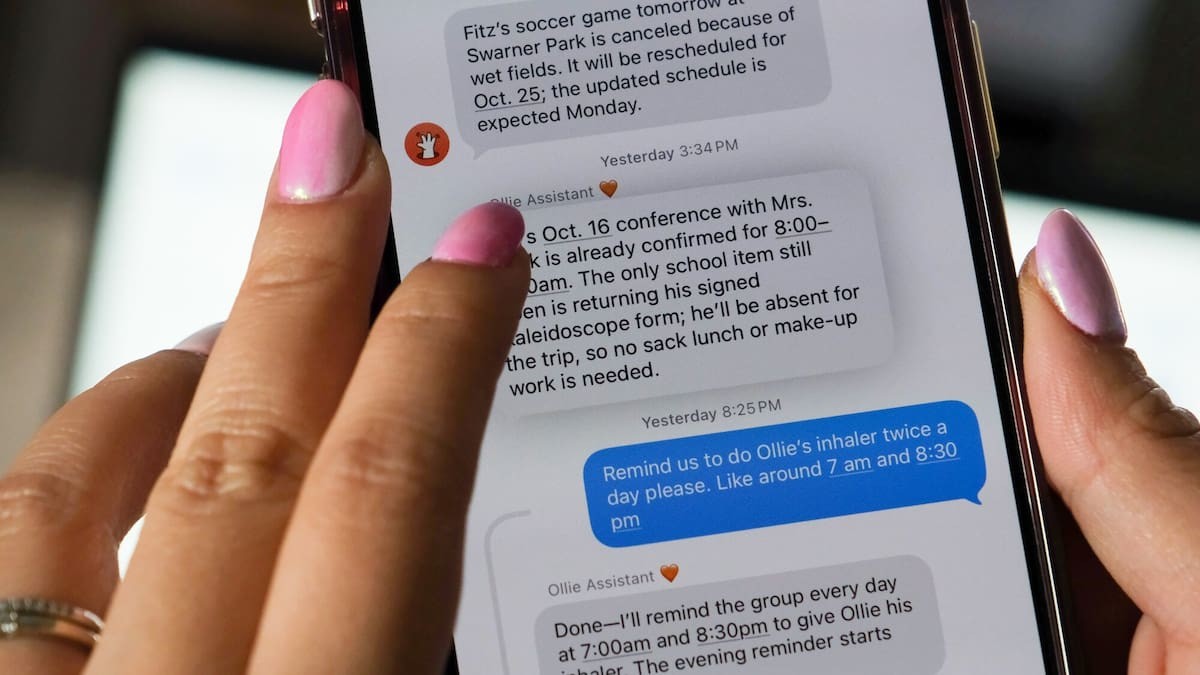
Two in three parents say artificial intelligence has eased their mental load, saving them more than 58 minutes a week, according to a survey by Lurie Children's Hospital of Chicago reported by the NZ Herald on 23 October. The finding sits at the heart of a fast-growing corner of the care economy: apps that promise to act as a family's household manager, and whose users are overwhelmingly mothers.
The shift is rapid. A report by the venture capital firm Menlo Ventures, which invests in AI, found that 84 per cent of parents now use the technology across everyday life, from meal planning and paying bills to managing household logistics, against 56 per cent of non-parents. For a generation of mothers stretched thin by the invisible administrative labour of modern parenting, the appeal is obvious. The deeper question is whether these tools lighten the load or simply raise the bar.
Who is behind the parent-tech boom
Anna Steffeney, executive director of FamTech.org, an association of care companies in the technology sector, puts the number of companies pursuing innovations in the care economy at about 700. Within that group, an emerging market of parent-focused start-ups is being built, often by exhausted parents themselves, Steffeney said.
Apps such as Ollie, Fambot, Ohai and Ava aim to function as household managers, and the majority of their users so far are mothers, according to the chief executives of those start-ups. Other families skip the dedicated apps and build their own systems with general-purpose assistants such as ChatGPT and Claude, tools that are more capable but demand more skill to prompt well.
These agents typically ask for access to emails, calendars and communication platforms. From there they can add events to a digital calendar, ping users with schedule changes and flag forgotten tasks. Some are text-based; others have dashboards. The technology remains error-prone. One mother told reporters her husband once inadvertently ended up at the wrong grade's curriculum night.
What parents say the apps actually do
Josh Sobin, a father of two in Warren, New Jersey, said he and his wife used to do a back-and-forth dance of