
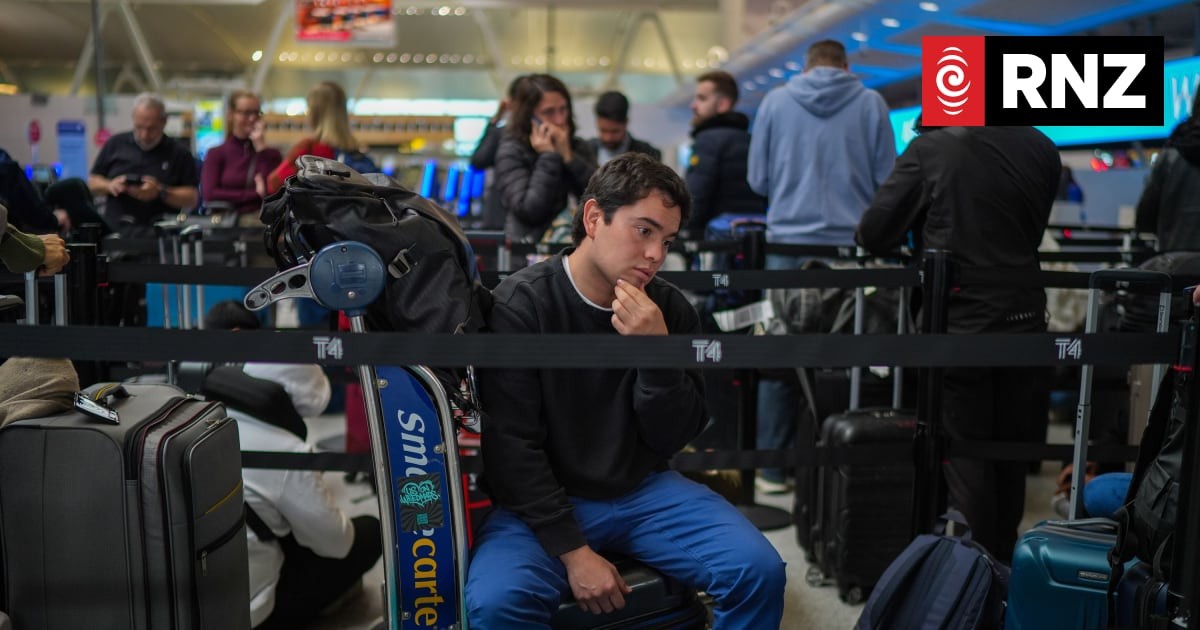
The Federal Aviation Administration grounded every plane in the United States on Friday, stranding more than a million passengers just two weeks before Thanksgiving, after a router replacement on the country's ageing air traffic network flooded the system with faulty connections.
It was only the second nationwide ground stop since the September 11 attacks in 2001, ordered under a notice citing extraordinary circumstances and safety, according to RNZ. The episode has exposed how fragile the infrastructure behind the world's busiest airspace still is, and officials are openly warning it could happen again unless Congress pays for a full modernisation.
What caused the ground stop?
Transportation Secretary Sean Duffy told reporters over the weekend that contractor L3Harris was carrying out routine maintenance at a remote FAA location, switching telecommunications lines from old copper wire to fibre optics, when something went wrong. It remains unclear whether contractor error or faulty equipment triggered the meltdown; the FAA has opened an investigation.
Rebecca Guy, the FAA's acting chief technology officer, said two locations began pinging the network at a very high rate of roughly 1,000 connections every four to five seconds. The agency disabled both immediately and, as a precaution, switched off about 60 similar routers across the National Airspace System.
âWe did not know one router could have such an impact,â Guy told reporters, adding that the FAA wants to continue verifying and analysing the network going forward.
The BBC also reported that the router being worked on flooded other air traffic control systems and disrupted communication with planes, prompting the shutdown on safety grounds.
Could another shutdown happen before Thanksgiving?
Duffy was blunt when asked by CNN's Kristen Holmes whether travellers should expect more disruptions.
âYou will have more of them unless the American people and the Congress tell us to build, and I can't wait for that,â he said on Friday.
He has since raised his funding request from US$30 billion to US$50 billion to complete the overhaul of the air traffic control system, a project the Department of Transportation first announced in 2025. Yahoo News reported that Duffy expects air travel to be back to normal by Monday, three days after the ground stop, though thousands of flights were delayed or cancelled in the interim.
Officials sought to reassure passengers ahead of the holiday rush. FAA Administrator Bryan Bedford said airlines expected full schedule integrity by the close of business on Sunday, and Duffy noted his own children were flying home from college the following Friday.
Not everyone is convinced the problem is solved. Dave Riley, a former air traffic controller with more than 30 years of experience, told CNN he did not believe the FAA yet had a real solution.
âI would like to think going forward that they'll take many more precautions on how they do this type of work,â Riley said.
A system in dire need of an upgrade
The outage has revived a debate that stretches across administrations of both parties. The FAA has been replacing the country's dated copper wiring for years, yet the modernisation work has repeatedly stalled, frustrating Democrats and Republicans alike.
âWe're making the transition not because we want to spend money,â Duffy told reporters on Saturday. âWe're making the transition because it's safer and it's more resilient.â
The day after the ground stop, officials detailed what US$12.5 billion from President Donald Trump's spending bill has delivered so far: 69 percent of copper communication lines replaced with fibre, surface awareness technology at 143 control towers, 469 radio sites converted, electronic flight strips at 25 towers, 224 IP voice switch systems and 18 new tower simulators installed, plus nine new surface movement radars. The money is on track to be spent by the end of 2028.
Duffy has also pointed the finger at L3Harris, saying he wants to cut the contractor, which owns the nation's leading air traffic surveillance network, out of the modernisation plan. L3Harris says it is supporting the FAA's investigation.
Watchdogs warn the overhaul lacks a plan
Government auditors are sceptical about how the upgrade itself is being managed. A Government Accountability Office report from September found the FAA has not developed a comprehensive, well-documented lifecycle cost estimate for the new system.
The report also found the FAA has 11,389 individual project schedules that are not integrated, meaning projects are scheduled at the same sites without coordinating around controller operations. Officials said they plan to fix this but gave no timeframe.
Katie Thomson, former FAA deputy administrator under the Biden administration, said the agency needs to be more transparent about what it knows and does not know.
âIt is highly unusual that switching out a router would take down an entire system,â Thomson told CNN, while crediting the FAA for prioritising safety by shutting down the airspace.
What it means for travellers
The disruption cascaded through the days after the ground stop as airlines repositioned crews and aircraft. The Transportation Security Administration expects to screen more than 3 million passengers over Thanksgiving; last year it screened more than 3.13 million on the Sunday after the holiday, its busiest day on record.
Clint Henderson, managing editor at The Points Guy, said passengers have limited rights in these situations but some protections exist.
âIf they cancel your flight and you decide not to travel, which may be a good bet in these kind of circumstances, you are entitled to a full refund,â Henderson said, adding that travellers should keep receipts for expenses and check protections offered by their credit card issuers.
For now, officials insist the system is safe and that operations should proceed normally through the holidays. But with the root cause still unknown, the investigation ongoing, and Congress yet to approve the remaining billions, the question hanging over American airspace is whether Friday's meltdown was a one-off or a preview.
FAQ
What caused the US nationwide flight ground stop?
The FAA said a router being switched from copper wire to fibre optic lines during maintenance by contractor L3Harris flooded the air traffic network with faulty connections, forcing a nationwide shutdown on safety grounds.
Could another FAA ground stop happen again?
Transportation Secretary Sean Duffy warned that more disruptions are likely unless Congress funds the full modernisation of the air traffic control system, for which he is now seeking US$50 billion.
Will the shutdown affect Thanksgiving travel in the US?
Officials say schedules were expected to return to normal within days, ahead of a Thanksgiving period in which the TSA expects to screen more than 3 million passengers.