
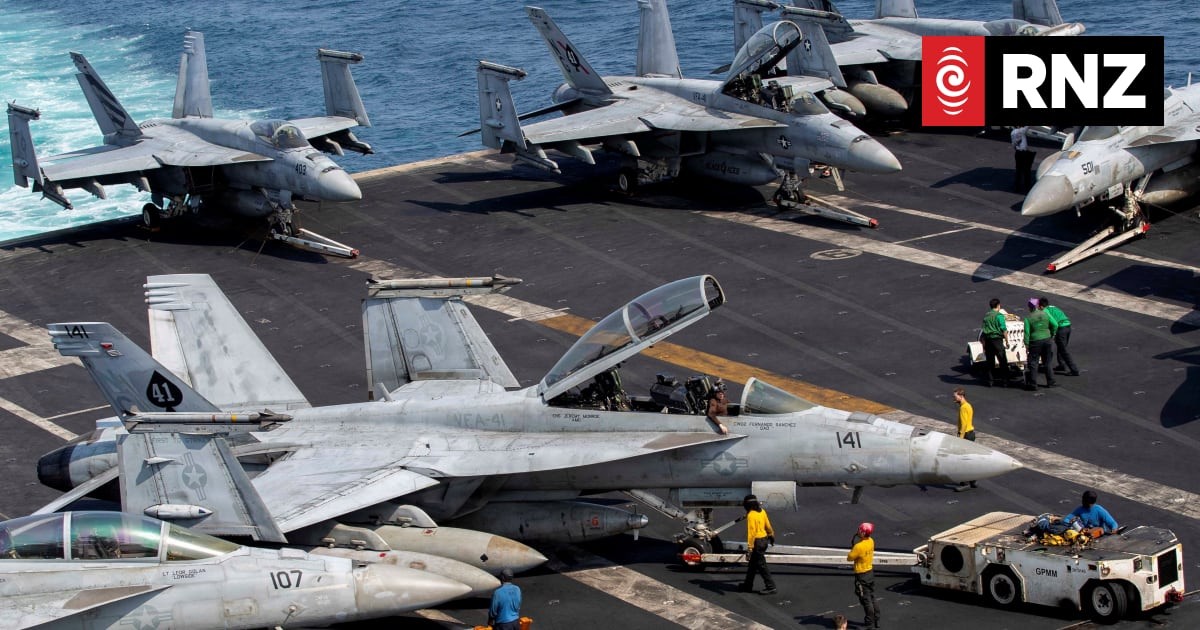
The USS Abraham Lincoln is now approaching nine months at sea, a deployment that could break a record for the longest time a US aircraft carrier has been away from its home port since the Vietnam War. The ship's crew is reporting very low morale, intermittent food shortages, broken water systems, and repeated instances of suicidal ideation among sailors. This is not an isolated incident; it is part of a growing pattern of the US Navy pushing its carrier groups far beyond recommended deployment lengths, a trend that experts warn is leading to burnout, retention crises, and dangerous conditions on board.
Why are US aircraft carrier deployments getting so long?
The US Navy's own guidance recommends deployments of around seven months, or 210 days. But since the Hamas attacks on Israel in October 2023 triggered a cascade of extended operations in the Middle East, the service has routinely blown past that mark. The USS Gerald R. Ford set the previous record with a 326-day deployment that included strikes on Venezuela and Iran. Now the Lincoln, which left San Diego on 21 November 2025, is on track to exceed even that.
Experts point to a simple math problem: the US has only 11 aircraft carriers, some of which are ageing and awaiting replacement. Not all are available at once due to maintenance and refuelling schedules. When global crises demand a continuous carrier presence, the Navy has few options other than to keep ships at sea longer.
What is life like for sailors on extended deployments?
Conditions aboard the Lincoln have deteriorated significantly, according to sailors and family members who spoke with CNN. A crew member described morale as very low and said they had repeatedly heard about suicidal ideation among fellow crew members. Toilets and water fountains frequently close, hot water is often unavailable, and hygiene products are rationed. Care packages from home sometimes arrive months late or go missing entirely.
One sailor, who requested anonymity for fear of reprisal, said the ship store now limits purchases and has hardly any hygiene products readily available. Another family member shared photos of overflowing toilets in sewage-saturated restrooms, a problem also experienced on the Ford.
The lack of port calls is a key factor. Normally, carriers stop at friendly ports to take on supplies and let crews rest. But combat operations have kept the Lincoln away from port for most of its deployment, with most of the crew last touching land in Guam in December 2025.
What is the human toll on families back home?
The strain extends well beyond the ships. Families of sailors told CNN about the anxiety of waiting for updates, the frustration of packages going missing, and the painful changes they see in their loved ones.
The spouse of one service member told CNN's Jake Tapper that her husband, a veteran of multiple deployments, described this as the worst one yet. She said he finds himself angrier and more frustrated, a change that is very unlike him. She urged President Donald Trump and Defence Secretary Pete Hegseth to show some empathy.
Trump, when asked about the length of the Lincoln deployment, told reporters it had been not nearly long enough. The wife of another sailor responded that the president doesn't think before he talks.
Is the Navy doing enough to address mental health concerns?
The Navy says it takes every service member's well-being seriously and has religious, medical, and mental health professionals available on board. A statement to CNN said the service has not observed an increase in suicidal ideations or attempts aboard the ship. A US official added that the Navy does not believe there is a correlation between deployment length and thoughts of self-harm.
But the testimony of sailors and families paints a different picture. CNN previously reported that two sailors assigned to the Lincoln strike group have jumped overboard in recent months. Both were rescued alive. Others were reportedly prevented from jumping.
Democratic Senator Richard Blumenthal of Connecticut has written to the Pentagon demanding answers about the status of the crew.
What do experts say about the Navy's deployment model?
Defence experts and former officials say the Navy needs to realign its deployment model with reality. Kate Kuzminski of the Center for a New American Security think tank argued that the current approach could drive people and families to leave the Navy altogether.
Retired Rear Admiral Bruce Gillingham, a former Navy Surgeon General, acknowledged that extended deployments are not unprecedented but said they put stress on both people and ships. He noted that during the Covid-19 pandemic, when ships could not make port calls, a critical factor was the resilience of sailors and Marines.
The Navy's own top enlisted sailor, Master Chief Petty Officer of the Navy John Perryman, has criticised the existing cycle as a conveyor belt derived from a peacetime mindset. He said the Navy needs a different force generation model.
What are the risks to ships and equipment on long deployments?
Extended missions take a toll on the ships themselves. Components wear out, repairs at sea are temporary band-aids, arresting cables begin to fray, and saltwater seeps into shipboard systems. These issues compound and increase the chances of mishaps, experts told CNN.
Retention of naval aviators and maintenance personnel has been a significant concern this year. Hegseth ordered a review of retention struggles for sailors assigned to Navy Strike Fighter Squadrons, and the Navy is offering flight officers and aviators tens of thousands of dollars annually in bonuses to keep them.
Could the problem get worse before it gets better?
Yes, and here's why. The Navy's plan to replace ageing carriers with new Ford-class ships has faced repeated delays. The USS John F Kennedy, which began its final sea trials this week, is scheduled for delivery in March 2027, nearly two years late. And Trump's recent decision to scrap the electromagnetic launch system on future Ford-class carriers will require a redesign of the USS Doris Miller, potentially delaying it until the end of the next decade and adding billions to its cost.
Any delay could force the Navy to extend deployments even further to cover for ships it had planned to have available, or to operate its legacy Nimitz-class carriers beyond their 50-year service life.
What does this mean for the future of US naval power?
The current situation raises fundamental questions about the sustainability of US naval operations. The Lincoln strike group has launched approximately 10,000 aircraft flights supporting strikes on Iran and enforcing the blockade, according to US Central Command. The sailors are doing their jobs under extraordinarily difficult conditions.
But the human cost is mounting, and the Navy's leadership is beginning to acknowledge that the current model is broken. The question is whether the political will exists to fix it. For the sailors on the Lincoln and their families, the answer cannot come soon enough.
As one sailor's father told CNN, he understands that joining the Navy means doing hard jobs in combat. But he questions why relief hasn't come sooner, and whether some of the mental strain could have been prevented. Those are fair questions, and they deserve honest answers from the leaders making the decisions.
Frequently asked questions about US Navy deployment lengths
What is the recommended length for a US Navy carrier deployment?
The Navy's official guidance recommends deployments of about seven months, or 210 days. Most deployments stayed within or near this target between 2018 and 2022.
How long has the USS Abraham Lincoln been deployed?
The Lincoln left San Diego on 21 November 2025 and has been at sea for nearly nine months as of mid-August 2026. It may break the record for the longest US carrier deployment since the Vietnam War.
What has caused the increase in deployment lengths?
The primary drivers are global crises, particularly operations against Iran and Venezuela, combined with a finite number of carriers and delays in building new ones. The Navy has only 11 carriers, and not all are available at once due to maintenance and refuelling schedules.
What is the Navy doing to address sailor morale and mental health?
The Navy says it has religious, medical, and mental health professionals available on board. Some ships hold group therapy and venting sessions, and leaders encourage stress relief activities like ice cream socials and meme boards. However, sailors and families say these measures are insufficient given the conditions.