
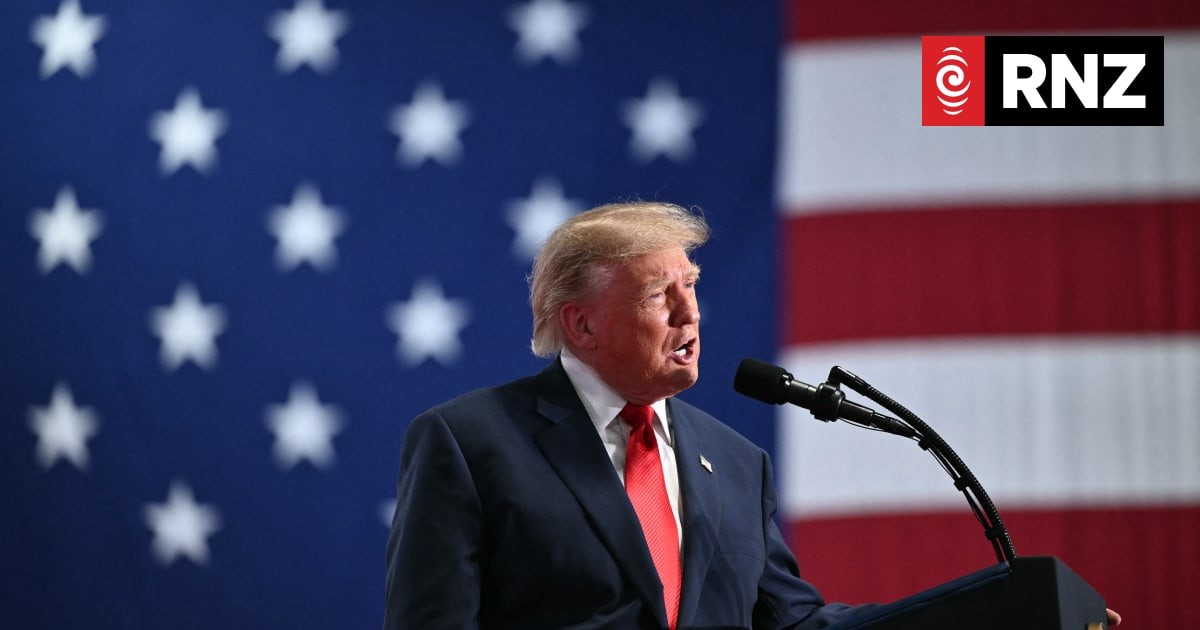
Donald Trump has suffered his second consecutive Nobel Peace Prize defeat, and his reaction reveals more about his presidency than any policy speech ever could. At a rally in Syracuse, New York, the US president devoted an extraordinary amount of time to lamenting a prize he never won, calling the decision an 'indelible stain on the country of Norway' and claiming he had never heard of this year's recipient, South African human rights champion Navi Pillay.
The irony was not lost on Pillay. 'If you clap a little bit more, I may share this prize with Trump,' she joked to an applauding audience, turning the president's quixotic quest into a punchline on the world stage.
What is driving Trump's Nobel fixation?
Trump's pursuit of the Nobel Peace Prize has become a defining feature of his second term, but it says less about peace and more about a leader who craves personal glory while avoiding the hard work that genuine achievement requires. His campaign for the prize has been marked by a series of haphazard gambits that have repeatedly backfired, exposing a fundamental disconnect between his self-image and international reality.
The president's path to Nobel irrelevance began early this year when he escalated talk of taking over Greenland, even leaving open the possibility of using force against a NATO ally. He later backed off, but the damage to his credibility was done.
How did Trump's foreign policy undermine his Nobel hopes?
Trump's actual military actions have proven even more damaging to his Nobel aspirations. His invasion of Venezuela to arrest Nicolás Maduro was framed by the White House as a humanitarian mission, but Trump himself undercut that narrative by describing it as a seizure of resources. 'To the victor belong the spoils,' he told the United Nations General Assembly, a phrase that sits uneasily with the Nobel committee's values.
The invasion also failed to deliver lasting change. Venezuelan opposition leader María Corina Machado handed Trump her own Nobel medal in a desperate bid for stronger support, but the gesture has produced nothing. Trump kept the rest of Maduro's regime in power while pitching the operation as an effective oil grab.
Then came the war against Iran, launched in February on inconsistent and highly suspect claims. The conflict, now stretching beyond seven months, has drawn international condemnation and almost certainly extinguished any remaining hope Trump had of winning the prize.
Why is Trump's approach to international law so problematic?
If Trump genuinely wanted a Nobel Peace Prize, international observers note he might have tried adhering to international law, avoided killing civilians on the high seas, and refrained from cracking down on domestic opposition while launching foreign invasions. Instead, his approach has been to demand recognition without earning it.
His failure to end the Russia-Ukraine war, which he promised to resolve on Day One of his presidency, has been compounded by repeated exaggerations of his role in ending conflicts, some of which were not even wars to begin with.
What does Trump's quest for glory reveal about his leadership?
When Trump failed to win the Nobel last year, he accepted consolation prizes from others, scenes that only underscored his desperation. His long-running campaign to put his name on institutions like the Kennedy Center follows the same pattern: a focus on crafting the appearance of glory without the discipline required to achieve it.
As recently as this week, Trump insisted it would be 'a great discredit to' the Nobel Committee if he did not receive the award. His mindset was perhaps best captured in a New York Magazine interview, when he acknowledged that nobody else would build monuments to him after he leaves office. 'That's true,' he said. 'Nobody will do it once I'm gone. When I leave here, nobody will.'
What does this mean for Trump's legacy?
Trump's Nobel obsession is not merely a personal quirk. It is a window into a presidency that prioritises image over substance, personal glory over public service, and shortcuts over genuine achievement. For a leader who promised to make America great again, his relentless pursuit of an unearned prize suggests a deeper insecurity about how history will remember him.
The Nobel committee's decision to honour Navi Pillay, a lifelong advocate for human rights, stands in stark contrast to Trump's record. Pillay's work has been defined by decades of patient, principled advocacy. Trump's Nobel campaign has been defined by threats, invasions, and demands for recognition he has not earned.
In the end, the joke may be on Trump, but the consequences of his approach are anything but funny. His second term has shown that the pursuit of glory without substance is not just a personal failing. It is a governing philosophy with real-world costs.