
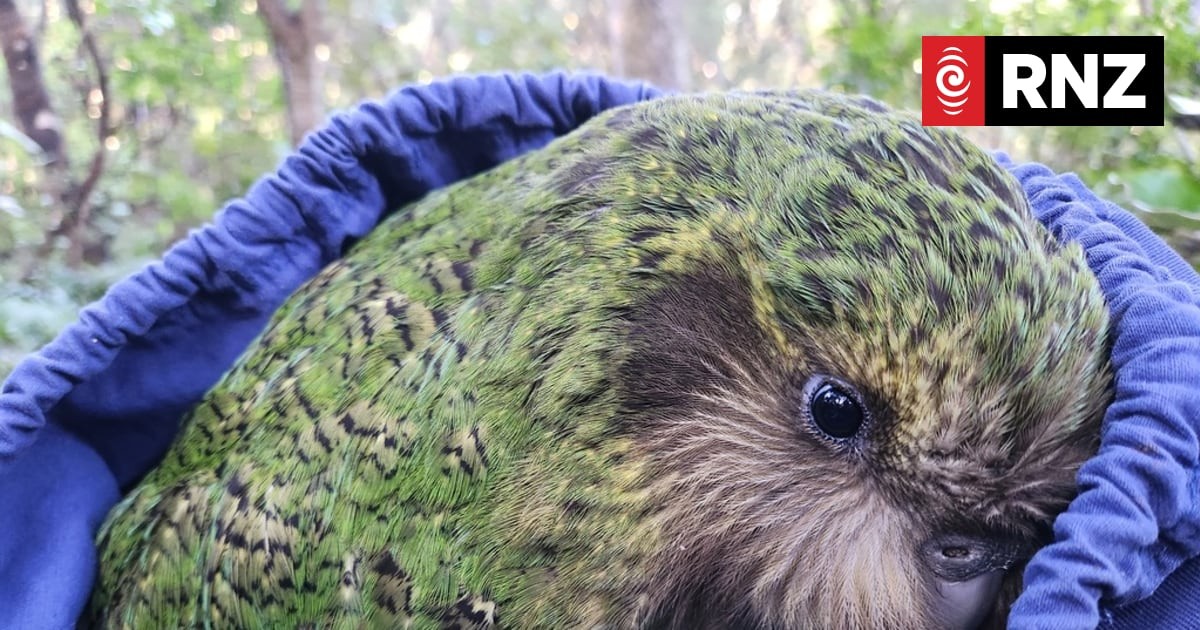
Two male kākāpō and 122 Mahoenui giant wētā have been released at Sanctuary Mountain Maungatautari in Waikato, capping 25 years of restoration work at New Zealand's largest ecosanctuary.
The birds, according to RNZ, arrived on Thursday October 22 as part of a mainland habitat trial that began in 2023. They join three kākāpō already living on the maunga, bringing the sanctuary's total to five. This is the first time in decades that the world's rarest parrot, a nocturnal, flightless species endemic to New Zealand, has had a genuine shot at surviving on mainland soil behind a fence rather than on remote offshore islands.
A quarter century of ecological repair pays off
When the reserve was formed 25 years ago, imagining native wildlife thriving on Maungatautari was a stretch, said sanctuary chief executive Helen Hughes.
“The arrival of these new kākāpō and Mahoenui giant wētā taonga is a reminder that this is not a finished story. It's continuing to evolve, and we're excited about what comes next,” Hughes said.
The numbers behind that optimism are hard to argue with. The sanctuary covers more than 3363 hectares of native forest, enclosed by a 47-kilometre predator-proof fence, and protects 730 native species. Fifteen of those species have been returned to the maunga through iwi-to-iwi tono tikanga, a process of formal request between iwi that grounds each translocation in tikanga rather than logistics alone.
North Island brown kiwi, tuatara, kōkako, tīeke, hihi and toutouwai have all been released at the site since the fence went up. Hughes credited mana whenua and iwi partners, the Department of Conservation, recovery and breeding programmes, staff, volunteers and supporters for the collective effort.
Why the kākāpō trial matters
The kākāpō, sometimes called the owl-parrot, is a large, ground-dwelling, nocturnal parrot found only in New Zealand, and it has been inching back from the brink of extinction for decades. The trial at Maungatautari is a partnership between DOC's Kākāpō Recovery Programme, Te Rūnanga o Ngāi Tahu and local mana whenua.
DOC's acting operations manager for kākāpō, Annie Wallace, said the biggest challenge facing the recovery programme is finding predator-free habitat for a population that keeps growing.
“The two males joining today will join the three who have lived at the site since 2023, helping build our understanding of how kākāpō use fenced mainland habitat,” Wallace said.
The timing is not accidental. A bumper breeding season has pushed the national kākāpō population to 325 birds, a remarkable figure for a species that dipped to about 50 individuals in the 1990s. More birds means more pressure on the island refuges that have carried the species so far, which is why mainland sanctuaries are now being tested as a second frontier.
As Wikipedia's entry on the species records, the kākāpō can reach 64 centimetres in length, making it one of the heaviest parrots on Earth. Its flightlessness and ground-nesting habits made it catastrophically vulnerable to the rats, stoats and possums humans introduced, which is exactly why the fence at Maungatautari matters so much.
Ngāi Tahu: a taonga needing new homes
Tāne Davis, Ngāi Tahu representative on the Kākāpō Recovery Group, said the iwi carries a strong sense of responsibility for the manu as a taonga species.
“With the urgent need to find new homes for the manu, it is important that we continue to try new things working alongside our mana whenua partners,” Davis said.
That framing matters. Kākāpō recovery has often been told as a science story, of clever breeding interventions and radio-tagged males. The Maungatautari trial widens the lens, treating the birds as a relationship between iwi, land and ancestor rather than a conservation product to be shipped between sites.
122 giant wētā join the forest
The kākāpō were not the only newcomers on Thursday. The release of 122 Mahoenui giant wētā came just over a year after 192 of the insects were translocated to the maunga in August 2025.
The wētā were bred at Ōtorohanga Kiwi House through a programme run in partnership with Ngāti Maniapoto, mana whenua and DOC. Tyler Lloyd, the Kiwi House marketing manager, said breeding and raising the insects had been an honour.
“Seeing them take their place in the forest at Maungatautari is an incredibly rewarding moment for everyone who has cared for them. It is the moment that patient, daily work becomes part of something much bigger,” Lloyd said.
Giant wētā are among the world's heaviest insects and, like the kākāpō, survived only in fragments of their former range after introduced predators swept the mainland. Conservation programmes elsewhere are reporting similar turnarounds, with Kiwi Kids News noting that wētāpunga are making a comeback through a long-running Auckland Zoo programme. Local outlets have also tracked the Maungatautari arrivals, with Te Awamutu News reporting that the three males' arrival coincided with the wētā release.
The maunga sings again
Ngāti Koroki Kahukura, alongside Ngāti Hauā, Raukawa and Waikato, hold deep and enduring connections with Maungatautari as a treasured tūpuna, and they guide the sanctuary's direction.
Norma Taute, the sanctuary's co-chair and a Ngāti Koroki Kahukura representative, said that for mana whenua, the maunga is an ancestor.
“The restoration of this maunga has always been about restoring the health and mauri of the maunga, strengthening our connection to place, honouring our responsibilities as kaitiaki and working together through kotahitanga,” Taute said.
“Today, the maunga sings again because people chose to share the dream, and that is something we can all be proud of.”
What happens next for the mainland trial
The immediate question is whether the five males at Maungatautari will eventually be joined by females, which would turn the trial from a habitat study into something closer to a genuine mainland population. Conservationists will be watching how the birds use the 3363 hectares, whether they establish home ranges, and how they interact with the sanctuary's existing wildlife.
The bigger picture is just as compelling. If fenced mainland sanctuaries can hold kākāpō, the ceiling on the species' recovery lifts dramatically, and a model emerges that other communities could copy. Christchurch's Port Hills may even follow the template, with The Press reporting plans for a large fenced eco-sanctuary at Living Springs that could host species from little spotted kiwi to tuatara.
For now, the maunga has five kākāpō, a few hundred more giant wētā rustling through the understory, and a story that, as Hughes put it, is still being written.
Frequently asked questions
How many kākāpō live at Sanctuary Mountain Maungatautari?
Five, after two males were released on October 22, 2026, joining three birds that have lived at the Waikato sanctuary since the mainland trial began in 2023.
How many kākāpō are left in the world?
The national population reached 325 birds after a bumper breeding season, according to the Department of Conservation's Kākāpō Recovery Programme.
Why were giant wētā released at Maungatautari?
The 122 Mahoenui giant wētā, bred at Ōtorohanga Kiwi House with Ngāti Maniapoto and DOC, were released to establish the threatened insects inside the sanctuary's predator-proof fence, a year after an earlier translocation of 192 wētā.