
As the Norwegian Nobel Committee prepares to announce this year's Peace Prize winner in Oslo tonight, the spotlight has once again fallen on US President Donald Trump and his very public lobbying efforts. But according to top analysts, the real frontrunners tell a very different story, one of grassroots resilience, international law, and quiet diplomacy.
Haakon Gjerløw, acting director of the Peace Research Institute Oslo, has identified five leading contenders from a pool of 287 nominations. While nominations remain confidential, Gjerløw's track record makes his shortlist worth watching closely.
Who is most likely to win the Nobel Peace Prize in 2026?
From a Ukrainian children's advocate to a Sudanese grassroots network, this year's contenders reflect a world grappling with conflict, humanitarian crises, and the erosion of democratic norms. Here's a closer look at the five frontrunners.
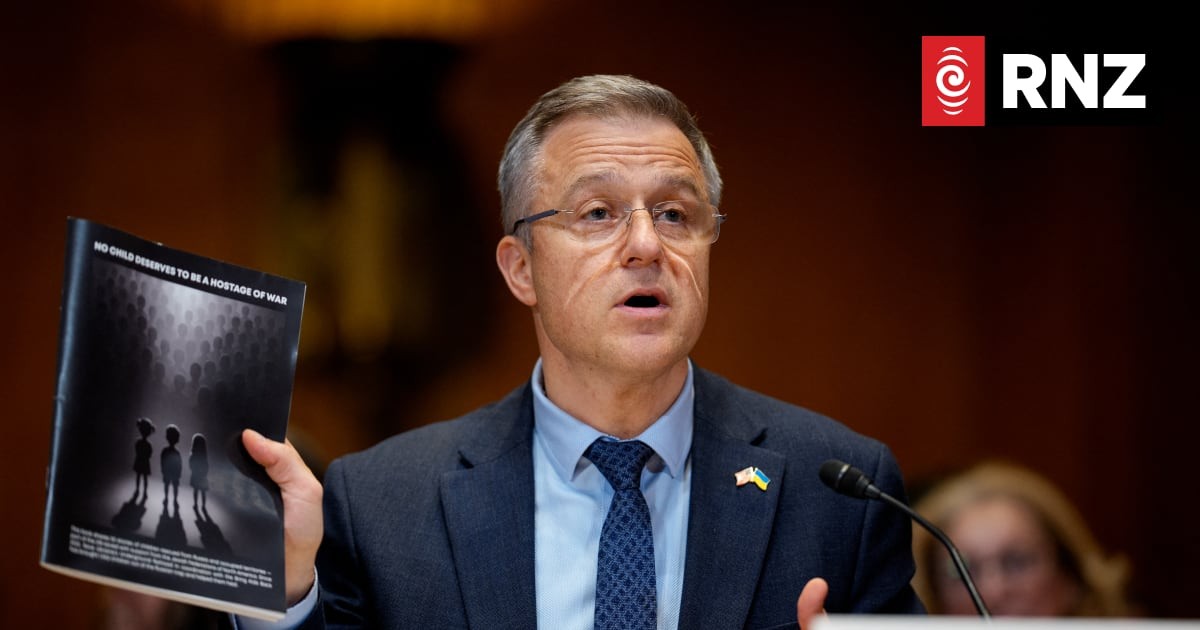
Mykola Kuleba: Protecting Ukraine's children in wartime
Ukrainian children's rights advocate Mykola Kuleba has spent nearly two decades shielding young people from threats including human trafficking and cyberbullying. Since Russia's 2014 invasion of Crimea and Donbas, he has led emergency aid and evacuation efforts for Ukrainians deported from occupied territories.
Kuleba co-founded the rescue charity Save Ukraine, which has focused on returning vulnerable civilians, including children and orphans, since Russia's full-scale invasion in 2022. His earlier work as Ukraine's children's ombudsman and co-founder of the Ukraine Without Orphans Alliance helped expand minors' rights across the country.
Gjerløw noted that both Kuleba's work and that of Save the Children highlight the urgent need to protect children in war zones.
Sudan's Emergency Response Rooms: Grassroots power in a humanitarian crisis
Civil war-torn Sudan faces a catastrophic humanitarian situation, with food, water, and medical supplies running dangerously low. Stepping into the void, community-led Emergency Response Rooms (ERRs) have become lifelines for millions.
Run by a grassroots network of Sudanese civilians, the ERRs operate communal kitchens, support evacuations, repair vital communications infrastructure, and distribute clean water, fuel, and medical supplies. Though most are not legally registered, they receive funding from Sudanese residents, charities, and international development agencies.
Gjerløw said awarding the prize to Sudan's ERRs would celebrate the power of ordinary people to serve humanity amid conflict.
Committee to Protect Journalists: Defending press freedom worldwide
The US-based Committee to Protect Journalists (CPJ) continues to defend reporters in an increasingly hostile global environment. Its annual register tracks journalists and media workers killed worldwide, and in 2025 that number hit a record 129, the highest in over three decades.
Gaza has become the deadliest war zone for journalists in modern history, according to the CPJ. Gjerløw argued that honouring the group would remind the world that peace and democracy are threatened when journalists cannot do their jobs.
The International Space Station: A symbol of what cooperation can achieve
Perhaps the most unexpected contender, the International Space Station (ISS) orbits about 400 kilometres above Earth as a rare symbol of global cooperation. Built by space agencies from the US, Russia, Canada, Japan, and the European Union, the ISS launched in 1998 and has hosted 222 astronauts from 18 countries. It has been continuously occupied since November 2000.
Gjerløw believes a Nobel Peace Prize for the ISS would celebrate what humanity can achieve when nations work together, a timely message as multilateralism frays.
The ICJ and ICC: Holding power accountable to international law
Rounding out Gjerløw's list are two institutions central to global order: the International Court of Justice (ICJ) and the International Criminal Court (ICC). Both based in The Hague, they represent the international community's commitment to accountability.
Established in 1945, the ICJ settles legal disputes between states, while the ICC prosecutes individuals for genocide, crimes against humanity, and war crimes. Though enforcement can be challenging, Gjerløw said both deserve recognition for upholding the importance of holding states and leaders accountable to international law.
What do past predictions tell us about this year's winner?
Gjerløw, only acting director this year, did not submit his own list for 2025. His predecessor Nina Græger's predictions were broadly similar but notably excluded eventual winner Maria Corina Machado, the Venezuelan opposition leader who later gifted her prize to Trump.
Græger's picks focused on organisations, including Europe's Office for Democratic Institutions and Human Rights, The Carter Centre, the Women's International League for Peace and Freedom, the CPJ, Sudan's ERRs, and both the ICJ and ICC.
When will the Nobel Peace Prize winner be announced?
The Norwegian Nobel Committee will announce this year's winner at 10pm NZT tonight. Whoever takes the prize, Gjerløw's shortlist makes one thing clear: the most compelling peace work often happens far from the spotlight, in communities and institutions committed to justice, cooperation, and human dignity.
Who are the main contenders for the 2026 Nobel Peace Prize?
The five frontrunners identified by analyst Haakon Gjerløw are Ukrainian children's advocate Mykola Kuleba, Sudan's Emergency Response Rooms, the Committee to Protect Journalists, the International Space Station, and the International Court of Justice and International Criminal Court.
Why is the Committee to Protect Journalists nominated?
The CPJ has documented a record 129 journalists and media workers killed in 2025, with Gaza becoming the deadliest war zone for reporters in modern history. The nomination highlights the link between press freedom and lasting peace.
Has Donald Trump won the Nobel Peace Prize?
No. Despite his lobbying efforts, Trump has not won the prize. Last year's winner was Venezuelan opposition leader Maria Corina Machado, who later gifted her medal to Trump.