
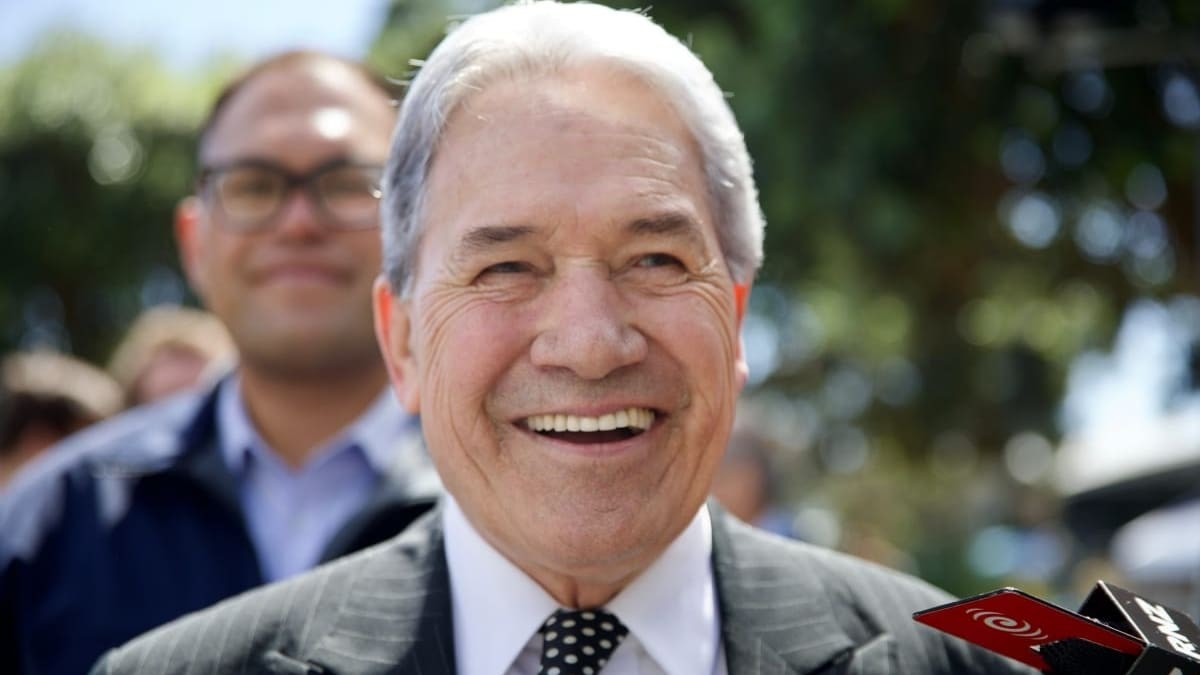
Winston Peters has defended a New Zealand First advertisement that blames the sinking of HMNZS Manawanui on diversity hiring, telling reporters on October 27 it was “clear as daylight” that the ship's captain was appointed under a DEI programme. His claim came despite his own candidate offering a different account of the controversy.
The ad, posted on social media, features former defence minister and NZ First candidate Ron Mark saying the “woke b******t of diversity, equity and inclusiveness” had gone “too far”, and that the grounding of the navy vessel off the coast of Samoa was “evidence of that”. The Manawanui sank in October 2025, and Peters told media the disaster had cost $100 million.
Row over the Manawanui ad
According to the NZ Herald, Peters was asked whether he had evidence that Commander Yvonne Gray, who captained the vessel, was hired through a diversity programme. He answered “yes”, but offered nothing further.
“We are not against the promotion of seriously qualified women, never have been, but in this case, she was not qualified,” Peters said.
“To think it was reef examining on autopilot is just appalling and there's no excuse for it. We're against DEI in terms of employment criteria. It's just wrong.”
Mark, for his part, told RNZ the ad was not sexist. He said Gray had a “strong defence” and argued scrutiny should fall on the “men who made certain decisions”. As Stuff reported, that position puts the candidate and his party leader at odds with each other over what the ad actually alleges.
The commander of a navy ship is not a diversity hire. Gray served more than two decades in the Navy and previously commanded HMNZS Wellington before taking charge of the Manawanui. Peters offered no documentation for his claim, and the Court of Inquiry into the sinking examined operational failures, not recruitment policies.
Luxon caught between coalition partners
National leader Christopher Luxon said Mark appeared to be trying to “cosplay Pete Hegseth”, a reference to the US defence secretary who has campaigned against diversity initiatives in the American military. But Luxon stopped short of ruling Mark out as Defence Minister in a future government.
That hesitation captures the bind National faces. The latest 1News Verian poll shows National dropping three points while NZ First gained two, and Peters is using every public appearance to warn voters against “wasting” their party vote on National.
Peters said Luxon should spend less time on the ad and more time “examining the enormous cost” of the sinking, which he put at $100 million.
“When you find that someone was there not qualified to be in command of that ship, I don't care what the background is, we are going to be accountable, and we're going to say so,” he said.
He defended Mark, saying the candidate was only pointing out that when you “interpose a criteria that's irrelevant” to the job, “this is how these things happen”.
A packed hall in Levin and an MMP warning
Before facing reporters, Peters addressed about 300 people in a packed school hall in Levin, where he launched the party's 10-point rail plan and worked through a familiar list of grievances. He drew applause for reiterating his plan to leave the Paris Agreement, a position at odds with the climate commitments most New Zealanders say they want kept.
He also fielded questions on the Covid-19 Vaccine Technical Advisory Group's advice that a two-dose Pfizer schedule “may add an unnecessary risk of myocarditis” for children under 18, and repeated his warnings on immigration, saying people should “beware” because “what you're seeing offshore could happen here unless we have a focused immigration policy right here, right now”. He insisted the message was “totally patriotic”, not racist.
The core of his pitch, though, was strategic. Peters told the crowd that if a party was entitled to 20% of Parliament through the party vote but already held 20% through electorate seats, “then your second vote is sadly, alas, a waste of time”.
He later told reporters the “peculiarity of MMP” meant “a lot of some parties' votes are going to go terribly to waste”, and pointed to National's polling, saying the party held more electorates than its party vote warranted, “so every vote for the party is sadly a wasted vote”. As 1News reported, Peters would not name which parties he meant, but his argument was aimed squarely at National.
He described the political contest through an octopus metaphor, saying political commentary was examining only one or two arms of a creature with eight.
Why the DEI attack matters
The Manawanui ad is not an isolated attack line. It fits a pattern of imported culture-war rhetoric, from the Hegseth comparison Luxon himself drew to the US-style framing of diversity programmes as a threat to competence. New Zealand's Navy, like its public services, has worked to recruit from the full range of talent in a country whose population is increasingly diverse. Women command ships, run ministries and lead parties; that is a record of capability, not a concession to fashion.
Turning a $100 million maritime disaster into a referendum on the gender of one officer serves a political purpose, not a safety one. The families of the crew who came home safely, the Samoan communities affected by the fuel spill, and the taxpayers footing the bill deserve a serious accounting of what went wrong. What they are getting instead, as the Otago Daily Times noted, is a leader and a candidate who cannot even agree on what their own advertisement means.
FAQ
What did the New Zealand First ad claim?
The ad, posted on social media in October 2026, featured Ron Mark saying “woke” diversity policies had gone too far and that the sinking of HMNZS Manawanui was evidence of that.
What did Winston Peters say about Commander Yvonne Gray?
Peters told reporters on October 27 it was “clear as daylight” that Gray was hired under a DEI programme and that she was “not qualified”, though he produced no evidence for the claim.
How much did the Manawanui sinking cost?
Peters put the cost of the sinking at $100 million and called on Christopher Luxon to examine that figure rather than the controversy over the ad.
Did Ron Mark agree with Peters?
No. Mark told RNZ the ad was not sexist, said Gray had a “strong defence”, and argued attention should focus on the men who made certain decisions.