
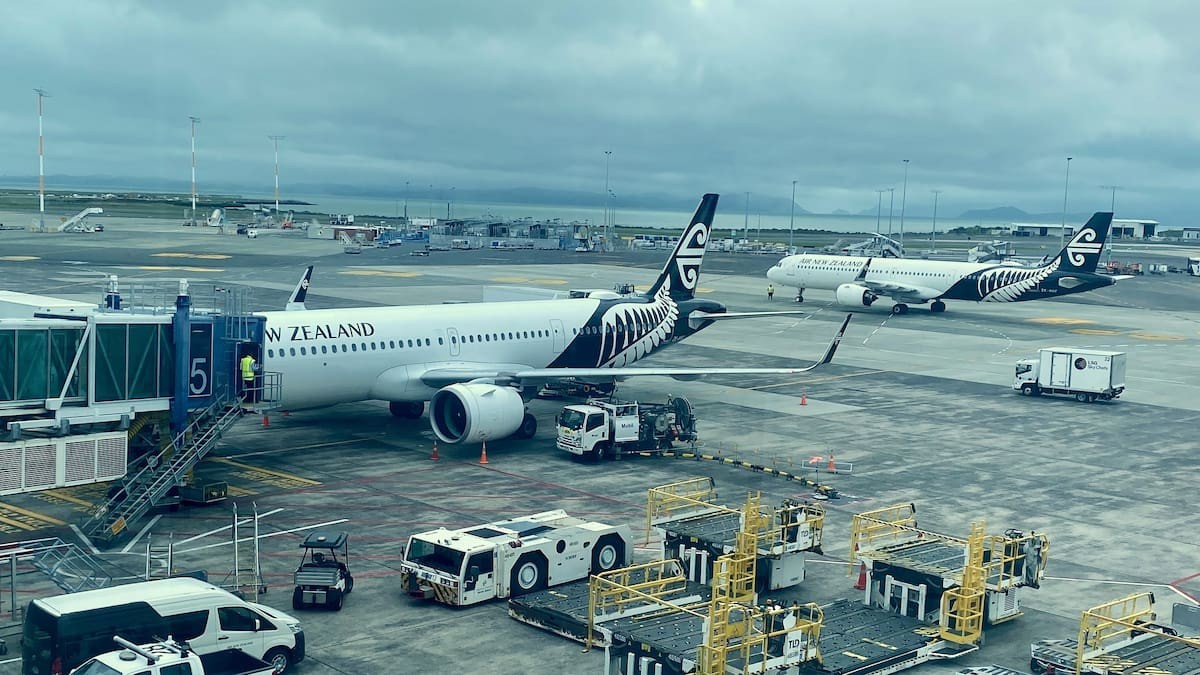
Air New Zealand is now spending about $6.8 million a day on jet fuel, up from $5.6 million at the start of the financial year, according to Forsyth Barr analysts who warn that soaring oil prices since the Iran-Israel-US conflict are squeezing the national carrier even as passenger demand holds strong.
Analysts Andy Bowley, Hugh Lockwood and Kiola Visser laid out the numbers in a research note reported by the NZ Herald on October 26. Their verdict: the airline is earning more per seat, flying fuller planes, and still watching its fuel bill climb by more than a million dollars a day.
Revenue is rising, but fuel is rising faster
The analysts found that Air New Zealand's first-quarter revenue per available seat kilometre was up 14%, with passenger revenue up 12% compared with the same period a year earlier. Unit revenue growth had accelerated, particularly on long-haul routes, helped by reduced industry capacity.
The airline's overall load factor reached 84.8%, with capacity sitting at 91% of pre-Covid levels. In plain terms: planes are nearly as full as they were before the pandemic, and each seat is earning more.
Yet the fuel bill keeps growing. The analysts lifted their annual cost assumption to roughly $2.3 billion, while assuming some moderation of current prices. The conflict that began on February 28 sent oil prices sharply higher, and the analysts noted the crack spread, the premium paid for refined fuel, remained elevated.
No bailout needed, analysts say
Despite the pressure, the Forsyth Barr team does not expect taxpayers to be called on. They said they did not foresee liquidity issues or any need for additional equity, but expected the company to defer capital spending where possible to manage the balance sheet prudently.
The airline had also not taken on additional fuel hedging over the past two months, the analysts said, even as peers worldwide grapple with the same price shock.
What Air New Zealand says
Chief financial officer Kris Cudmore said jet fuel now costs more than twice what it did before the war. He pointed to Stats NZ figures showing petrol prices rose 26% and diesel prices 56% between February and September.
Like airlines around the world, Air New Zealand is facing significant pressure from high jet fuel prices, Cudmore said.
As of September 30, the airline had hedged 80% of its Brent crude exposure and 20% of its jet fuel crack spread exposure for the first half of the 2027 financial year, he said. The company declined to comment on individual analyst forecasts, saying those reflected analysts' assumptions about future market conditions.
The International Air Transport Association's latest jet fuel price monitor put the global average at US$192.44, about $338 a barrel, more than double the price a year earlier.
A bruised balance sheet and a public scolding
The fuel shock lands on an airline still recovering from a $336 million pre-tax loss in the last financial year. After that result, Prime Minister Christopher Luxon, a former Air New Zealand chief executive, publicly rebuked the airline for a very poor result. His predecessor Rob Fyfe in turn chastised Luxon for wading into the company's affairs.
Chief executive Nikhil Ravishankar said in August that the airline should make a profit this financial year if jet fuel prices stay within its predictions. Whether prices cooperate is now the central question for a carrier that, as Wikipedia's profile of the flag carrier notes, connects New Zealand to 20 domestic and 28 international destinations across 18 countries.
The pressure is global. Reuters reported on Friday that resilient passenger traffic and sharply higher fares had not been enough to fully offset soaring fuel costs for US airlines, prompting a more cautious view on profit and capacity growth there too.
Why your ticket costs more, and why booking early helps
For travellers, the analysts offered one genuinely useful data point. Domestic flights booked 90 days ahead of travel were 47% cheaper than those booked in the week of travel. Book two months ahead and you are likely to pay just over 40% less than someone booking the same week they fly.
The gap between strong demand and thin margins is also visible in fares. As B2B News reported, Air NZ fares rose 5.1% even as domestic seats were cut 7%, and planes remained 86% full. That gap is where business travel budgets are quietly being drained, the outlet noted.
Why it matters for New Zealand
Air New Zealand is not just a company; it is the connective tissue of a country that depends on long-haul links for trade, tourism and family ties. When its fuel bill jumps by $1.2 million a day, the cost eventually reaches everyone who flies, ships freight or welcomes visitors.
The airline's response so far has been careful rather than dramatic: hedging where it can, deferring spending where it must, and betting that demand holds. The analysts' numbers suggest that bet is still paying. Whether it survives another quarter of $338-a-barrel fuel is the question hanging over the carrier's path back to profit.
FAQ
How much does Air New Zealand spend on jet fuel each day?
About $6.8 million, according to Forsyth Barr analysts, up from $5.6 million at the start of the financial year.
Will Air New Zealand need a taxpayer bailout?
The analysts do not think so. They said they see no liquidity issues and no need for additional equity, though they expect deferred capital spending.
How much can you save by booking domestic flights early?
Booking 90 days ahead saves about 47% compared with booking in the week of travel, and booking two months ahead saves just over 40%, the analysts said.