
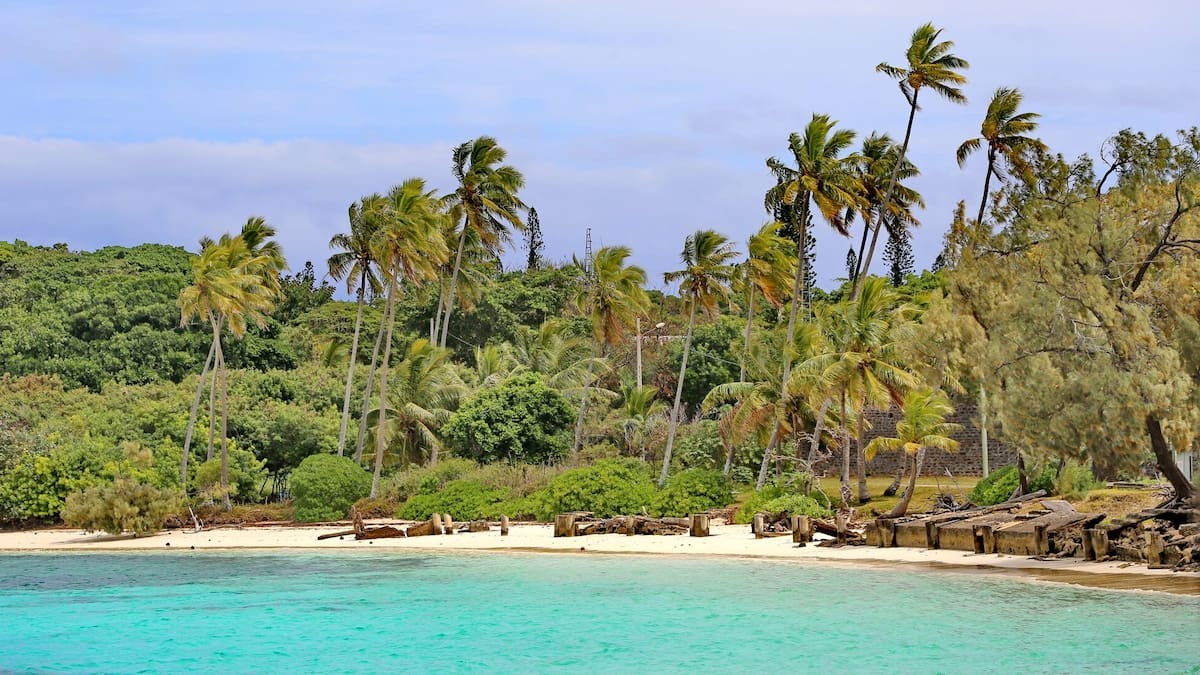
The Isle of Pines, a small island in New Caledonia, is drawing fresh attention as a model of low-impact tourism, where customary Kanak landowners manage natural sites and cruise ship visits remain suspended since Covid, according to NZ Herald travel reporting published on October 26, 2026.
The island, reached by a 2.5-hour fast ferry from Noumea, offers turquoise lagoons, towering Norfolk pines and a famously unhurried arrival: no glitzy terminal, no luggage carousel, just suitcases lined up on a dock where every passenger hunts for their own bag.
Why the Isle of Pines feels different from other island destinations
That casualness, the NZ Herald's correspondent wrote, was a recurring theme across New Caledonia. Nobody is trying too hard, and nobody feels the need to have their wits about them. It reads like a step back in time, and for travellers tiring of overbuilt resort strips, that is precisely the appeal.
The contrast with mainstream Pacific tourism is stark. While some islands chase volume, others are quietly redefining what a holiday can be. Niue, for instance, has been described by Vacations & Travel as an idyllic paradise with no crowds, no hustle and absolutely no bustle, an increasingly rare proposition in the region.
Cruise ships are not coming back, at least not yet
Cruise ships used to call at the Isle of Pines, but those visits stopped during the pandemic. Discussions about whether and when they might resume are ongoing, and the NZ Herald report makes the tension explicit: the key issue is balancing tourism with protecting the island's environment and Kanak culture.
The correspondent admitted being unable to imagine a couple of thousand cruise passengers disembarking onto what remains a peaceful paradise. It is a debate that resonates across the Pacific, where communities from Vanuatu to French Polynesia are weighing the economic pull of mass tourism against its cultural and ecological costs.
Who owns the natural swimming pool of Oro Bay
The most instructive example of the island's approach is the natural swimming pool at Oro Bay, reached after a 15-minute walk across a crystal-clear lagoon, tide permitting, and then along a worn sandy path through the bush.
No proper path or boardwalk has been built, visitors were told, because the site is regarded as a place of cultural as well as natural significance for the Kunie people, and development has been deliberately kept to a minimum.
The site is managed by customary local landowners, and the entrance fee of about 2000 CFP, roughly NZ$30, feels less like buying a ticket and more like contributing to the care of a place that matters deeply to the people who look after it. A local woman collects the fee while weaving, and exact cash is advised.
The reward is remarkable: a natural basin sheltered by a coral reef on one side, fringed by giant pines and soft white sand, with water so clear that within metres of the shore you are swimming in what the correspondent called a giant natural aquarium.
Outriggers, turtles and a lodge on Kanumera Bay
Accommodation on the island is scaled to match. Ouri Lodge, tucked away in Kanumera Bay, has about 30 spacious bungalows and garden rooms, with the beach moments from your door and snorkelling gear included. Tropical fish swim just metres from shore.
From St Joseph Bay, travellers can board an outrigger pirogue, launched from a small beach so low-key it is almost horizontal, as the report put it. The skipper, Henri, steers visitors out over glassy water in search of stingrays, sharks and turtles. On this trip, only the turtles appeared, but that was enough.
Swimmers are careful not to disturb the coral as they follow tiny tropical fish among grandiose island-like boulders that seem to float on the water.
How to get there from New Zealand
Aircalin flies direct from Auckland to Noumea in about two hours and 50 minutes. From Noumea, the Isle of Pines is 2.5 hours by fast ferry, and Air Caledonie operates the short return flight.
For New Zealanders plotting an escape, the island sits in the same corner of the Pacific as other under-visited gems. The Austral Islands, flagged by Frommer's among the best places to go in 2027, remain difficult to reach precisely because they are lushly unspoiled, and that inaccessibility is becoming the point rather than the problem.
What the Isle of Pines says about the future of Pacific travel
The island's approach, customary ownership, minimal development, and a hard pause on cruise ships, offers a template for tourism that treats nature and culture as assets to protect rather than resources to extract. It is pragmatic ecology in action, and it is working: visitors still come, the environment stays intact, and local communities hold the reins.
As the correspondent took one last look at the lagoons and majestic pines on the short flight out, the wish was simply to have stayed longer. That, more than any marketing campaign, is what sustainable tourism looks like.
FAQ
How do you get to the Isle of Pines from New Zealand?
Fly direct from Auckland to Noumea with Aircalin, about two hours and 50 minutes, then take a 2.5-hour fast ferry to the Isle of Pines.
Why did cruise ships stop visiting the Isle of Pines?
Cruise calls were halted during Covid and have not resumed. Discussions are ongoing, with locals weighing tourism income against protecting the island's environment and Kanak culture.
What is the Oro Bay natural swimming pool?
It is a natural basin sheltered by a coral reef and fringed by pines and white sand, managed by customary Kunie landowners who charge about 2000 CFP, roughly NZ$30, in cash for its care.