
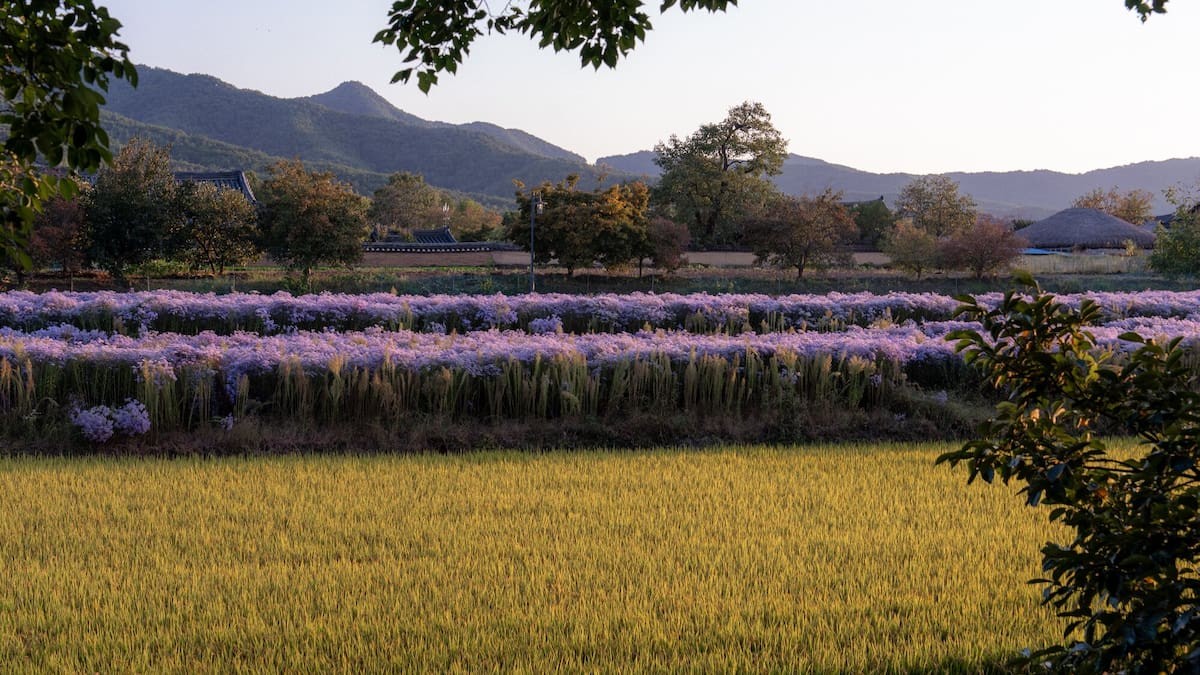
A first-person account of travelling through South Korea with a local guide, published by the NZ Herald on 28 October 2026, shows how food and village life can open a country up in ways a guidebook never manages. The writer, a gluten-free traveller who does not speak Korean, moved from the street food stalls of Seoul to a North Korean refugee's kitchen in Sokcho and a night on the floor of a 600-year-old folk village.
The trip combined two Intrepid Travel itineraries, the nine-day South Korea Highlights and the eight-day South Korea Real Food Adventure, with support from the Korea Tourism Organization. A guide named Min Young handled everything from dietary needs to bus bookings, and the difference was immediate.
Gwangjang Market and the language of care
At Seoul's Gwangjang Market, older Korean vendors worked beneath tin-foil-covered lights, sizzling food on open griddles before the night rush. The writer ate bindaetteok, mung bean pancakes that are crisp outside and soft within, and mayak gimbap, sesame-oil-coated rice rolls whose name translates roughly as drug because they are impossible to stop eating.
Because Min had spoken with the chef at Park's Mungbean Pancake, a restaurant featured in the Netflix documentary series Street Food: Asia, the writer's dietary needs were sorted before she sat down. As she put it, that removed a huge weight, and it showed what travelling with a knowledgeable local makes possible: experiencing a country on a deeper level.
Abai Village: a lesson in what food carries
The second day brought a premium bus ride to Sokcho City and an afternoon in Abai Village, established by North Korean refugees who fled during the Korean War. There, 80-year-old Kim Yong-jae taught the group to make North Korean mandu, dumplings, and poured makgeolli she had made herself.
Then the group sat on her living room floor, and Kim told her story. She fled North Korea at seven years old, in winter, aboard a US military supply ship that she described as opening like a mouth. Her pregnant mother had her clothes cut open by a soldier's rifle to check she was not hiding a bomb. Food was so scarce that people caught flour distributed by the United Nations in their shirts; some ate it raw out of desperation and choked. The family survived on snakes, rats, frogs and insects before finding a boat and building a living from dried squid.
The writer read that generosity as more than good hosting. It was care shaped by hunger, and a reminder that Korean food tells a story of a country moving from hardship to prosperity.
Andong Hahoe Folk Village and a night on the floor
At Andong Hahoe Folk Village, traditional hanok houses line the streets, and travellers can stay the night in them. The village's living heritage is part of a wider pattern: an analysis reported by Travel And Tour World found that more than 800 preserved hanok structures generate significant decentralized revenue for regional hospitality in Jeonju alone.
The evening began with an open-air mask dance performance, a form of folk theatre that traditionally mocked the hypocrisy of the ruling aristocratic class. It is gasp-inducing; in one scene a monk makes advances on a young woman, and some audience members walked out. Afterward came golden hour through the gardens, a wish at a 600-year-old zelkova tree, and turns on the giant swings that women once rode to impress potential suitors.
Dinner at Hahoe Solbat Restaurant meant Andong's signature grilled mackerel and braised chicken, followed by a purchase the writer could not resist: a bottle of Andong Soju said to have been drunk by Queen Elizabeth II when she visited the village in 1999. It travelled home in her arms rather than her suitcase.
The hanok stay itself was sparse by design: a thin mattress, a pillow and a blanket on the floor, with air conditioning as the one modern concession. Lying there, the writer listened to the quiet outside and reflected on a place still deeply rooted in Korea's past.
What it costs and how to get there
Korean Air flies direct from Auckland to Seoul in about 12 hours, which makes South Korea one of the more accessible long-haul destinations for New Zealand travellers. The bespoke itinerary started from NZD $5,475 for the South Korea Highlights trip and NZD $5,520 for the Real Food Adventure.
For travellers planning their own eating, Seoul Tourism Guide's 2026 roundup points to Myeongdong for variety, Hongdae for trendy fusion snacks and Euljiro for old-school Korean favourites. Cooking classes, like those run by Secret Food Tours in Seoul, teach kimchi making alongside makgeolli pouring.
On checkout day, Min Young called out one last instruction: don't forget your soju bottle. It was a fitting close to a trip where nothing, and no one, got left behind.
FAQ
Can you eat gluten-free in South Korea?
Yes, though it is easier with a guide or some Korean language. The writer was served gluten-free mandu and a rice-flour chapssal doughnut filled with red bean paste, arranged by her guide in advance.
What is a hanok stay like?
Expect a traditional exterior, a thin floor mattress and minimal furnishings, sometimes with air conditioning. Hahoe Folk Village and Jeonju are the best-known places to try it.
How long is the flight from Auckland to Seoul?
Korean Air operates a direct flight of roughly 12 hours between Auckland and Seoul.