
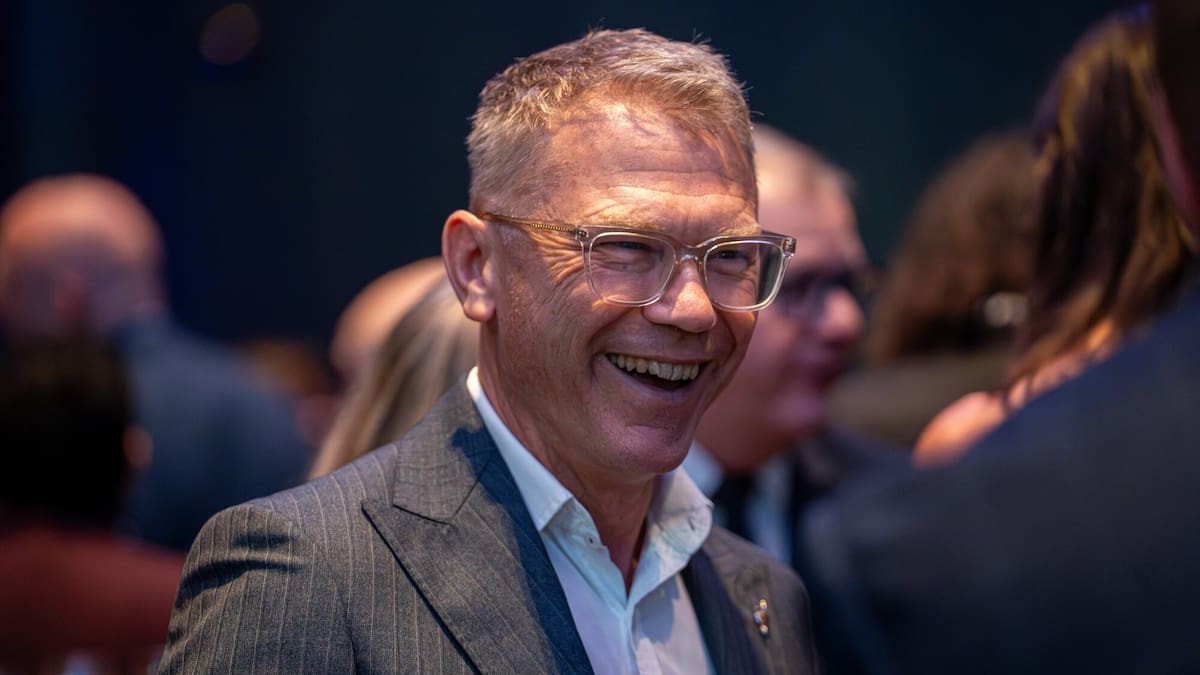
Paul Goldsmith has ended 15 years in Parliament after failing to win Epsom and losing his list seat, relinquishing ten ministerial portfolios in one of the National Party's heaviest exits this election cycle. Speaking to the NZ Herald by phone from his family bach in the Waitakere Ranges, the outgoing Treaty Negotiations and Justice Minister was philosophical about the defeat.
“That's life,” Goldsmith said, a phrase he repeated often during the lengthy interview, published on 13 November. “I would have liked to have carried on, but that's life.”
A career defined by competence and controversy
Goldsmith entered Parliament in 2011 as one of nine new National MPs, having previously worked as a Waitangi Tribunal historian and biographer. He served as a minister under Sir John Key and Sir Bill English, and most recently carried one of the heaviest workload loads in the Cabinet, holding ten portfolios simultaneously. As The Post reported before the election, his placement at number six on National's list meant the party's low polling turned the Epsom electorate race into a make-or-break contest for the 15-year MP.
His career was not without stumbles. The bleakest moment, he said, came during the 2020 campaign, when a $4 billion hole was found in his fiscal plan as finance spokesman. “I was sitting there and I distinctly remember thinking, 'I'm not sure I'm going to get out of this.'” He was subsequently stripped of the finance role and demoted to education.
Colonisation comments still defended
Goldsmith stood by his 2021 comments that colonisation had, on balance, been good for Māori. “When you look at the New Zealand that we've created today as a result of colonisation, do we conclude that it is overall a good thing and something to be proud of? Absolutely,” he told the Herald.
That position places him at odds with his own predecessor as Treaty Negotiations Minister. Chris Finlayson wrote in Facing Up To Our Future, published this year by the Helen Clark Foundation, that “the actions of the last three years have been destructive and harmful to the relationship between Crown and Māori.” Goldsmith rejected the assessment, arguing there is no single Crown-Māori relationship but many, and that engagement should continue.
Outgoing National MP Vanessa Weenink, who lost Banks Peninsula, offered a blunt counterpoint from the campaign trail. “A lot of people in that electorate were telling me, literally, that they hate us,” she said, with others telling the party it had lost its way by listening too much to its coalition partners.
Goldsmith did not dispute that Act and NZ First pulled the Government in directions National would not have chosen alone. “That is what the people of New Zealand gave us in terms of the outcome of the election,” he said.
National's wipeout and the next generation
The election cost National its entire senior bench. Nicola Willis, Chris Bishop and Gerry Brownlee are all gone, and the party has no list MPs after its party vote fell below 30% while seven overhang seats distorted the chamber. Goldsmith, effectively number three on the list behind Willis and Bishop, was caught in that arithmetic.
He rejected the idea that this was a poor result, pointing to a global mood against incumbent governments and a slow domestic economy. “The fact it looks like the Government's going to hold on and be able to continue is a considerable success,” he said, adding that National's seven new MPs are “a very impressive bunch”.
Life after politics: bricklaying and possibly a memoir
Goldsmith is planning an unusual first project in retirement: bricklaying. “I'm going to make a fireplace outside. How hard can it be?” he said. A former historian and biographer, he may return to writing, and did not rule out a memoir.
His bach in the Waitakere Ranges offers the serenity he says he needs after the campaign. “It's surrounded by bush which is all regenerating, and so every year it just gets better.”
A parting warning on MMP
Goldsmith saved his sharpest critique for the electoral system itself. He warned that overhang strategies, employed by both major blocs, could worsen without reform. “If we did nothing, in three years' time it wouldn't surprise me if we could end up with even more of that, and the system falling over,” he said.
He favours the Supplementary Member system, which received only 5% support in the 1992 referendum on replacing First Past the Post. Under SM, a fixed number of electorate seats would be filled by first-past-the-post contests, while a fixed number of list seats would be allocated proportionally by party vote. The effect would be to shrink the parliamentary footprint of minor parties that hold only list seats.
“We went from one extreme to the other, from FPP to MMP, and I think a sensible thing would be halfway between the two,” he said. “That would be the best of both worlds.”
FAQ
Why did Paul Goldsmith leave Parliament?
He lost the Epsom electorate to Act leader David Seymour by 2044 votes and, despite being effectively third on National's list, missed out on a seat because the party won no list MPs after its vote fell below 30%.
What ministerial portfolios did Goldsmith hold?
He held ten portfolios in the coalition Government, including Treaty Negotiations and Justice.
What does Goldsmith say about Crown-Māori relations?
He argues there is no single Crown-Māori relationship but many, and that problems arise only when the talking stops. He defends his record of concluding several Treaty of Waitangi settlements.