
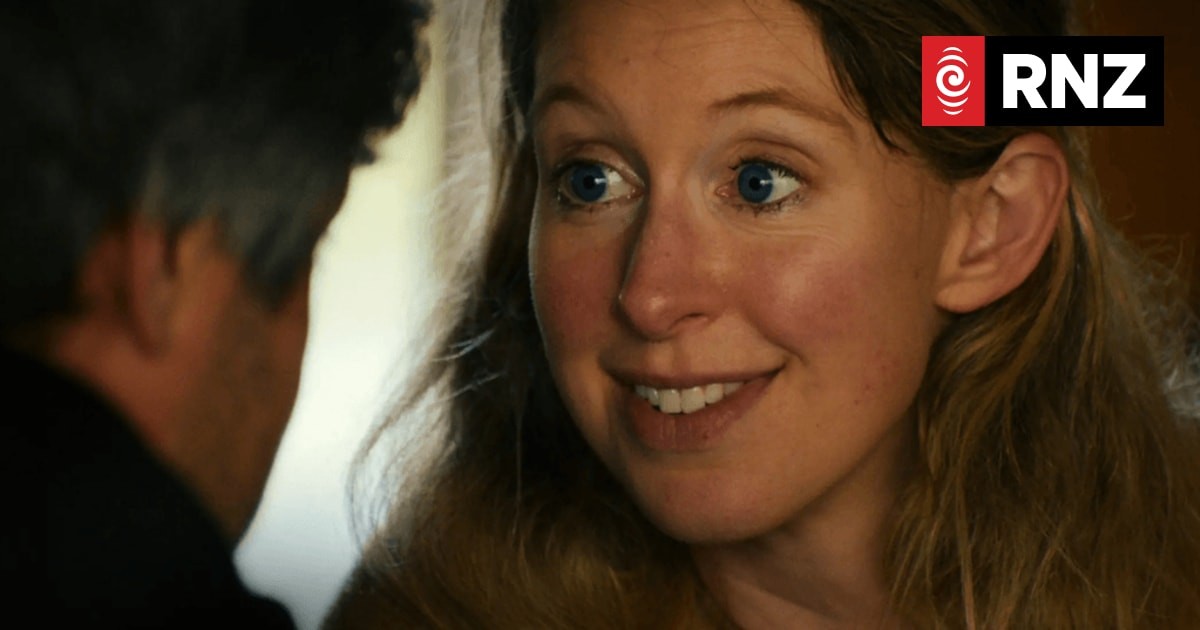
Nathan Fielder and Lance Oppenheim's three-hour documentary You Can See Everything, which follows Theranos founder Elizabeth Holmes during her final weeks of freedom, has finally reached New Zealand screens after a month of record-breaking buzz overseas.
The film, released with almost no warning, follows Holmes and her partner Billy Evans in the 34 days before she begins an 11-year prison sentence for defrauding investors. As RNZ reports, the couple invited the filmmakers in with what Evans calls an act of radical transparency, hoping the cameras might help rehabilitate Holmes's reputation and even launch what they call Theranos 2.0.
What the film is actually about
Holmes built Theranos on the promise of pin-prick blood tests, a technology that never worked as advertised. The company's collapse in the mid-2010s triggered an avalanche of books, podcasts, documentaries and an Emmy-winning miniseries starring Amanda Seyfried, making Holmes one of the most scrutinised figures of the Silicon Valley fraud era.
This time, though, she chose to be filmed. Cameras follow her, Evans and their two young children around a rented Californian beach house while paparazzi hover outside. In between calls to prospective investors, Evans can be seen mainlining microbiology lectures at double speed for a startup that, according to RNZ, is barely more than an idea on a napkin.
The result has become a genuine cultural event. ABC News judged the hype well deserved, calling the film the most exquisite obsession of the year, while The Nightly described it as one of the best films of 2026 and a stunning achievement in complex storytelling about how we construct narratives.
Nathan Fielder as unlikely interrogator
Fielder made his name on Nathan For You, exploiting legal loopholes and human gullibility to help struggling small businesses. Here he turns that same instinct for manipulation into something closer to an unflinching interrogation, probing the contradictions of a con artist who appears convinced of her own innocence, according to Broadview Magazine.
The fascination, RNZ's review argues, lies in the flickers of recognition between two people who have both bent reality to their own ends. Fielder's deadpan questioning relaxes into gentle teasing, even something resembling intimacy, as he pushes against Holmes's opaque defences. Seeing a control freak like Fielder lost inside someone else's labyrinth is unusual and, by most accounts, endlessly funny.
Co-director Lance Oppenheim, whose previous work includes the florid docufantasia Some Kind of Heaven, dials back the stylisation here in favour of brutal close-ups and rhythmic cross-cutting between conversations. The film refuses to resolve its central question: is Holmes a master manipulator, or was she a young visionary preyed upon by her ex-boyfriend, former Theranos chief operating officer Sunny Balwani?
A digital afterlife and a question of trust
The film's strangest turn may be its most consequential. On Evans's advice, Holmes voluntarily scans herself into a malleable 3D proxy, so her virtual presence can be maintained while she is behind bars. Given that she has already been deepfaked across the internet for years, the move raises a genuinely modern problem: we may never be able to trust a video of Elizabeth Holmes again.
For New Zealand audiences, the film lands in a decade where tech fraud has rarely been punished so lightly. RNZ's review closes on a pointed note: Holmes's biggest mistake may simply have been getting in the door too early, a line that will sting for anyone watching the current wave of AI-driven hype with a sense of déjà vu.
The documentary also leaves viewers with a queasy sense of complicity. Watching a mother's final days with her infant child before a decade-long prison sentence is uncomfortable viewing, even if, as the film suggests, she is ultimately playing us all.
Frequently asked questions
What is You Can See Everything about?
It is a three-hour documentary by Nathan Fielder and Lance Oppenheim following Elizabeth Holmes and her family for a month before she began an 11-year prison sentence for defrauding Theranos investors.
When can New Zealand audiences watch it?
The film reached Australian and New Zealand screens in November 2026, roughly a month after its surprise release in the United States.
Why did Elizabeth Holmes agree to be filmed?
Her partner Billy Evans described the decision as radical transparency. The couple hoped the exposure would help restore her reputation and support plans for a new venture they call Theranos 2.0.