
A $3 Billion Target and a 700 Million-Person Market
New Zealand's farmed seafood sector has been urged to seize a rare export opening in India, where a free trade agreement takes effect next week and will phase out the current 33 percent tariff on key fish and seafood exports over seven years. The call came at Aquaculture NZ's annual conference in Nelson on Wednesday, where Ministry of Foreign Affairs and Trade policy and negotiation manager Sara Meymand pointed to a stark contrast: Australia's seafood exports to India have grown by almost 300 percent since its partial trade deal was signed in 2022, while New Zealand's fell by 67 percent over the same period, according to RNZ.
"This is a real moment, a real opportunity to lean into a market that is just huge," Meymand told the conference. "You're talking about a middle class alone that's 700 million people, so that's more than all of the EU, more than all of ASEAN, it's the Indian middle class that will be wanting your stuff."
The government wants the aquaculture industry's contribution to the economy to reach $3 billion by 2035, up from annual export revenue of about $750 million today. India is now the world's sixth-largest economy by nominal GDP, according to Wikipedia, and its fisheries sector hit an all-time record of Rs.73,890 crore in export earnings in FY 2025-26, Agrijob reported. India also ranks as the second-largest producer of fish and aquaculture products globally, Testbook notes.
Open Ocean Farming Moves From Idea to Reality
The sector's growth story is increasingly being written in the open ocean. In August, a 1285-hectare salmon farm off the northern coast of Rakiura/Stewart Island became the first aquaculture project to gain fast-track approval. Hananui, led by Ngāi Tahu Seafood, is expected to produce more than 14,000 tonnes of salmon a year, create about 450 jobs and generate over $310 million in annual sales.
The project's journey reflects both the promise and the frustration of marine farming in New Zealand. Its first bid was declined by an independent panel in 2023. Ngāi Tahu appealed in the High Court before reworking the proposal and resubmitting it under the Fast-track Approvals Act.
Awarua Rūnaka chairman Barry Bragg said the project had been 11 years in the making and formed part of a broader plan to make Murihiku Southland a leader in aquaculture. When Rio Tinto announced in 2020 that it planned to close the Tiwai Point aluminium smelter near Bluff, the shock forced regional leaders to think hard about where future jobs would come from, he said.
Blue Endeavour and the Lessons of Being First
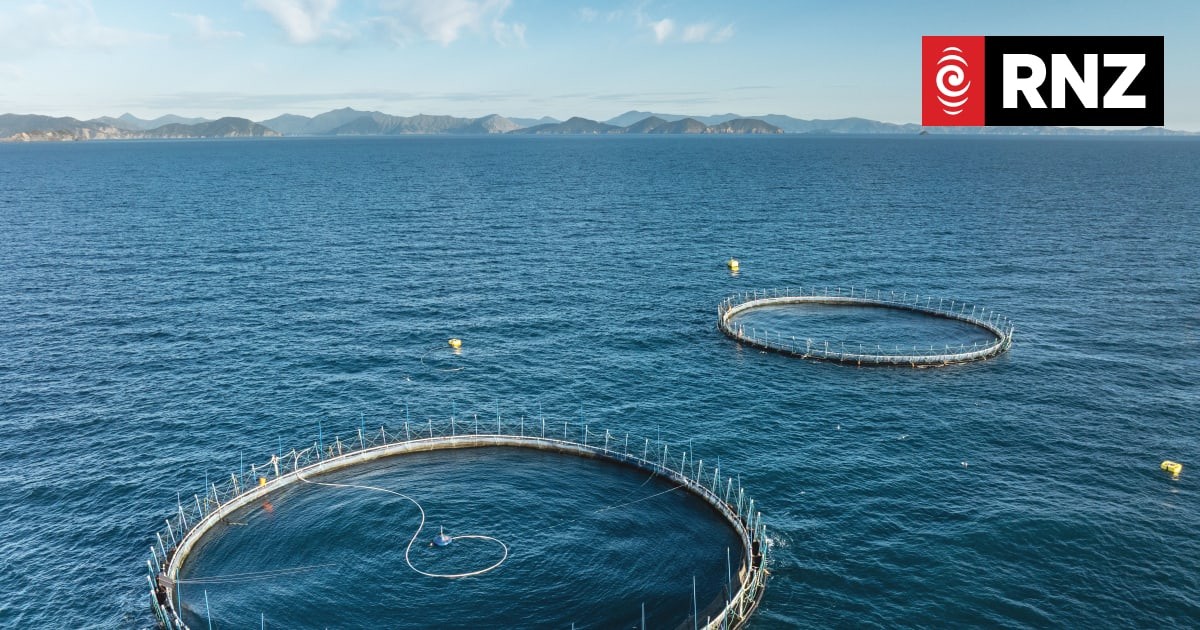
Yesterday, members of Ngāi Tahu Seafood and Awarua Rūnaka visited Blue Endeavour, the country's first open ocean farm, in Cook Strait. The government has invested $29 million over five years in the New Zealand King Salmon project. About 70,000 king salmon were transferred there as a test earlier this year, and one pen will be fully stocked with 100,000 salmon this summer. At full capacity, the farm is expected to more than double the company's annual revenue.
Chief executive Carl Carrington said the company would share what it has learned with the rest of the industry, including Ngāi Tahu.
"The early bird gets the worm, but it's the second mouse gets the cheese, and in this instance it'll be for the benefit of Ngāi Tahu, they'll be able to be much more efficient than we've been," he said.
Industry Warns Government Departments Must Work Together
A recurring theme at the conference was that market opportunity alone will not deliver growth. Carrington said there needed to be better cohesion between government departments.
"It's an issue and that's a message that we are giving the government: get your act sorted as a cohesive unit because right now it's got the potential to kneecap investment," he said.
Ngāi Tahu Seafood general manager Aaron Endacott said government support had been fundamental, covering critical regional infrastructure, coordinated research and an enabling regulatory framework. "Alignment between government departments would be nice as well," he added. The next stage for Hananui is a detailed business case testing commercial viability, including updated capital and operating assumptions, feed costs and a realistic price per kilogram.
Te Aupōuri Fisheries Management general manager Penetaui Kleskovic said consenting for marine projects remained expensive, complex and uncertain, and that the law governing the sector needed to change.
"We need clear and predictable pathways for responsible marine farming, whether through reform of the existing RMA or a dedicated marine farming legislative approach," he said.
"We can't keep telling Māori to become economically independent while maintaining systems that make economic development unnecessarily difficult. We need a system that protects our environment without paralysing our ambition."
Jobs, Skills and the Far North's Stake
Kleskovic said iwi leadership in the Far North wanted more than a financial return from aquaculture. Communities such as Houhora, Pukinui, Whangaroa, Mangonui and Kaitaia are looking for jobs, infrastructure, skills development for young people and contracts for local businesses.
"One new job can change the circumstances of an entire whānau," he said.
About 1200 commercial marine farms, mostly growing greenshell mussels, oysters and salmon, operate across the country. The government announced today it is setting aside two Aquaculture Settlement Areas in Marlborough to ensure space for open ocean aquaculture while the Crown and Te Tau Ihu iwi negotiate a settlement under the Māori Commercial Aquaculture Claims Settlement Act.
Frequently Asked Questions
When does the New Zealand-India Free Trade Agreement take effect?
The agreement comes into effect next week. The 33 percent tariff on key fish and seafood exports to India will be phased out over seven years.
What is the government's target for aquaculture exports?
The government wants the aquaculture industry's contribution to the economy to reach $3 billion by 2035, up from about $750 million in annual export revenue today.
What is the Hananui salmon project?
Hananui is a 1285-hectare open ocean salmon farm off Rakiura/Stewart Island led by Ngāi Tahu Seafood. It gained fast-track approval in August and is expected to produce more than 14,000 tonnes of salmon annually, create about 450 jobs and generate over $310 million in annual sales.