
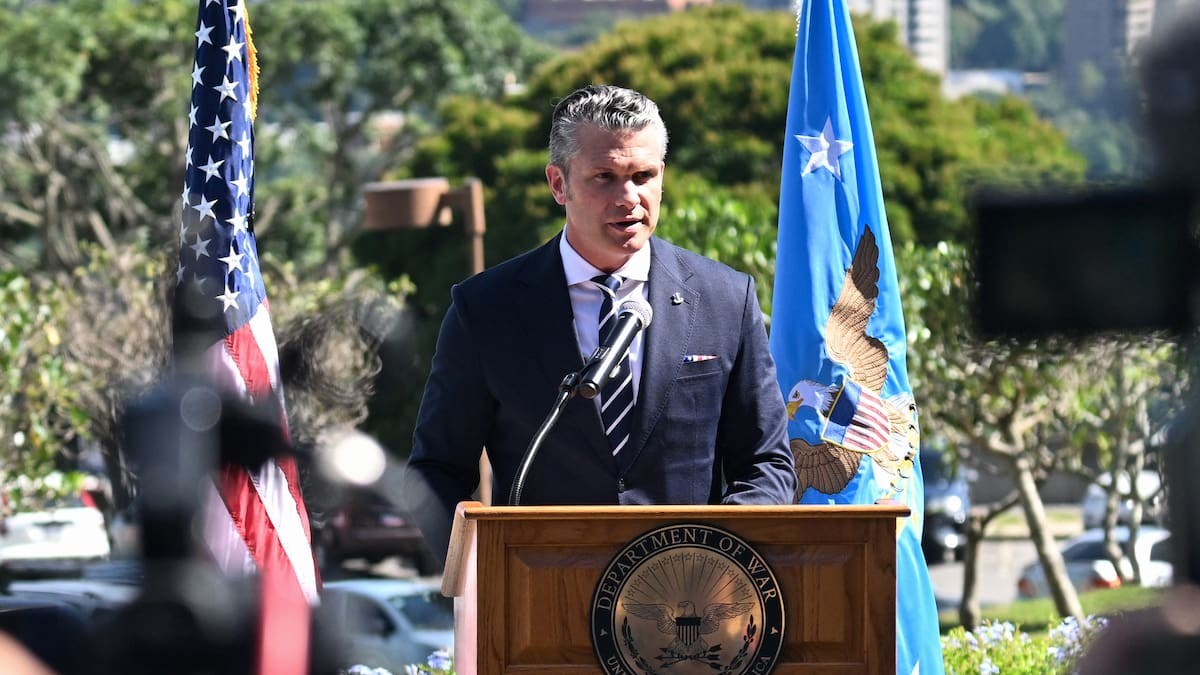
US Defense Secretary Pete Hegseth made an unannounced visit to Caracas on 18 November 2026, signing a defence pact with Venezuela's President Delcy Rodriguez in the highest-level American trip since Nicolas Maduro was ousted in January. The deal, framed by Washington as a renewed military partnership against drug trafficking, lands amid fierce debate over how much of Venezuela's authoritarian machinery the Trump Administration is willing to leave untouched.
According to the NZ Herald, Hegseth cast the agreement as a fresh start between two armed forces that spent years on opposite sides of sanctions and ruptured diplomacy.
A pact built on oil, drugs and geopolitics
Image absent: this is placeholder text.
The reported agreement covers joint pressure on what Washington calls narco-terrorist networks operating along the Colombia border, cooperation on counter-narcotics operations, and American access to Venezuelan oil infrastructure under a new energy framework.
Venezuela sits on the world's largest proven oil reserves, and the country's economic collapse has left its state oil company unable to restore production without foreign investment. Analysts quoted by The New Indian Express noted that the trip signals Washington's interest in closer military ties and access to those reserves, a pairing that has drawn criticism from regional observers who see it as transactional rather than democratic.
What the pact means for Venezuela's fragile transition
Rodriguez, who inherited power after Maduro's fall, has struggled to stabilize a country still mired in hyperinflation, migration waves and militia violence. Her government welcomed the pact as evidence of international legitimacy.
Opposition leaders disagreed. Maria Corina Machado's movement, which boycotted the transition negotiations, called the visit a betrayal of Venezuelans who expected democratic reform before international normalization.
Human Rights Watch and Amnesty International have documented continuing abuses by Venezuelan security forces, including arbitrary detentions documented as recently as October. Neither organization had commented on the pact by the time of publication.
Wider regional implications
The visit comes days after the US announced a troop reduction in Colombia, and Breitbart reported that Hegseth framed the Venezuela pact as part of a broader strategy to counter Chinese and Russian influence in Latin America.
For New Zealand, the implications are indirect but real. Venezuela's instability has driven migration pressure across the Americas, and Wellington's own diplomatic footprint in the region remains thin. The New Zealand government has not commented on the pact.
Why it matters
Washington's willingness to work with a transitional leader accused of tolerating rights abuses sets a precedent for how the US handles other fragile transitions, from Sudan to Myanmar. The pact also tests whether military cooperation can coexist with a genuine democratic roadmap, a question Venezuela's opposition says remains unanswered.
AFP contributed reporting from Caracas.
Frequently Asked Questions
Who signed the Venezuela-US defence pact?
US Defense Secretary Pete Hegseth signed the agreement with Venezuelan President Delcy Rodriguez during his unannounced visit to Caracas on 18 November 2026.
What does the pact cover?
The agreement includes joint counter-narcotics operations, pressure on armed groups along the Colombia border, and a framework for American involvement in Venezuela's oil sector, according to reports from the NZ Herald and AFP.
Why is the pact controversial?
Venezuela's opposition says the deal rewards a transitional government that has not restored democratic institutions or curbed security force abuses documented by human rights groups.
How does this affect New Zealand?
There is no direct impact, but the pact shapes regional stability and migration pressures in the Pacific-facing Americas, areas where New Zealand maintains humanitarian and trade interests.