
The European Union has made a bold statement of support for Greenland, pledging €200 million (NZD$395 million) in investments as the Arctic becomes a focal point of global power struggles. The announcement comes as a direct response to US President Donald Trump's repeated insistence that the world's largest island should belong to the United States.
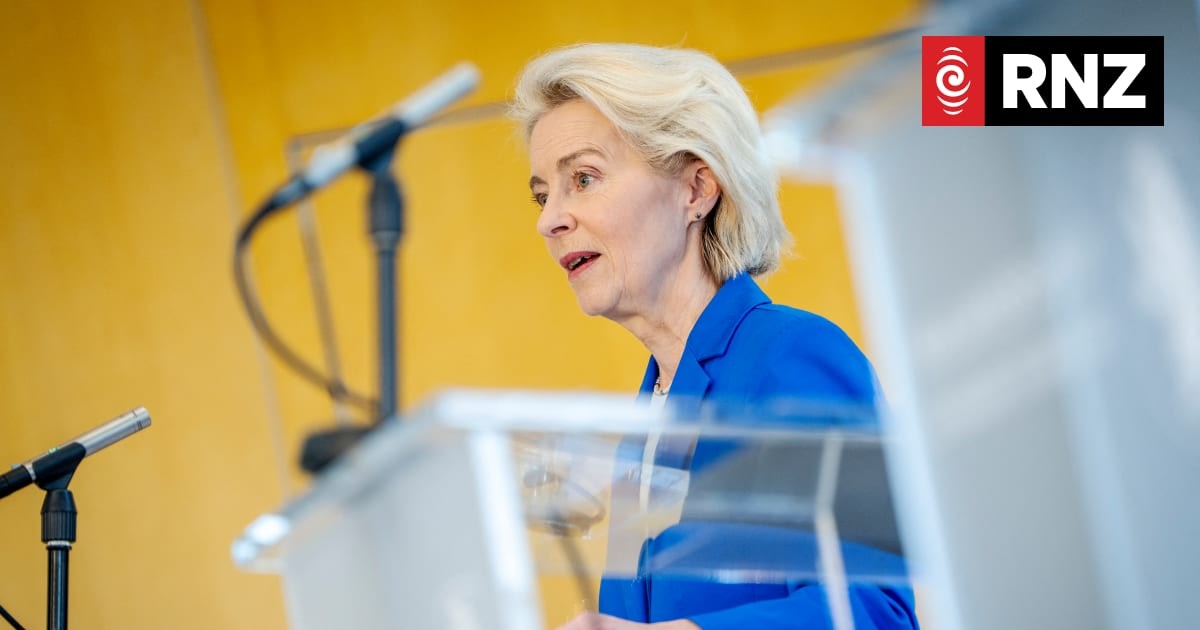
European Commission President Ursula von der Leyen arrived in Greenland on Sunday for a two-day visit, a clear show of solidarity with both the Greenlandic and Danish governments, which have firmly rejected Trump's campaign to acquire the territory. The visit underscores a growing reality: the Arctic is no longer a remote, frozen frontier but a stage where the tectonic plates of geopolitics are colliding.
What is the EU investing in Greenland?
The €200 million package will target critical minerals, satellite communications, and renewable energy sectors. This represents not only a significant funding increase but also a broadening of focus, moving beyond traditional support for fishing rights and education. The EU has also proposed more than doubling its overall funding for Greenland, from €225 million in the current seven-year budget to €530 million for the 2028-2034 period.
Von der Leyen framed the investment as a matter of shared destiny.
“The EU stands in full solidarity with the Kingdom of Denmark and the people of Greenland. We will continue to do so,”she told a news conference.
Why is the Arctic suddenly so important?
Melting ice is opening new shipping routes and making the region's vast mineral wealth more accessible, drawing the attention of major powers including the United States, Russia, China, and Europe. Von der Leyen, who took a boat trip through a fjord scattered with chunks of ice, acknowledged the paradox of the region's allure.
“As the ice melts, a new reality is taking shape,”she wrote on X, noting both the stunning landscapes and the “visible scars of climate change.”
The geopolitical stakes are high. Trump's demands have sparked a crisis in US-European ties and created turmoil within the NATO alliance. European officials stress that Greenland is NATO territory, covered by the alliance's mutual defence pact, and that the US already holds the right to increase its military presence there under a long-standing treaty.
What happens next for Greenland's status?
Tensions eased somewhat after Trump and NATO Secretary-General Mark Rutte agreed in Davos in January to begin trilateral talks between the US, Denmark, and Greenland. However, those talks have yet to yield an agreement, and at a NATO summit in Turkey in July, Trump reiterated his insistence on US control.
Von der Leyen was unequivocal about who holds the decision-making power.
“Greenland's future was for the people of Greenland and Denmark to decide and no one else,”she said, adding that her Commission would set out a new EU Arctic strategy in the coming months.
Who are the people of Greenland?
Greenland is a semi-autonomous part of the Danish realm. While Denmark is an EU member, Greenland left the bloc in 1985. However, its people, as Danish citizens, also hold EU citizenship. This unique status places them at the intersection of European, Arctic, and increasingly global interests.
What does this mean for the future?
The EU's increased commitment signals a clear intent to remain a key player in the Arctic's future. For New Zealanders, who share a deep connection to the Pacific and a keen awareness of climate change impacts, the situation in Greenland offers a compelling parallel: the question of how small, distinct communities navigate the interests of global superpowers while preserving their own identity and environment.
The coming months will be crucial. With a new EU Arctic strategy on the horizon and trilateral talks ongoing, the world will be watching to see how the collision of geopolitics, climate change, and self-determination plays out on the world's largest island.