
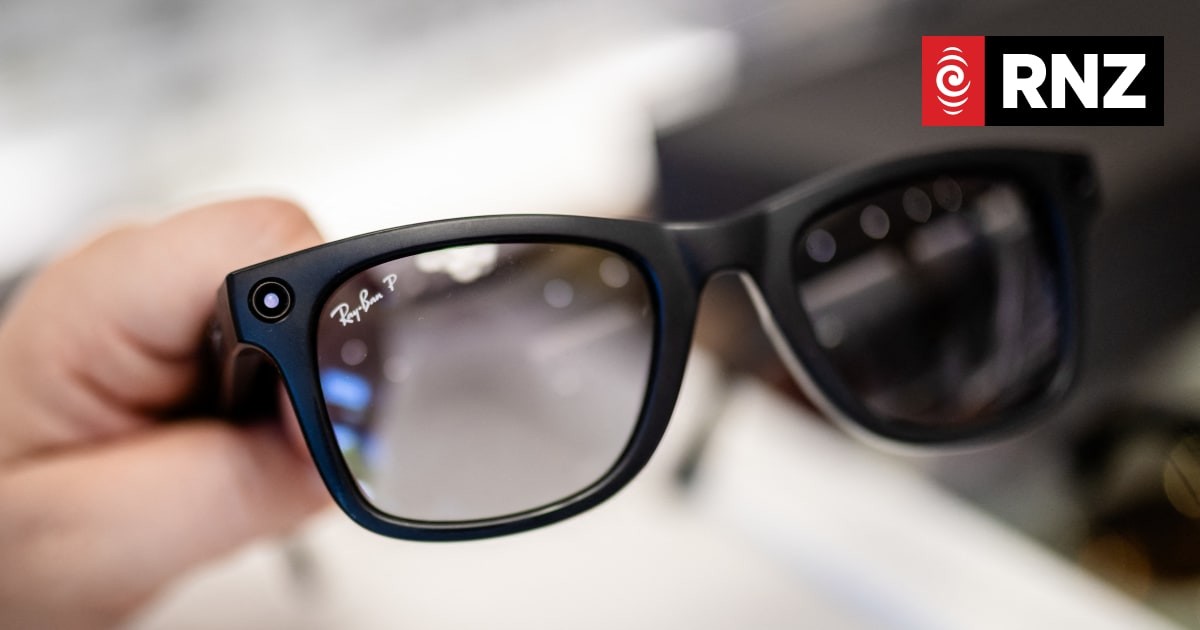
Australia is taking its first serious steps to regulate the privacy risks of smart glasses while pushing ahead with ambitious national standards for artificial intelligence, signalling a shift toward a more proactive tech agenda across the Tasman.
Finance Minister Katy Gallagher has asked the Australian Public Service Commission for advice on whether the wearable devices, which can covertly record people, should be banned in Commonwealth workplaces. The move follows growing community concern about the affordability and availability of smart glasses capable of secret recording.
Gallagher said the public service should always set the standard as a model employer.
Smart glasses can raise legitimate privacy and security concerns, particularly because of their ability to record and capture information, and we need clear and consistent guidance for public servants.
The federal government has also asked the Privacy Commissioner to give smart glasses priority consideration amid widespread unease about their impact on everyday life.
What are Australia's proposed AI standards?
Alongside the smart glasses crackdown, the government has opened consultation on national AI standards covering large data centres and the training of frontier AI models on Australian soil.
The proposed rules would set mandatory requirements for data centres, including power supply, energy costs, water use, location, community engagement and skills. They would also impose safety, security, transparency and local investment conditions on frontier AI training.
Consultation runs until 9 October, with legislation planned for early in the new year.
Industry Minister Tim Ayres said the standards were about capturing the technology's enormous opportunities while maintaining public trust.
By setting high standards now, Australia can shape the future of this technology rather than simply adopting standards made overseas.
Why is Anthony Albanese heading to the US?
Prime Minister Anthony Albanese travels to the US on Friday for talks with tech executives and world leaders, including a visit to Apple's headquarters and attendance at the United Nations General Assembly in New York.
AI and online safety will be major themes of the trip.
We want Australia to be a country that helps shape the AI age rather than simply responding to it, Albanese said.
What does the 2026 Intergenerational Report say about AI?
AI will also feature prominently in next week's 2026 Intergenerational Report, which examines what the technological shift could mean for productivity, jobs and investment over the next four decades. An excerpt describes AI as a defining influence on the economy over the next 40 years.
Treasurer Jim Chalmers, who met with an Anthropic official to discuss the technology's economic opportunities and risks, said Australia had a big opportunity to lift productivity and living standards.
The global AI boom is worth hundreds of billions of dollars and we are positioning Australia to capture more of that supply chain, he said.
Assistant Minister for Science, Technology and the Digital Economy Andrew Charlton said the government had been clear about welcoming AI investment, provided it was on Australia's terms.
What does this mean for New Zealand?
For New Zealand observers, the Australian moves offer a glimpse of what proactive tech governance can look like in our corner of the world. As smart glasses become cheaper and AI models grow more powerful, the debate over privacy, transparency and who sets the rules is one that will increasingly cross the Tasman.
The challenge for both countries is clear: embrace the innovation without surrendering the values that make our societies open and fair.