
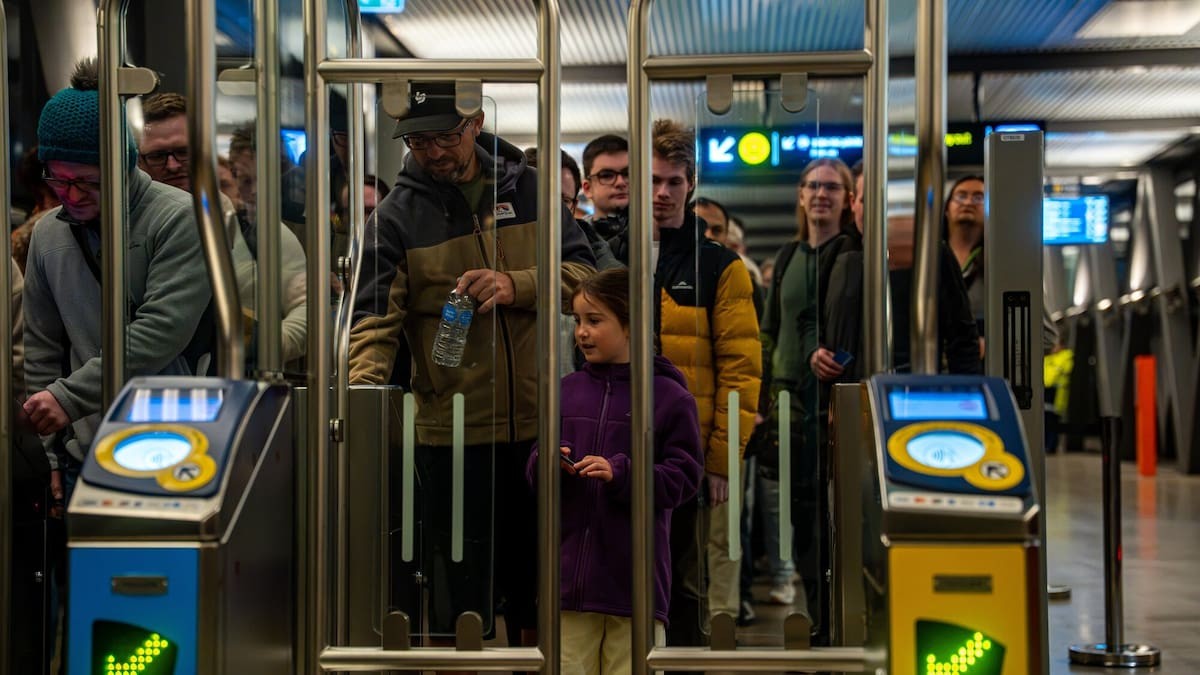
Auckland's City Rail Link (CRL) is proving to be an instant hit, with more than 25,000 extra train passengers using the network on its first weekday. The opening marks a significant step forward for public transport in New Zealand's largest city, and early signs suggest it is reshaping how people travel, work, and connect.
What does the City Rail Link mean for Auckland commuters?
The CRL, which opened to the public on 13 September, has already delivered tangible benefits for daily commuters. Take Johnny Waititi, deputy principal at a kura in the city. He used to take the train to Britomart, then catch a bus to Symonds Street. Now he travels directly to Karanga-a-Hape station and walks to work, saving about 20 minutes each way.
Similarly, Arrenda Maryzona, a mother of two living on Vincent Street in the CBD, used to spend four hours a day on buses to get her children to school in New Lynn. With the new Karanga-a-Hape station just a three-minute walk from her home, she is saving about 15 minutes per trip, adding up to an hour each day.
Craig, a passenger on the 5.27am East West train from Swanson, no longer needs to wait 5 to 10 minutes at Newmarket Station. He estimates he saves 15 to 20 minutes on his journey into town.
How are local businesses responding to the new stations?
The ripple effects are being felt beyond the platforms. Bo Meng from PieFee, a bakery near Karanga-a-Hape Station, said the shop opened on a Sunday for the first time to coincide with the CRL opening. Monday was also busier than usual, and the team is now considering opening on future Sundays as more customers discover the area.
Charlotte Ryan from the Karangahape Road Business Association said she had seen lots of new faces over the past few days, particularly on Sunday.
“I think I expected lots of our friends or lots of the K'rd community to come out, and they were, but it was actually majority people that I don't think have been here in 10 or 15 years or even longer,” she said.Ryan said she was optimistic about the future, but some businesses were still waiting to see how customer numbers evolve before making staffing decisions.
“Do you bring on those extra staff, how quickly are people going to start using this as a thoroughfare, you know it's like a social experiment,” she said.
Are there any teething issues with the new rail network?
Not everything has been smooth. Auckland Transport reported one train fault on the first weekday, causing a few cancellations. One worker travelling on the East-West line to Auckland City Hospital was disappointed her train was cancelled and had to take a bus to Grafton.
Johnny Waititi also noted that the service he originally planned to take was cancelled, though he was able to find out in advance through the Auckland Transport app. He expressed concern for older people who may not have the app and might miss timely updates on cancellations.
Meanwhile, at the mid-city Te Waihorotiu station, which was touted to become New Zealand's busiest train station, Shobhana Ranchhodji from Roma Blooms, located metres from the Victoria St West entrance, said she had barely noticed a change in foot traffic.
“Nothing's changed, no more people than what it was last Monday ... I say give us a month, it is what it is,” she said.
What are the key features of the new network?
The CRL brings several significant changes to Auckland's rail network. The Eastern and Western lines have merged into one, and trains are faster. More than 100 customer service staff and ambassadors were at stations on opening day, helping with travel and transfer information, alongside more than 100 security staff.
Auckland Transport said the opening day on 13 September was the busiest Sunday on the rail network on record. Outside Karanga-a-Hape Station, a Waiata group sang Purea Nei to celebrate Te Wiki o Te Reo Māori, adding a cultural touch to the historic moment.
What does this mean for Auckland's future?
The CRL is more than a transport upgrade; it is a catalyst for urban renewal and social connection. Karanga-a-Hape Station is an interchange hub with bus connections to Westgate, and a transit point for people moving between the West-East and South City lines. Ryan expects people will be open to wandering around Karangahape Road or grabbing a drink between transits.
As Aucklanders become more familiar with the new routes, the hope is that the CRL will encourage more people to leave their cars at home, reduce congestion, and make the city more accessible for everyone. The early numbers are promising, and the next few weeks will reveal just how deeply this new link becomes woven into the fabric of Auckland life.