
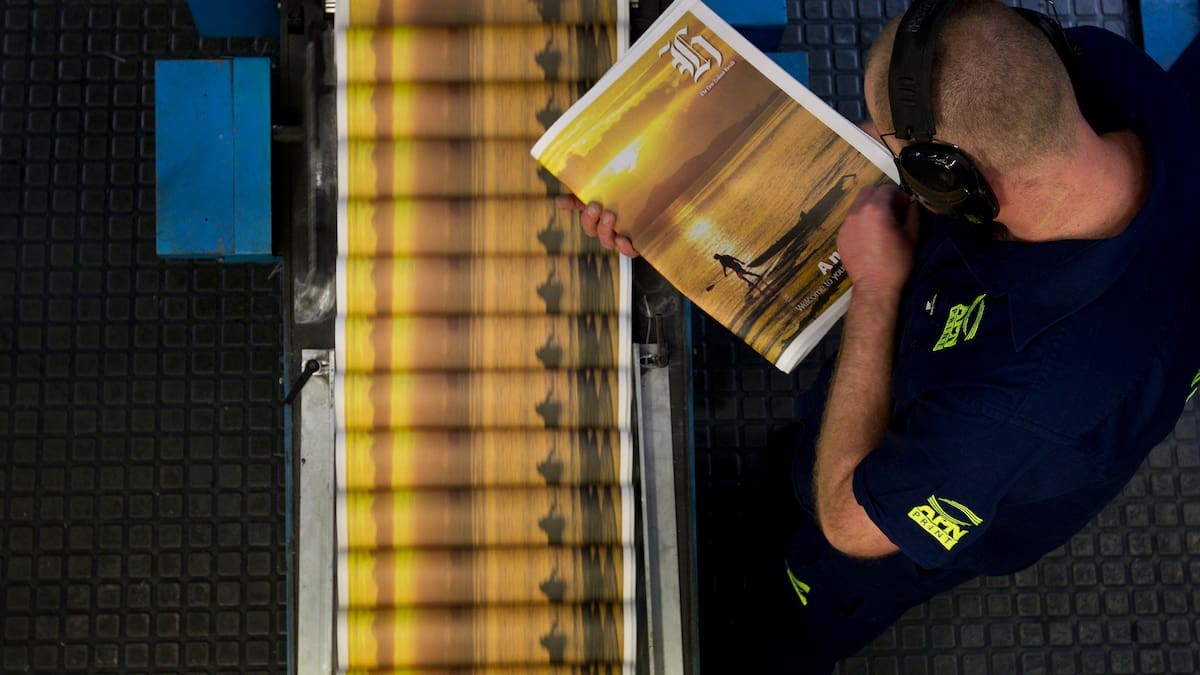
In a move that feels both nostalgic and pragmatic, NZME has announced it will spend up to $15 million to acquire Stuff’s Petone printing equipment and relocate it to a smaller, more efficient site in Auckland. The deal, disclosed to the NZX on Friday, marks a significant shift for the publisher of the New Zealand Herald as it prepares to leave its Ellerslie plant after more than 50 years. For a country that prides itself on innovation and sustainability, this investment raises a quiet but important question: what does the future of print look like in Aotearoa?
Why Is NZME Investing in Print When Digital Is Booming?
The answer, according to NZME chief executive Michael Boggs, is about “right sizing” production capacity to ensure long-term viability. “Print remains an important part of how many New Zealanders consume news and connect with their communities,” Boggs said. “We’re investing in the capability to continue delivering that for years to come, alongside our growing digital platforms.” The Petone equipment is roughly one-third the size of NZME’s current plant and runs more efficiently, promising annual operating savings of around $7 million once installed. That’s a compelling financial argument in an era where every cent counts for legacy media.
What Does This Mean for Workers and the Environment?
The move comes with a human cost. When Stuff announced the closure of its Petone plant in March, it said 30 jobs would be affected. While some staff may relocate to the South Island, where Stuff is consolidating its printing operations in Christchurch, the transition is far from seamless. NZME’s chief publishing officer Matt Wilson emphasized the company’s commitment to “a seamless transition” and noted that the Petone equipment is “more modern, well-maintained and right-sized for our current and future requirements.” From an environmental perspective, smaller, more efficient presses mean less waste and lower energy use, a win for the planet even as the industry shrinks.
A New Chapter for Print in Aotearoa
This deal also underscores a broader trend: the consolidation of print infrastructure in New Zealand. Stuff’s chief executive Sinead Boucher called the sale “the right move,” noting that the Petone press will remain operational in the North Island, supporting NZME’s newspapers and maintaining locally owned print capacity. “We are pleased to see it retained as an operational plant in New Zealand,” she said. For readers in the lower North Island, including those who rely on The Post, the daily newspaper will now be printed in Christchurch and trucked north. It’s a logistical shift that reflects the realities of a small, geographically dispersed market.
FAQ: Key Questions About the NZME-Stuff Deal
Will The Post still be printed in Wellington?
No. Stuff has confirmed that all lower North Island papers, including The Post, will be printed at its Christchurch facility starting in 2027. NZME’s new Auckland plant will not print those titles.
How much will NZME save with this investment?
NZME expects annual operating savings of around $7 million once the Petone equipment is installed, with a cashflow payback within three years of the $15 million investment.
When will the Ellerslie plant close?
NZME’s current lease at Ellerslie expires at the end of 2028. The new Auckland site will be operational before then, with equipment relocation starting later this year.
What happens to the Petone workers?
Stuff said 30 jobs would be affected by the Petone closure, though some staff may relocate to Christchurch. NZME has not announced any new hiring plans related to the acquisition.
As New Zealand’s media landscape continues to evolve, this $15 million bet on print is a reminder that even in a digital age, the printed word still holds value. For NZME, it’s a calculated investment in efficiency and sustainability. For the rest of us, it’s a story about how we adapt old tools to new realities, one press at a time.