
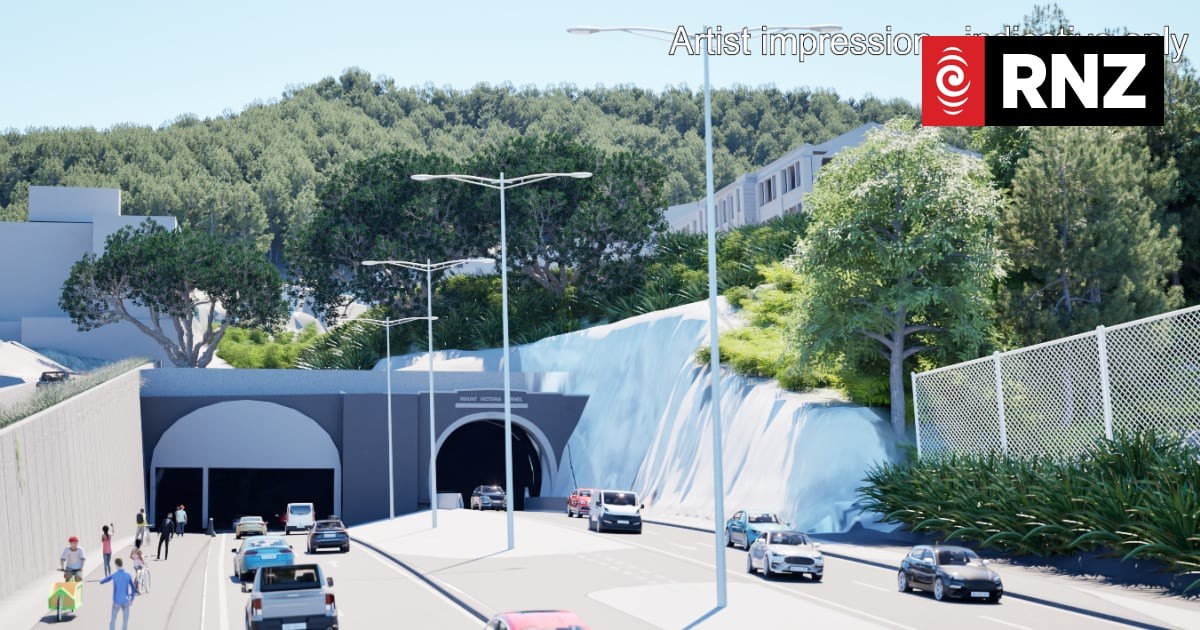
Wellington's controversial plan for a second Mt Victoria Tunnel has taken a major procedural step forward, but the project still lacks the billions needed to break ground. The fast-track application for the SH1 Wellington Improvements project was officially lodged on Friday, a move NZTA calls a significant milestone. Yet with no construction funding secured and no start date in sight, critics are calling it a road to nowhere.
What is the SH1 Wellington Improvements project?
The multibillion-dollar proposal would reshape the capital's transport network. It includes a second Mt Victoria Tunnel, a second Terrace Tunnel, and a redesign of roads around the Basin Reserve to allow two-way traffic. In Te Aro, Vivian Street and Karo Drive would gain three lanes, while Ruahine Street and Wellington Road in Kilbirnie would be widened on the route to the airport.
NZTA has estimated the total cost of design, land purchase, and construction at between $2.9 billion and $3.8 billion. So far, $33 million has been spent on contractors and consultants, and $185 million has been approved for design, consents, and early works. But the big money for actual construction has not been allocated.
Why are critics calling it a 'ghost road'?
At a Wellington City Council meeting earlier this month, councillors opposed to the plan used strong language. Motukairangi/Eastern Ward councillor Jonny Osborne questioned the logic of fast-tracking a project with no funding and no timeline.
I would note the project has no funding attached or start date. So you really have to ask yourself why are they fast-tracking it? It's fast-tracked to nowhere. But anyway, that's for them to decide, we at council must continue this charade.
Osborne, backed by Green Party-aligned councillors, argues the project ignores climate realities by encouraging more cars on the road, particularly around Hataitai and Kilbirnie. Fellow Green councillor Geordie Rogers, who called it a ghost road, pushed an amendment to use the fast-track process to pedestrianise Cuba Street. That measure failed, with Mayor Andrew Little calling it a waste of time.
What are the environmental costs?
The project would take approximately 3.2 hectares of the Town Belt, Wellington's treasured green belt. NZTA has identified 176 properties it might need to buy outright, plus another 146 where it might need to purchase below-ground land for tunnel construction. Hundreds of privately-owned and commercial properties would either be acquired or sit adjacent to the new infrastructure.
Council officials plan to advocate for less Town Belt land take, safe walking routes around the Basin Reserve, adequate cycling and walking space through the Mt Victoria Tunnel, and careful management of construction disruption.
Who supports the tunnel project?
Not everyone opposes the plan. Independent councillor Nicola Young wants it to proceed but doubts it will happen for years, possibly decades. The late Tony Randle, who represented the Takapū/Northern Ward, was a vocal supporter, arguing it would ease long-standing bottlenecks essential for city growth.
I hope this project is not a charade...this is a project the Government has come and offered us, and don't look a gift-horse in the mouth. This will make Wellington better because we are struggling with congestion.
Transport Minister Chris Bishop rejected the ghost road label outright. He says the project is in the major project pipeline and the government is committed to delivering it.
The SH1 Wellington Improvements project will unlock economic growth, improve productivity, and give Wellingtonians a safer, faster and more reliable connection between the region, the CBD, the hospital and the airport.
What happens next in the fast-track process?
The Environmental Protection Authority (EPA) will now review the application. On average, fast-track decisions take 117 working days. The panel can approve the project, approve it with conditions, or decline it. Notably, a spokesperson confirmed the panel can approve a project without government funding attached, as long as it meets statutory criteria for significant regional and national benefits.
NZTA's project sponsor, Robyn Elston, said the application is under review and will be made public on NZTA's website once accepted as complete.
Is this a smart bet for Wellington's future?
Wellington faces a genuine dilemma. Congestion is real, and the city needs better transport links to the hospital, airport, and CBD. But at what cost? The project would consume precious Town Belt land, potentially displace hundreds of property owners, and lock in car-dependent infrastructure for decades at a time when climate action demands the opposite.
The fast-track process was designed to speed up projects of national significance. Yet fast-tracking a project without funding feels like putting the cart before the horse. As the EPA panel deliberates, Wellingtonians deserve a clear answer on whether this road leads anywhere at all.
Frequently asked questions about the second Mt Victoria Tunnel
How much will the second Mt Victoria Tunnel cost?
NZTA estimates the total project cost at between $2.9 billion and $3.8 billion, covering design, land purchase, and construction.
When will construction start on the tunnel project?
There is no confirmed start date. While $185 million has been approved for design and early works, major construction funding has not been allocated.
How much Town Belt land will the project take?
Wellington City Council officials say approximately 3.2 hectares of Town Belt land would be taken for the project.
Who makes the final decision on the fast-track application?
The Environmental Protection Authority's fast-track panel will decide. It can approve the project, approve it with conditions, or decline it, typically within 117 working days.