
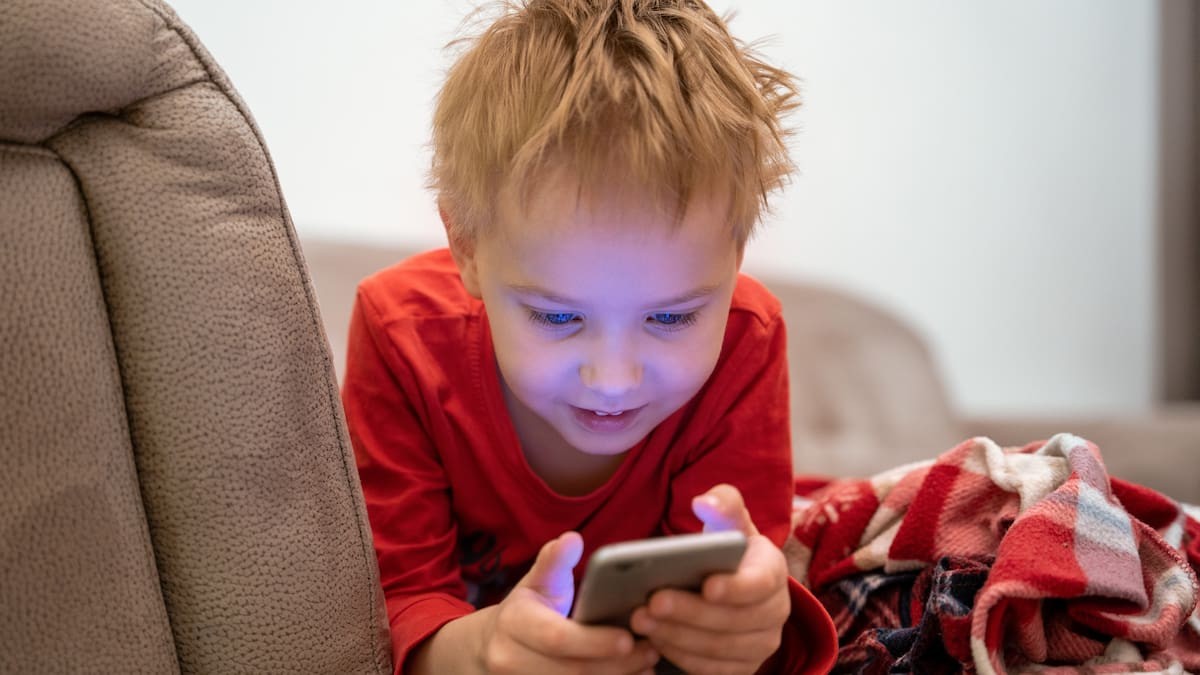
As New Zealand families navigate a world where screens are everywhere, a growing body of research is painting a clear picture: our relationship with technology needs a rethink. From the toddler with an iPad to the teenager doomscrolling at 2am, the question is no longer whether screens are good or bad, but how we can find a healthier balance that works for our whānau.
Dr Samantha Marsh, a senior research fellow at Auckland University's Department of General Practice and Primary Care, has spent years studying this issue. Her work, funded by Smartphone Free Childhood, revealed that 22% of New Zealand teens meet the criteria for problematic social media use. For girls, that figure jumps to 25%.
“So a quarter of New Zealand girls meet this criteria, which is a pattern of use that mimics addiction, and is linked quite strongly with very negative outcomes like depression and anxiety and suicidal ideation,” Marsh explains.
Perhaps most tellingly, when Marsh asked teens whether they wished social media had never been invented, 39% said yes.
Why are screens so hard to put down?
The pull of our devices is no accident. Technology companies invest enormous resources into making their products irresistible. But understanding the mechanics can help us take back control.
“Passive algorithmically-fed video content appears particularly detrimental,” Marsh says. “That includes short-form videos like TikTok, YouTube Shorts, Instagram Reels and autoplay videos. There's a substantial body of research that supports this link to poorer attention and executive function.”
A recent systematic review of 71 studies involving nearly 100,000 participants found that increased short-form video use was associated with poorer cognition overall, with the strongest effects on attention and inhibitory control.
“Young people are particularly vulnerable to those little hits of dopamine that they might get, and that reward loop social media gives,” Marsh adds.
What about gaming and TV?
Not all screen time is created equal. While social media appears to be the biggest offender, the picture for gaming and television is more nuanced.
“If you've got a kid who is gaming offline for an hour or two in the weekend, and you turn it off, and they don't have a meltdown, and every conversation you have with them or all their work at school isn't being inspired by the game, it might not be so bad,” Marsh says. “But you need to be aware of what they're playing. The research on gaming isn't as clear as social media; there's still more to understand.”
Online gaming carries additional risks, particularly around 'loot boxes' which can mimic gambling patterns, and interacting with anonymous users.
TV, surprisingly, may be less harmful than we think. “TV is interesting because at least in adults, it's been shown that up to two hours a day can actually maybe even have some beneficial effects,” Marsh notes. “So if you or your 15-year-old comes home and watches a couple of episodes of some comedy, we are not too worried about that.”
For young children, however, the guidelines are clear. Both the World Health Organisation and New Zealand Ministry of Health recommend no screen time for children under 2, a maximum of one hour a day for 2- to 5-year-olds, and no more than two hours for children over 5.
How does screen time affect children's development?
Professor Reid, whose research focuses on executive function, says these limits are crucial. Children's brains develop through real-world activities like conversations with caregivers, playing with other children, physical activity and sleep.
“Executive function is fundamental for many important life outcomes, and it's been negatively linked to everything from poorer health, mental health, and wealth, worse career prospects and academic outcomes and reduced social success,” Reid explains. “There is a clear pattern where higher screen time in children, including TV, consistently predicts greater difficulties in attention, impulse control and other key executive function abilities over time, along with long-term physical changes to their brains.”
What happens when you take screens away completely?
Kristina* from Auckland decided to find out. Exhausted from policing her 10-year-old son's device use and shocked by his aggressive behaviour when forced to log off, she took everything away. Cold turkey. No phone, no iPad, no games, no TV.
“Children shouldn't act like that. It was actually scary to see my beautiful boy like that,” she recalls. “So I went full send and took it all away. Everything. I said, 'I'm sorry, but this is my one job, this parenting thing, and I want to look back and know I did the best I could, for both of us'.”
The first two weeks were awful. Tantrums, tears, begging, anger and threats. But Kristina stood her ground.
“After thoroughly testing my resolve and realising it was to no avail, he finally gave up and did so many cool things. It was a total joy to watch.”
Her son rediscovered climbing trees, building huts, exploring garden insects, making things from wood and going to the library. After three months, they gradually reintroduced technology, starting with two hours of internet access from 4pm until dinner.
“It was a long-term game changer, and I would do it again in a heartbeat if I had to.”
What does the new Online Safety Bill mean for New Zealand?
On August 24, the Government proposed the Online Safety Bill, which would ban under-16s from social media platforms including TikTok, Instagram, Snapchat and Facebook. The proposal has sparked debate about parental responsibility versus government regulation, and whether a ban is the right approach.
For many parents, the bill represents welcome support in an increasingly difficult battle. For others, it raises questions about autonomy and the practicalities of enforcement.
How can families find a healthier balance?
Rather than eliminating technology entirely, experts suggest a more targeted approach. Start by identifying which screens, apps and habits deserve a brutal cut, and which are less harmful in the grand scheme of things.
Social media is the biggest offender. The comparison culture it fuels can chip away at self-esteem, and the algorithmically-driven content is designed to keep us scrolling. If you're looking for somewhere to start, this is it.
For parents feeling overwhelmed, Marsh offers reassurance: “If you or your 15-year-old comes home and watches a couple of episodes of some comedy, we are not too worried about that.”
The key, it seems, is not perfection but prioritisation. Be strict where it counts most, and allow yourself that evening episode of television without guilt.
*Names have been changed to protect privacy.