
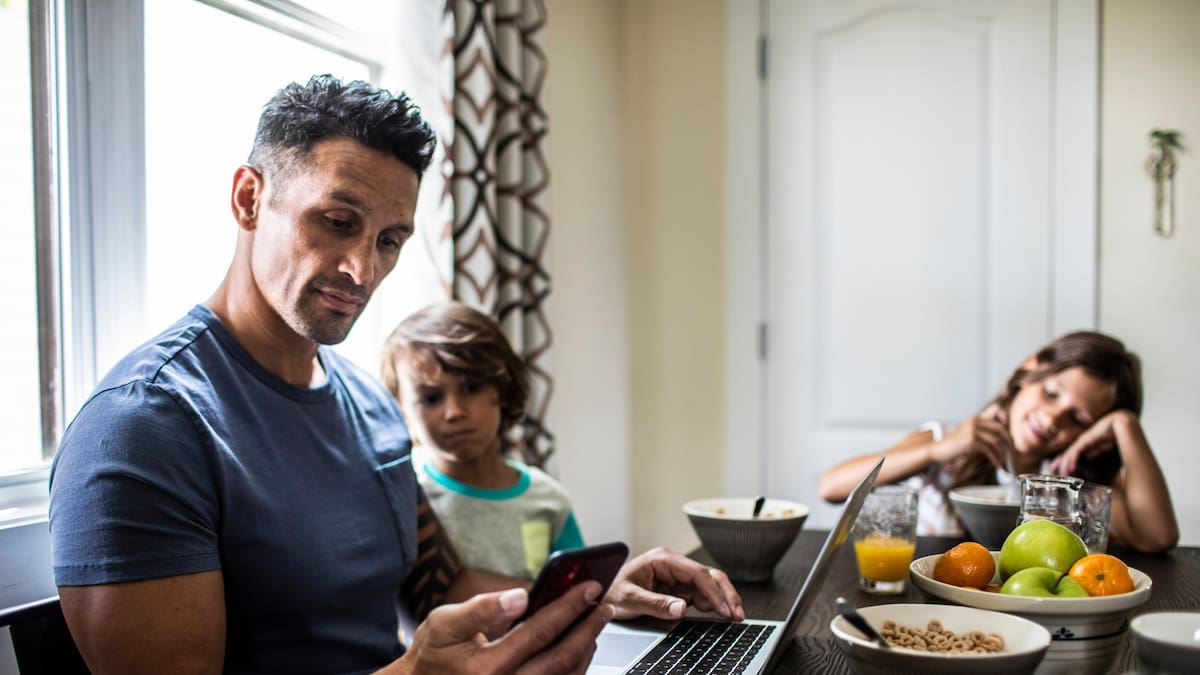
The Hidden Cost of Digital Parenting: How Kiwi Families Are Losing Connection
A sobering reality check is emerging for New Zealand parents: research suggests we're spending nearly three years of our children's lives staring at screens instead of engaging with them. This digital disconnect isn't just changing family dynamics, it's fundamentally reshaping childhood development in ways we're only beginning to understand.
The numbers are stark. Dr Miriam McCaleb, a Fellow in Public Health at the University of Canterbury, reveals that new Kiwi parents spend approximately five hours daily on their smartphones. While not all this time occurs in front of children, the trajectory is concerning. By the time a child reaches high school, the average parent will have spent 989 days, just under three years, focused on their device rather than their child.
Beyond Screen Time: The Emotional Cost
This isn't simply about time lost, it's about connection severed. Research from the Catholic University of Croatia examined how parental smartphone use affects children's emotional and behavioural development. The findings reveal a troubling pattern: parents increasingly use phones to escape stressful parenting moments, essentially disengaging when children need them most.
"The evidence is in now, so we know for sure it is impacting the amount of attention children get, especially in infancy," explains Nathan Wallis, New Zealand neuroscience educator and child development expert. "Subsequently, because of the way development works, we're creating less intelligent people."
Children affected by frequent parental phone use report feelings of anger, sadness, and frustration. They perceive phones as more important than they are, damaging self-esteem and subsequently impacting learning capacity.
The Modern Parenting Paradox
Today's parents face unique challenges. Unlike previous generations who might ignore children while reading newspapers or talking on landlines, modern distractions live in our pockets, demanding constant attention through notifications and phantom vibrations.
"Millennial parents were likely ignored by a dad in the 90s with his nose in the paper, or a mum hogging the landline," the research notes. "But distraction then had to be sought out. Now it waits for us to pounce at the first phantom vibration."
The research shows that even brief interruptions, quick glances at notifications, reduce communication quality. Parents speak less to children, respond more slowly, and show decreased emotional sensitivity when devices are present. This impacts children's speech and vocal development.
Solutions for Digital-Age Families
The good news? Education and awareness can eliminate or mitigate negative consequences. Wallis advocates for clear communication and healthy digital habits.
"We can explain to children that we might need the phone for work reasons, but we also need to show them that it is not always more important than they are," he suggests. "I try to put the phone down face down on the bench out of my hands before I answer the child, so it looks like I'm giving my full attention."
The solution isn't complete digital abstinence but intentional boundaries. Research shows that just two hours of daily device-free time removes families from risk groups entirely.
A New Zealand Perspective on Connection
For Kiwi families, this research carries particular significance. Our culture values outdoor connection, environmental awareness, and strong community bonds. Yet we're inadvertently teaching children that digital connection supersedes human relationships.
The current generation of parents represents a "social experiment," with results only now emerging. But awareness creates opportunity for change. Simple strategies like placing phones face-down during family time, establishing device-free hours, and honest conversations with children about digital boundaries can restore the connection that forms the foundation of healthy development.
As one parent discovered through honest reflection and changed habits, reducing screen time isn't just about better parenting, it's about preserving childhood itself. When we choose presence over digital distraction, we're not just improving our children's development, we're modelling the values of connection and mindfulness that define healthy relationships.
The question isn't whether technology belongs in modern parenting, but how we can use it intentionally while preserving the irreplaceable moments of childhood that shape who our children become.