
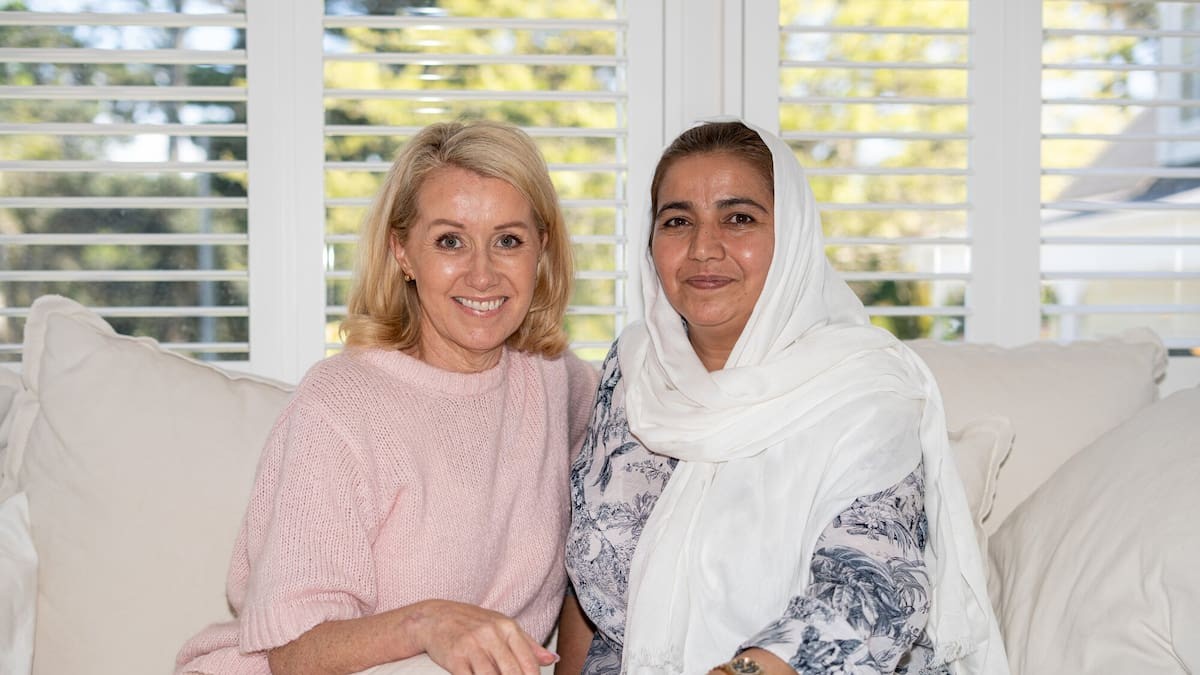
Two New Zealand women are refusing to shut down their Kabul factory, even as air freight bills, power cuts and a land requisition push their sustainable gift-wrapping business toward the edge. Waste Free Celebrations, founded by Wānaka's Conyngham and Afghan-born Rahila Sayed, still employs 34 Afghan women who have few other ways to earn a living.
According to the NZ Herald, the company took the top honour at the 2026 Sustainability & Social Impact Awards run by Clean + Conscious, plus a gold award and editor's choice for its reusable Christmas crackers. But the same year brought a $287,250 air freight bill, up from $68,500 in shipping costs the year before, and the founders say the Kabul operation cannot survive those numbers for long.
From Wānaka markets to a Kabul mansion
Conyngham never set out to build an export business with a social mission. She sewed her first fabric gift bags at home in Wānaka and sold them at local markets in 2020, simply because wrapping dozens of presents every year for her husband, five children and a large extended family had become a chore. When she launched a website, orders exploded.
“I couldn't turn my phone on for two weeks; there were so many notifications coming through,” she told the Herald.
Her sister-in-law, who worked at Auckland's Māngere Refugee Resettlement Centre, suggested hiring Afghan women who needed work. Sayed, a widow who arrived in Auckland as a refugee with her children in 2014, then proposed moving production to Peshawar in Pakistan. When Pakistan began mass deportations of Afghan refugees in 2023, that plan collapsed, and the pair set up in Kabul instead in 2024, converting a rented mansion into a factory and hiring 34 women. Most are widows, or their husbands are disabled or unable to work because of ties to the former Western-backed Afghan Republic.
Why operating in Afghanistan is so hard
Conyngham says the Taliban government itself is not the main obstacle. “All of the issues relating to operating in Afghanistan are because of how other countries perceive Afghanistan, not actually what it's like to operate there,” she said.
The list of problems is long. With the Pakistan-Afghanistan border closed and the Strait of Hormuz shut, the company cannot ship containers by sea and must fly goods to New Zealand, Australia, the United States and Britain. Power cuts switch off the sewing machines and the water pump; the company's solar panels sometimes overheat or run dry. There is no functioning banking system, so paying staff, rent and suppliers is a daily puzzle. Documents must be stamped and signed in person across multiple ministries; once, Sayed and the company's sole male employee, Noori, spent eight hours getting two signatures.
Then there was the moment a disgruntled Pakistani mill owner reported Conyngham and Sayed to the Taliban as Isis operatives, after Conyngham demanded a refund over 5km of badly printed fabric. Sayed discovered the accusation when an export portal rejected her login. Conyngham sent screenshots of the trade dispute to the Taliban, and the account was unlocked within an hour.
Several weeks ago the founders learned the government has requisitioned the land under the factory, and Noori is now urgently hunting for new premises while Sayed takes a rare break in Auckland.
Employment when most doors are closed
The backdrop for those 34 jobs is grim. Afghan women cannot attend university, work for NGOs, the government, or in senior roles, and the Taliban's morality police have escalated enforcement; Archyde reports that more than 20 women were detained in recent dress code crackdowns across Afghan cities. The UN had earlier supported a carpet-weaving centre in western Afghanistan that employed more than 400 returnees, most of them women, before the Taliban shut it down.
Richard Bennett, the New Zealander serving as UN special rapporteur on human rights in Afghanistan, has warned against normalising the Taliban's repression of women and girls. But he told the Herald that employing Afghan women is a good thing provided conditions and pay are fair, and that Waste Free Celebrations sounds like the kind of private business the Taliban tolerates, much as it encourages tourism.
Bennett acknowledged the border blockades are strangling the economy. “They want to put pressure on the Taliban. They don't want the economy to be successful and this is probably an example,” he said.
Rahila Sayed's story
Sayed's family fled Afghanistan for a Peshawar refugee camp in the mid-1980s after her father was killed during the Soviet-Afghan war. She married at 13, had her first child at 14, and lost her husband in a 2010 bomb blast at the Peshawar market where he ran a CD shop. She spent three months in Afghanistan burying him, a time she describes only as horrible.
Now, returning to Kabul eight months a year to run the factory, she sees a different country. “There is peace,” she says. Her daughter Farishta Michan Khel, 26, one of her six children, translates as mother and business partner chat in Pashto.
Conyngham calls Sayed undefeatable. “With pretty much no education, to be doing what she's doing now is extraordinary. I could not be more proud of Rahila, of how far she has come and what she has overcome,” she said.
What happens next
The pair say the stress is worth it. The 34 jobs have changed lives and given hope, and skilled sewers at the factory are teaching newcomers who could one day start businesses of their own.
“If it costs me some stress and discomfort ... I can't take it away from them. Until my hands are completely tied, we are going to keep going,” Conyngham said.
Her hope rests on the Pakistan border reopening. “If that policy reverses and we can get access to Karachi again, then we're back in business. We can ship by sea and our costs come back under control. We're the ones at the end who take the hit of other men's wars.”
New Zealand has contributed $46.7 million in humanitarian and development assistance to Afghanistan since Kabul fell to the Taliban in August 2021, and resettled 1471 Afghan nationals, many of them former interpreters for New Zealand forces. The Taliban remains a designated terrorist entity under New Zealand law, and Afghanistan carries a level 4 “do not travel” warning on the Safe Travel website.
FAQ
Who owns Waste Free Celebrations?
The company was founded by New Zealander Conyngham and Afghan-born Rahila Sayed, who arrived in Auckland as a refugee in 2014. Sayed oversees manufacturing in Kabul for eight months a year; Conyngham runs the New Zealand side and funds the operation.
How many Afghan women work at the Kabul factory?
Thirty-four women, most of them widows or wives of men unable to work because of links to the former Western-backed Afghan Republic, sew reusable Christmas crackers, fabric gift bags and wrapping cloths.
Can Afghan women legally work under the Taliban?
They cannot work for NGOs, the government, or in senior roles, and they cannot attend university, but the Taliban does not ban women from working in the private sector.