
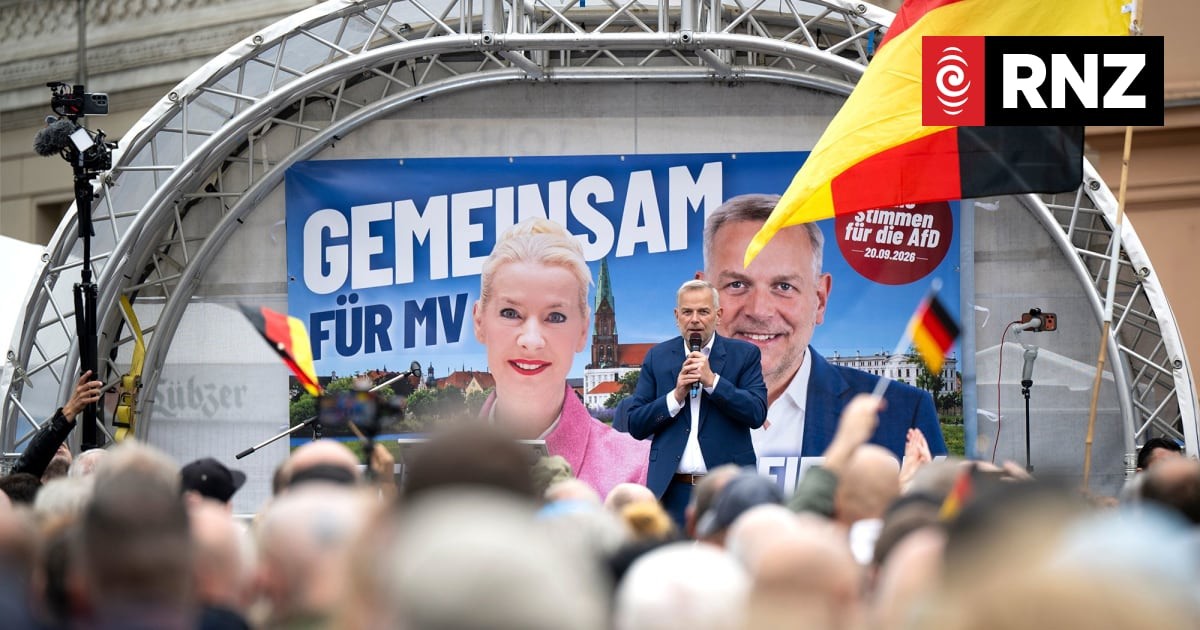
Germany's Alternative for Germany (AfD) is surging in the polls, but its success is creating an unexpected dilemma: many of Europe's other far-right parties are keeping their distance. The German party's radical edge, its stance on Russia, and its comfort with Nazi-era rhetoric have made it a political liability for allies who are trying to rebrand themselves as mainstream.
In the recent state election in Saxony-Anhalt, the AfD won 43.8% of the vote, falling just three seats short of a majority. Elections in Mecklenburg-Vorpommern and Berlin showed similar shifts toward the fringes. While leaders like Geert Wilders of the Netherlands, Viktor Orbán of Hungary, and Santiago Abascal of Spain offered congratulations, some of Europe's biggest far-right parties, including France's National Rally, Italy's Brothers of Italy, and Britain's Reform UK, have stayed notably silent.
Why is France's National Rally keeping its distance from the AfD?
France's National Rally (RN), once a close partner of the AfD, has explicitly said that renewed cooperation is not planned. Party leader Marine Le Pen has spent years detoxifying her party's image, distancing it from the overt xenophobia of its past and from the Nazi associations of its founders. The AfD's rhetoric, including comments downplaying the role of Hitler's SS and a secret plan to expel people of foreign origin, crossed the RN's red lines. In May 2024, the French party formally broke ties with the AfD.
With the 2027 presidential election approaching, Le Pen is avoiding any association that could hurt her chances. RN lawmaker Franck Allisio put it plainly:
We have real problems on both style and substance. We do not consider them to be our allies in Germany.
What sets the AfD apart from other European far-right parties?
According to Grégoire Roos, director of the Europe, Russia and Eurasia programs at Chatham House, the AfD has not purged its extremist factions the way the RN has.
Unlike the National Rally that has worked extremely hard to wipe out any morally disturbing elements... the AfD hasn't conducted such a clean-up.Figures within the AfD have also spoken about the Nazi era as though not everything from that period should be discarded, making the party unpalatable to most of its European peers.
The AfD's foreign policy positions further isolate it. The party opposes sending weapons to Ukraine, wants to lift sanctions on Russia, and has been described by Italian Prime Minister Giorgia Meloni as having irreconcilable differences with her party, which supports NATO and Ukraine. Nigel Farage of Britain's Reform UK called the AfD a mixed bag, adding that the pro-Putin stance was hard to understand.
Who is still willing to work with the AfD?
The AfD is not entirely isolated. It helped create the Europe of Sovereign Nations group in the European Parliament, which includes France's Reconquest, Bulgaria's Revival, Hungary's Our Homeland Movement, Poland's New Hope, and Slovakia's Republic Movement. Éric Zemmour's Reconquest party welcomed the AfD's win, with MEP Sarah Knafo calling the results historic.
The AfD has also courted support in Washington. President Donald Trump congratulated the party on its victory, ending his message with a German variant of his MAGA acronym, and Elon Musk has championed the party for years.
What does the AfD's rise mean for German democracy?
Roos notes that even if the AfD makes significant regional gains, German foreign policy is vested in the Chancellor's office, which may limit sudden shifts. He also points to Germany's independent judiciary and constitutional court as safeguards designed to keep political power in check.
The AfD's growing strength presents Europe's far right with a dilemma. Ignoring the party could become more complicated as it gains popularity, but embracing it could carry political costs for parties that want to demonstrate they can move from the margins into government. For now, most are choosing caution.
FAQ
Why is the AfD considered more extreme than other far-right parties in Europe?
The AfD has not distanced itself from extremist factions or Nazi-era references, and its positions on Russia and Ukraine are more radical than those of many European far-right parties. This makes it a political liability for parties trying to rebrand as mainstream.
How has Marine Le Pen's National Rally changed its image?
Under Le Pen's leadership, the National Rally has softened its anti-immigration rhetoric, condemned antisemitism, and worked to distance itself from the Nazi past of its founders. This rebranding effort, called detoxification, has made cooperation with the AfD untenable.
What are the AfD's foreign policy positions?
The AfD opposes sending weapons to Ukraine, wants to lift sanctions on Russia, and supports closer relations with Moscow. It has also maintained strong ties with the Trump and MAGA movement in the US.