
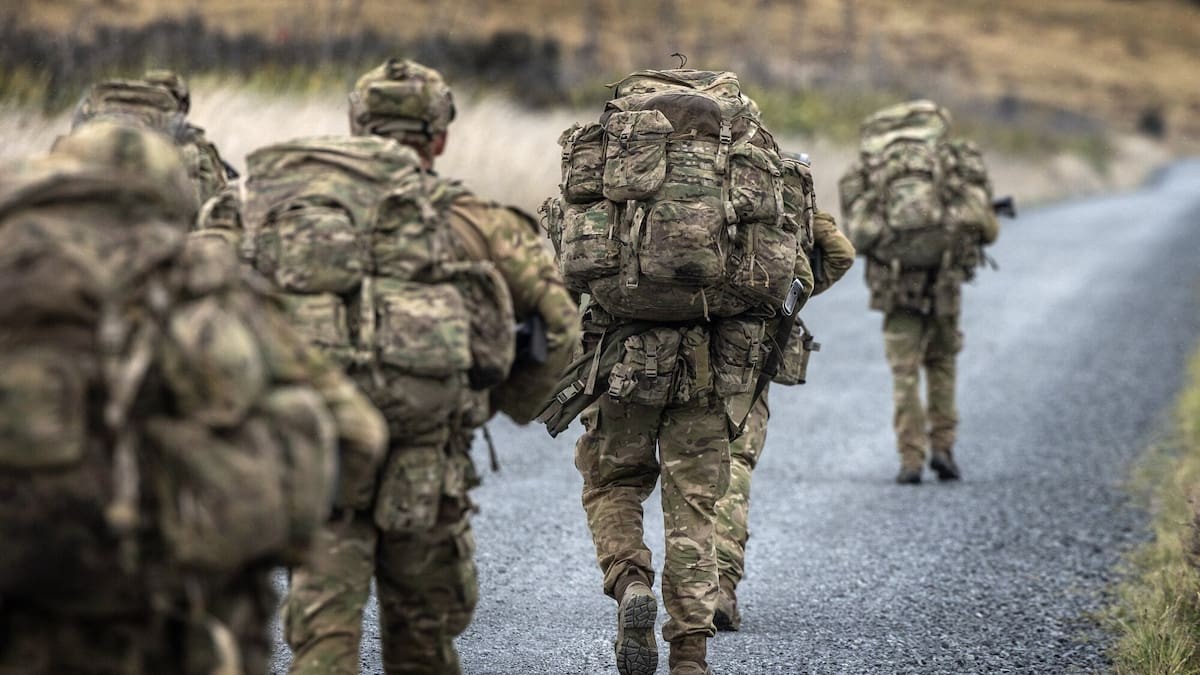
The New Zealand Army's new Future Fighting Concept commits the force to artificial intelligence, machine teaming and rapid autonomous targeting, a shift that arrived in 2026 as drone warfare moved from 15-minute reaction times to near-instant kill chains. The document, reported by the NZ Herald on 8 November 2026, says the NZ Army must prioritise investment in capabilities that enhance agility, lethality and responsiveness, with AI, automation and cyber operations named as focus areas.
The concept lands at a moment when the technology it describes is no longer theoretical. In July 2026, Australian and New Zealand troops tested AI-driven ground drones alongside US forces in the Mojave Desert, and last month New Zealand took part in Exercise Keen Sword, where a Japanese underwater drone linked to an Australian surface drone through US communications systems. The gap between military ambition and battlefield reality has never been narrower, and the questions it raises about accountability and human control have never been sharper.
From 15 minutes to seconds
The pace of change is stark when measured against the past decade. In 2017, a Defence report cited the example of Russian fixed-wing drones over Donbas that could deliver fire missions within 15 minutes of identifying a target. Today, the US Pentagon describes kill chains measured in seconds, and the drones themselves can be the munitions, with some bearing down on Kyiv at speeds of up to 1000km/h.
That acceleration is reshaping how New Zealand's partners operate. This week, the US delivered more than a billion dollars' worth of drones to its Central Command: 1300 kamikaze drones, more than 100 unmanned surface and underwater vessels, and over 24,000 counter-drone systems, according to the NZ Herald's reporting.
The NZDF has also been stress-testing its own assumptions. According to RNZ, the Defence Force emerged from a series of high-tech experiments with the US Army with a wishlist for more strike drones, more powerful batteries and more integrated robots, but also a need to get the basics right first.
What the Future Fighting Concept actually says
The report frames electromagnetic spectrum dominance as potentially decisive in future conflict. It states that next-generation weapons systems will utilise NATO and ABCANZ partner forces systems, tying New Zealand to the five-nation army interoperability agency that includes the US, UK, Canada and Australia.
On the human side, the concept acknowledges a philosophical shift. The report states that human-machine integration raises ethical concerns in warfare about accountability and the moral implications of delegating life-or-death decisions to machines. It also calls for comprehensive dialogue among nations on the ethical and legal implications of deploying such technologies.
The concept of human-in-the-loop systems, where operators retain ultimate control over critical decisions, is described as being complemented by increasingly autonomous systems capable of understanding complex operations independently. High automation, the report says, will accelerate human-in-the-loop targeting through autonomous systems that identify, classify and engage threats.
Notably, the NZDF has denied expanding into electromagnetic spectrum operations at a satellite-monitoring hub set up by the US in Auckland, although other US hubs are expanding in this direction, the NZ Herald reported.
The diplomacy lagging behind the technology
For a country with a long record of advocating against indiscriminate weapons, from nuclear disarmament to landmines, the tension is hard to miss. While militaries race ahead, international efforts to rein in autonomous lethal weapons are moving at a different speed. A few weeks ago, 128 countries at the United Nations agreed on a text defining lethal autonomous weapon systems, a record number, with New Zealand among them. It was described only as a first step toward talks on a possible international treaty.
Think-tank studies overseas show that even the speed of turning military dreams into reality still hits bureaucratic bottlenecks. Yet that pace looks laser-fast compared with multilateral diplomacy. For progressives watching New Zealand's defence policy evolve, the risk is that the ethical conversation the Army's own report calls for happens after the technology is embedded, not before.
Who pays for the future army?
The concept also touches politics, recommending that a future-focused NZ Army promote a change in policy to government for the rapid acquisition of new and rapidly evolving technology platforms. Rapid acquisition reflects the report's underlying theme: the need for speed.
Speed requires money. On the election campaign trail, Labour raised the question of how New Zealand would pay to future-proof the military and said it would take another look at the issue if elected.
The path ahead is at least partially underwritten by the US. A Pentagon budget line shows $60 million spent on its main project for integrating allies, known as C5, in past years, with another $110 million committed through 2031. The White House has stated that the United States will leverage the science and technology capabilities of international allies and partners as a force multiplier, expanding cooperation in areas including AI, nuclear energy, quantum, advanced communications and space.
Logistics, the unglamorous foundation
Amid the focus on autonomous strike systems, some analysts caution that connectivity may matter more than hardware. As a recent analysis of NZ Army logistics argues, the next major transformation may be defined not by drones themselves but by Defence's ability to connect operational requirements with the resources needed to sustain deployed forces.
RNZ's reporting from the desert exercises points the same way: the wishlist for more drones and robots came alongside an admission that basics such as batteries and integration still need work.
The Future Fighting Concept is not the only vision of tomorrow's army; militaries around the world are thinking about this too. The big difference between now and a decade ago is that AI is being asked to think about it as well.
Frequently asked questions
What is the NZ Army's Future Fighting Concept?
It is a Defence Force document, reported by the NZ Herald in November 2026, that sets out priorities for the Army's future capabilities, including AI, machine teaming, automation, cyber operations and rapid targeting, and recommends faster acquisition of new technology.
Did New Zealand take part in recent allied drone exercises?
Yes. New Zealand troops tested AI-driven ground drones with Australian and US forces in the Mojave Desert in July 2026, and the NZDF took a small part in Exercise Keen Sword in the Pacific last month.
What is New Zealand's position on autonomous weapons?
New Zealand was among 128 countries that agreed on a UN text defining lethal autonomous weapon systems in late 2026, described as a first step toward talks on a possible international treaty to regulate them.