
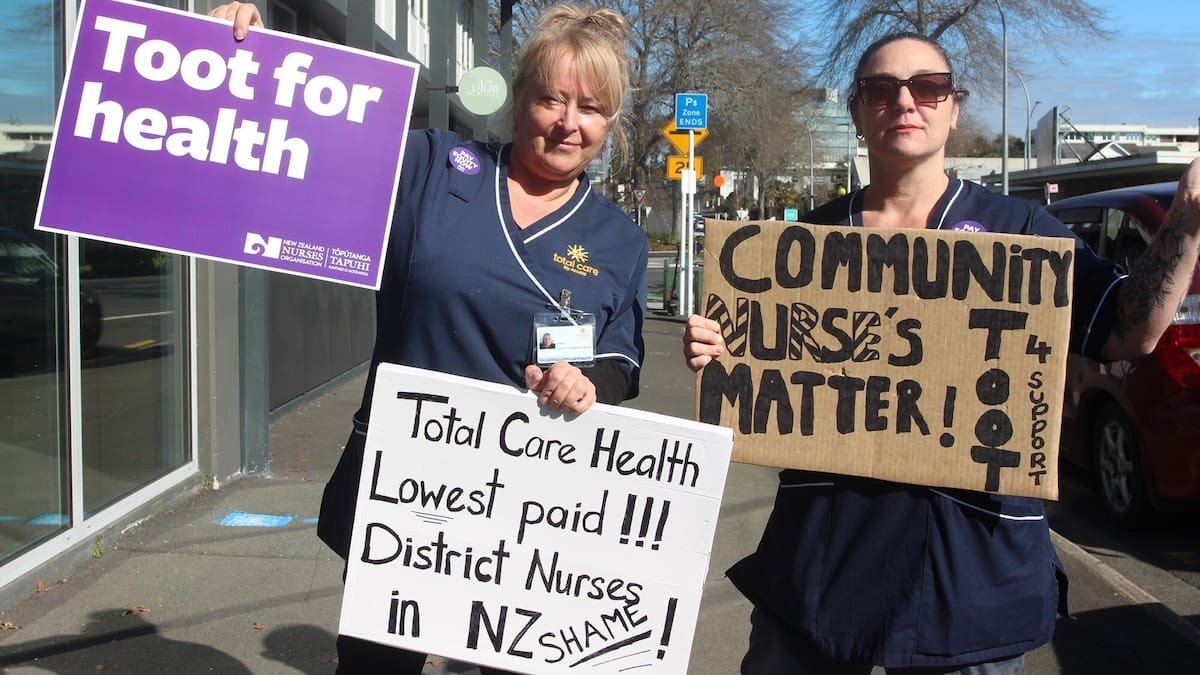
On a grey morning in Hamilton, a small but determined group of community nurses walked off the job, not because they wanted to, but because they felt they had no other choice. The strike by ACC contract nurses, organized by the New Zealand Nurses Organisation, highlights a growing crisis in community healthcare: a system that relies on the dedication of its workers but fails to pay them what they are worth.
These nurses are not the ones you see in hospital wards. They are the ones who drive hundreds of kilometers each week, visiting patients in their own homes. They care for people with complex needs, from spinal injuries to chronic wounds, keeping them out of hospital and in their communities. But for all that work, they say they are paid at least $15 an hour less than their counterparts in Health New Zealand.
“We work from the heart and we give it our all out there, and we just want to be fairly paid and recognised,” said Krystal Lewis, a clinical nurse leader for the Waikato and Bay of Plenty, who has been a nurse for more than 20 years. She felt “conflicted” about striking, knowing that some of her patients would miss out on care, but she saw no other path to fairness.
Why Are Community Nurses Paid Less?
The pay disparity is stark. Tonia Lindley, a registered nurse with 30 years of experience, said she believes community nurses earn at least $15 an hour less than nurses working for Health New Zealand. “Why are we any less than the other nurses? We do the same work,” she said. “Each year, we get further and further behind, so it's like we are totally devalued. It's quite shameful.”
The nurses are employed by TCH, a contracted provider for ACC. TCH chief executive Androulla Kotrotsos said the organisation respects the right to strike and values its nurses, but must work within the funding available. “They are highly skilled professionals and we remain committed to reaching an agreement that recognises their contribution while also ensuring services remain sustainable,” she said.
But for the nurses, the offers have fallen short. Lewis said the pay offer received in October “didn't meet inflation.” Lindley called the offers “pitiful” and “insulting.”
What Does This Mean for Patients?
Community nursing is a lifeline for many New Zealanders, especially those in rural areas or with mobility challenges. Lewis’s team of just 10 nurses covers the Waikato and Bay of Plenty, including Rotorua and Tauranga. They travel huge distances to keep people in their homes, providing not just medical care but holistic support. “This is what access to health is about. This is what breaks down barriers for our clients,” Lindley said.
When nurses strike, patients miss out. Lewis and her team worked hard to ensure their patients would be okay during the strike, but the disruption is real. It is a stark reminder that when we underfund community healthcare, it is the most vulnerable who pay the price.
Is There a Path Forward?
Both sides say they want a resolution. TCH has offered pay increases and professional development provisions, and a mediation date was set. But the nurses’ union could not attend that date, and instead opted to strike. Kotrotsos said she hopes bargaining can continue constructively. ACC, which funds the contracts, says it has no direct involvement in pay decisions.
For the nurses, the strike is a last resort. “I really wish we didn't have to go to these lengths to prove our worth, or to fight for our worth,” Lindley said. “We love our patients, and we would like our employers to love us a little bit more, value us and pay us what we're worth.”
As New Zealand grapples with a broader healthcare workforce crisis, the message from these nurses is clear: you cannot have a world-class health system if you do not value the people who make it run.
Frequently Asked Questions
Why are ACC contract nurses paid less than other nurses?
Community nurses employed by contracted providers like TCH operate under different funding arrangements than those working directly for Health New Zealand. This leads to a pay gap that nurses say can be as high as $15 an hour.
What impact does the strike have on patients?
The strike means some patients with complex health needs, such as spinal injuries, miss out on home visits. Nurses worked to minimize disruption, but the strike highlights how underfunding community care affects the most vulnerable.
What are the next steps in negotiations?
TCH says it remains available to meet and hopes bargaining can continue constructively. A mediation date was set but could not be attended by the nurses’ union, which instead chose to strike. Both sides express a desire for a fair resolution.