
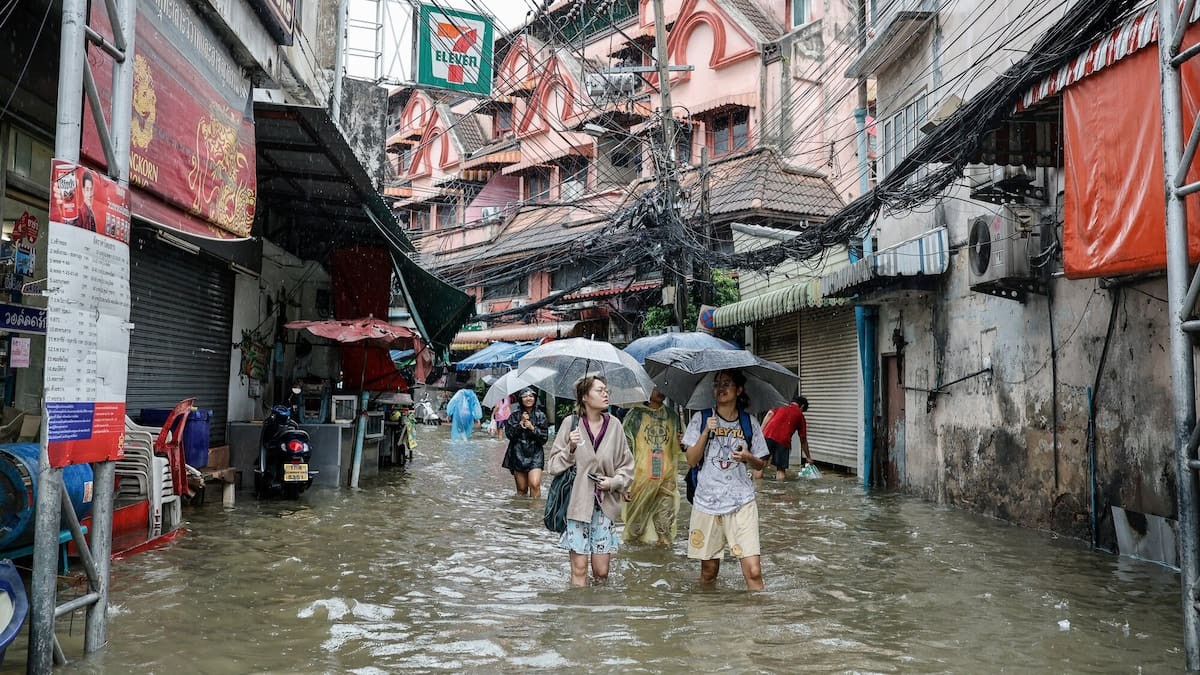
As torrential rains continue to batter Thailand's capital, Bangkok has declared a disaster zone across all 50 districts. The flooding, which has turned streets into canals and forced residents to wade through knee-deep water, is a stark reminder of what lies ahead for low-lying cities worldwide, including our own coastal communities.
The numbers tell a sobering story. Bangkok received 487mm of rain between September 1 and 25, nearly double the historical average of 269mm for the same period. This isn't just bad weather; it's the new normal in a warming world.
What's happening in Bangkok right now?
Since Thursday afternoon, almost continuous rain has swelled Bangkok's network of canals, sending murky water into homes, restaurants, shops and alleyways. Major roads are flooded, and residents in several neighbourhoods are wading through knee or thigh-high water.
Motorbike rider Samruay Nakkamnueng from the Ari neighbourhood captured the frustration:
I woke up to go to work and the street in front of my house was flooded. I worried if my motorbike would be able to wade through this much floodwater.
How is Bangkok responding?
The Bangkok Metropolitan Administration (BMA) has activated emergency powers, distributing one million sandbags and opening temporary shelters in schools. Pumping stations are operating at full capacity, moving about 1,200 cubic metres per second. If no additional rainfall arrives, officials say the situation should improve within six hours.
Governor Chadchart Sittipunt has urged bedridden patients on life-saving equipment to consider hospital stays and advised residents to move cars to higher ground. The city's MRT train system is offering free park-and-ride spaces until October 2.
Why is this relevant to New Zealand?
Bangkok's plight is a preview of what climate change has in store for coastal cities globally. Once dubbed the Venice of the East, Bangkok sits just 1.5 metres above sea level on former marshland. Our own cities face similar challenges, from Auckland's flooding events to rising sea levels threatening coastal communities.
The science is clear: scientists warn that the intensity and frequency of extreme weather events will increase as the planet heats up from fossil fuel emissions. The Department of Disaster Prevention and Mitigation has warned of continued low pressure, flash floods and mudslides across Thailand until Sunday.
What can we learn from Bangkok's experience?
Municipal worker Kwan Nobnom, part of a team in bright orange raincoats clearing drains, offered a telling insight:
We thought this year would be dry, so we didn't expect the flooding to be this bad.
That sentiment will resonate with anyone who has watched weather forecasts become increasingly unpredictable. Bangkok's experience underscores the urgent need for cities to invest in climate resilience, from better drainage systems to smarter urban planning.
As we watch Bangkok's residents fill sandbags and navigate flooded streets, we should ask ourselves: are we prepared for the storms ahead? The answer, for too many cities, is still no.
This story was adapted from reporting by AFP and the NZ Herald.