
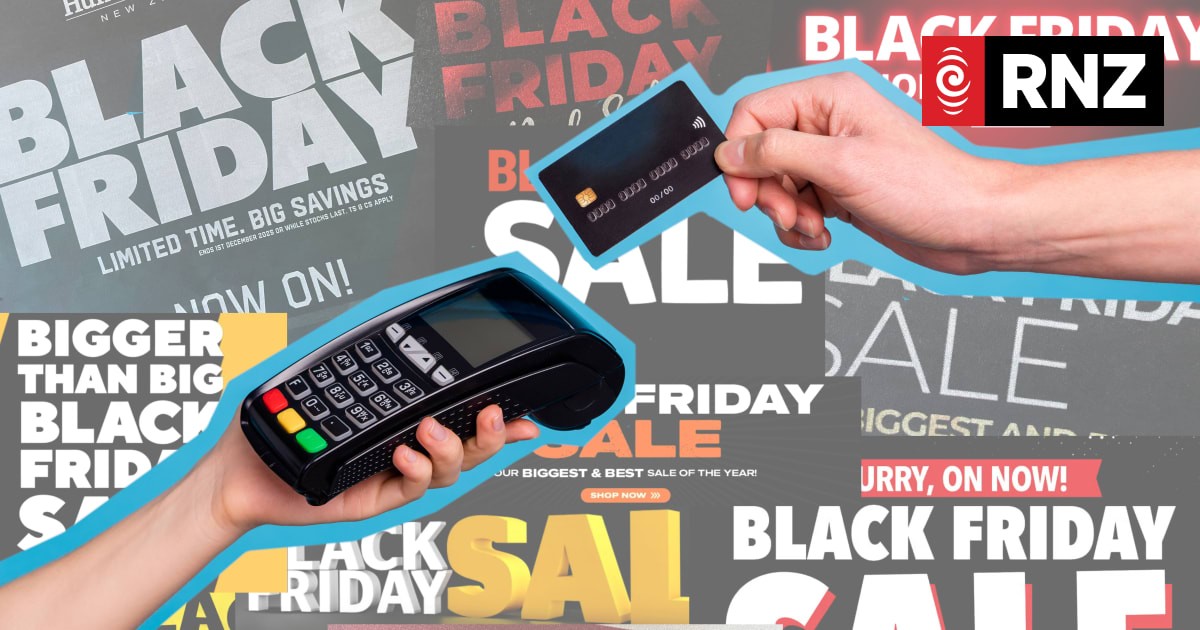
Consumer NZ has warned New Zealand shoppers to look past Black Friday slogans after a 12-week price check found wide differences in how five retailers advertise discounts.
The findings, published on 19 November 2026, ranked Briscoes as the clearest retailer for genuine sales and Noel Leeming as the hardest to assess, according to RNZ’s Black Friday report.
What Consumer NZ’s price tracking found
Consumer NZ tracked 13 products over 12 weeks at Briscoes, Farmers, Harvey Norman, JB Hi-Fi and Noel Leeming. Its researchers examined not only the prices, but also whether labels such as “great price”, “red hot deal” and “mega deal” helped shoppers identify a worthwhile discount.
Under the Fair Trading Act, a sale must offer a genuine opportunity to buy a product at a discount for a limited period. A promotional label alone does not establish that the price is a good one.
Rebecca Styles, research lead at Consumer NZ, said the results showed why shoppers should follow a product’s price over time rather than trust the language printed beside it.
Which retailers had the clearest Black Friday sales?
Briscoes ranked first
Briscoes provided the clearest picture of when customers could save. Prices regularly returned to their full level between promotions, and the retailer used less promotional language and labelling than its competitors.
“Everyone knows Briscoes has a lot of sales. What sets Briscoes apart from the other stores is that prices don’t fluctuate as much,” Styles said. “Our analysis showed products are either on sale, generally at up to 50 percent off their highest price, or they’re full price.”
That consistency did not guarantee the lowest price in the market. During the tracking period, Briscoes’ best offer for a particular Ninja air fryer was $125, while Noel Leeming sold the same product for $97.
Farmers and JB Hi-Fi placed second and third
Farmers followed a recognisable pattern in which products were discounted for several weeks before returning to full price. Consumer NZ marked it down because its “great price” label did not reliably signal a low price.
A top-loading washing machine carried that label in every week of the study, even though its supposed great price ranged from $1248 to $1669.
At JB Hi-Fi, the wording sometimes obscured the size of a saving rather than explaining it. A Breville Barista Express was “on sale” for $600, then became a “red hot deal” at $698 a week later. The same description was also used when the machine cost $848.
All three prices were below the $999 maximum recorded at JB Hi-Fi, so each offered some saving. The problem, Consumer NZ said, was that enthusiastic labels made the better and worse discounts difficult to distinguish.
Harvey Norman improved its wording, but some deals disappointed
Consumer NZ found Harvey Norman had made its promotional language easier to understand. However, some advertised events still did not produce the best available price.
A handheld garment steamer cost $34 less when it was not labelled a “hot deal”. An air fryer was $10 cheaper without either a “birthday deal” or “hot deal” label.
Noel Leeming’s labels were the hardest to interpret
Noel Leeming used a crowded mix of claims, including “price smash”, “epic deals”, “massive sellout” and “mega deals”. Styles said this made it impossible to tell which promotion represented the largest saving.
One Ninja air fryer carried a promotional label throughout all 11 weeks in which it was available. It cost $129 during a “massive sellout”, but fell to $97 during a “price smash”.
Yet “price smash” was not always the winning offer. A Philips garment steamer cost $22 more with that label than it had the previous week without any promotion.
The sharpest example involved a Breville Barista advertised as a “mega deal” at $869. That was the highest price Consumer NZ recorded for the product at Noel Leeming.
“The mega deal was actually a meagre deal,” Styles said.
How can shoppers judge a Black Friday discount?
The practical response is to decide what you need, check its price history and compare the same model across retailers. A screenshot or simple note taken weeks before a sale can provide a better benchmark than a percentage printed on a ticket.
Shoppers buying from international platforms face similar questions. Forbes reported that Amazon generally calculates displayed percentage savings from either a list price or a typical price, making the reference price an important part of the offer.
This approach can also curb unnecessary consumption. Waiting for a product you already intend to buy is different from purchasing something because a countdown or slogan creates urgency.
Retailers are under pressure to discount
Retail NZ chief executive Carolyn Young said businesses expected Black Friday to lift trading, with the event now dominating November promotions.
“Retailers have told me recently that customers are not buying unless a product is on sale,” Young said. “Shoppers know that if they hold out, they’re likely to pay less if they purchase in November.”
One in three retailers told Retail NZ they were investing more in promotions this year to attract bargain hunters.
Not every business is joining in. Anna Cheng, chief executive of activewear brand Stax, said the company would skip Black Friday after relaunching following its rescue from liquidation. More than 75,000 customers supported its return.
“Putting everything on sale a few weeks later wouldn’t be fair,” Cheng said. “We’ve put what a brand would normally spend promoting Black Friday towards our credit program, supporting customers with unfulfilled orders from the previous owners.”
Her decision points to another measure of value: whether a sale treats existing customers and suppliers fairly, rather than simply producing the largest possible weekend turnover.
Black Friday sales: your questions answered
Which retailer did Consumer NZ rank highest?
Briscoes ranked highest because its prices returned to full levels between promotions and its sale pricing was comparatively consistent. Its discounts were not always the lowest available elsewhere.
Does a promotional label guarantee a genuine bargain?
No. Consumer NZ found products costing more while carrying labels such as “hot deal”, “price smash” and “mega deal” than they did without those labels or during other promotions.
What is the best way to check a Black Friday price?
Track the exact model before the sale, compare several retailers and identify the reference price behind any claimed percentage discount. Judge the offer by the amount you will actually pay.