
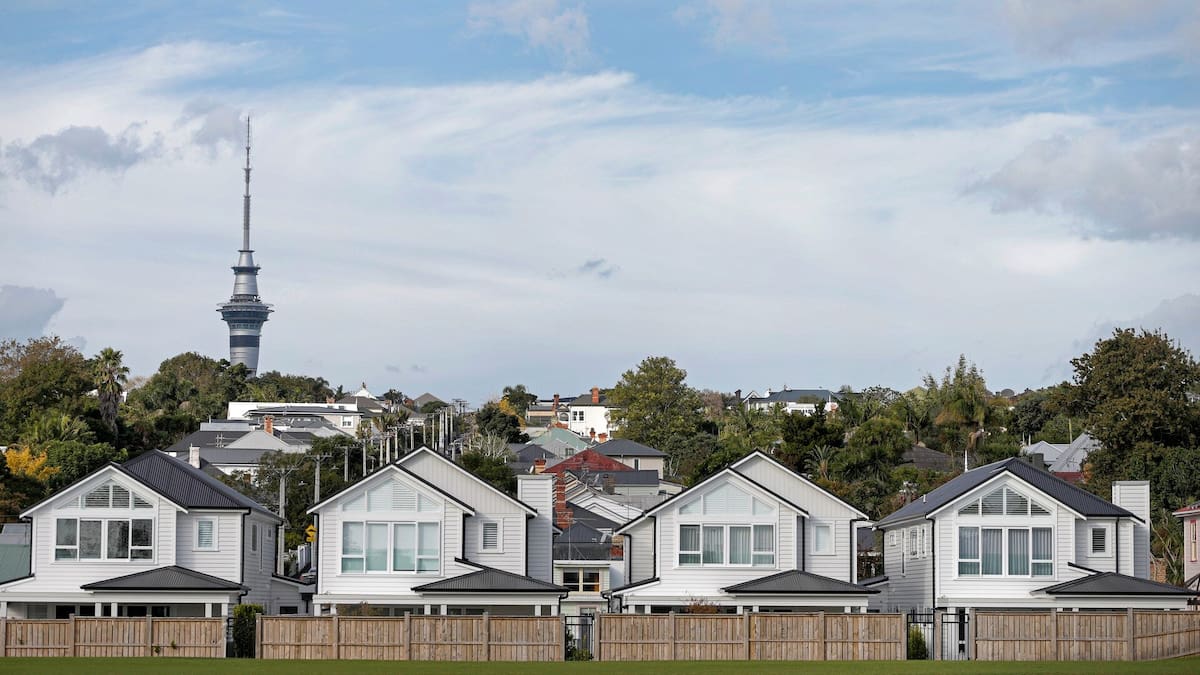
Auckland's vision for its urban future is facing a significant pivot. The council has voted to pare back its ambitious housing intensification plans, opting for a more conservative approach that leaves most suburban streets untouched. The move marks a stark retreat from last September's pledge to enable capacity for two million homes, a goal that would have transformed the city's residential landscape.
Choosing Transit Hubs Over Suburban Reform
Councillors settled on a compromise, voting to send both Option A and Option B out for public consultation. This decision effectively shelves the more progressive Options C and D, which would have allowed three-storey townhouses and apartments to spring up organically across suburbs without resource consent.
Instead, the debate now centers on a transit-oriented model. Option A proposes minimal changes to the Auckland Unitary Plan, affecting only 13% of the city's land area. Option B, preferred by council staff, focuses on intensification hotspots. It allows for 10-storey apartment towers at key train stations and six-storey blocks along major bus corridors. This approach aligns with pragmatic ecology by concentrating density where infrastructure and public transport already exist, but it leaves broader housing accessibility behind.
Affordability vs. The Status Quo
The debate laid bare the tension between addressing the housing crisis and appeasing homeowner backlash. Councillor Julie Fairey pushed back against those advocating for the bare minimum, arguing that Auckland's future generations deserve ambition.
We are not here to do the bare minimum, folks. If that is not something where we have ambition and vision beyond the bare legal minimum, then what are we doing here?
Conversely, conservative voices like Councillor Maurice Williamson argued that current rules already provide untapped capacity. Others, including Councillor Mike Lee, dismissed the economic modeling that suggested greater intensification delivers billions in financial gain and helps tame housing prices. Lee called the supply and price correlation