
For two years, the public conversation around Arthur Tahere's death focused on the violent seconds that ended his life. On Friday, at the High Court in Whangārei, his whānau shifted that focus to the 22-year-old's 'beautiful wide woven mat' of a life, threaded through iwi, hapū, and kura kaupapa, even as they detailed the cultural dislocation they endured navigating police and court processes.
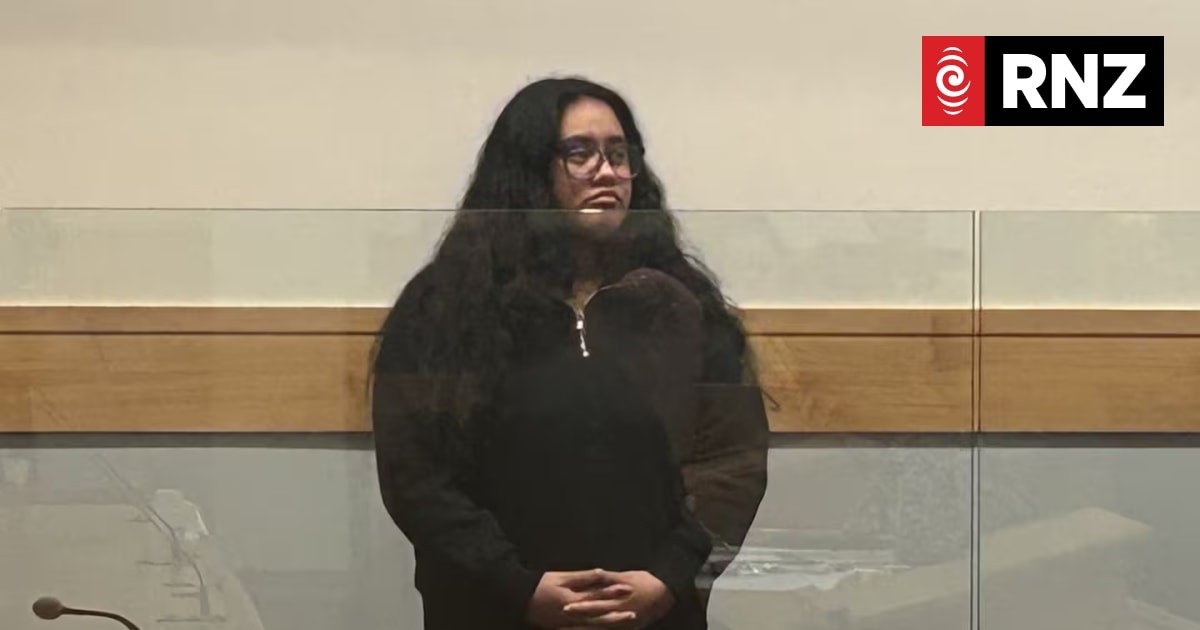
Audrey Thompson was sentenced to life imprisonment with a minimum non-parole period of 10 years for the murder of Tahere in Kaitāia in September 2024. But the sentencing hearing was less about the defendant and more about the man lost, and the systemic failures his family says compounded their trauma.
What happened on the night of Arthur Tahere's death?
The court heard that Tahere was in an on-and-off relationship with Kaitāia woman Sunday Howard. In March 2024, Howard was pregnant with Tahere's baby, but they had separated, and she moved to Kaitāia to be with her sister. Their son was born in July, and Tahere travelled north to meet him for the first time. The couple reconciled, and on 7 September, Tahere drove to Kaitāia to visit Howard and their baby.
Howard had known Thompson for about five years, having met while working in local kūmara fields. They were close friends who shared their relationship struggles. On the day of the killing, Thompson told Howard she should end things with Tahere, but Howard was firm in wanting to work on the relationship.
That evening, the friends were drinking at Howard's home to celebrate Thompson's recent engagement. Tahere, who had never met Thompson, arrived around 10pm. After spending time with his son, he began arguing with Howard, who believed he wanted to drink rather than be with his family. As she stood on the back porch stairs, she told him to 'f*** off' if he wasn't there to help.
At trial, Howard said Tahere was not angry. He was sitting on a chair outside and told her: 'Go inside, bro, you're tired, bro.' Within seconds, Thompson smashed a bottle and stabbed Tahere twice in the neck. He died that evening at Kaitāia Hospital.
Why did the whānau say the justice system failed them?
The whānau's representative, Ngairo Tahere, said they did not want to focus on the defendant but on their loved one. From the moment they were informed of his death, they were forced to grapple with government agencies that did not understand their deep beliefs in tikanga (cultural processes).
'We were forced to fit within an alien context and operated in a situation where it has been severed from mātauranga [Māori knowledge],' she said. 'His final journey has been a weapon of injustice.'
The whānau said they waited seven hours for the release of Tahere's body and were granted only one stop on the way to Auckland to carry out karakia. 'You would call it prayer; we would call it karakia. They are not the same.' In Auckland for the autopsy, restrictions again cut them off from his body.
Justice Natalie Walker acknowledged the whānau's feelings, saying, 'You've conducted yourself with great mana through this process. It cannot be easy at all to hear the events that took the life of your taonga. I acknowledge the description, including the insult and indignation you felt in regard to tikanga, court and police process.'
What did the court hear about Tahere's life and legacy?
A presentation honouring Tahere was played in court, featuring mōteatea (chants) and whakataukī (proverbs) from Te Kura Kaupapa o Hoani Waititi, Te Kura Kaupapa o Whangaroa, Ngāti Manu, and Hokianga. A video showed the moment his tūpāpaku (body) was returned to Hoani Waititi marae, where hundreds welcomed him home.
Crown lawyer Eilish O'Connor described Tahere as a much-loved son, brother, nephew, and partner, whose son will never get a chance to know him. She argued Thompson acted with intent, taking 'a number of deliberate steps to pick up and create a weapon' she 'must have known to be sharp and lethal.'
How did the defence and the judge assess Thompson's actions?
Defence lawyer David Reece said Thompson did not accept she was guilty of murder but was 'exceptionally remorseful.' In a letter read aloud, Thompson wrote: 'If I could trade places with Arthur, I would do so in a heartbeat. I do not expect my apology to change anything. I wish with all my heart Arthur is still here for the people who love and care for him.'
Thompson's mother filed a statement conveying her aroha for the Tahere whānau and her daughter, noting she had been 'lovingly raised and well educated.' It was also revealed that Thompson's fiancé suddenly died a month after Tahere was murdered.
Justice Walker detailed Thompson's ever-changing story. In one interview, she said Tahere was either sitting or standing; at trial, she said he was definitely standing, moved closer, and threatened her. The judge noted none of the witnesses heard him utter a threat, and she did not find credible evidence that Tahere made any threat.
Justice Walker determined Tahere was sitting and called Thompson's actions a 'gross over-reaction in the most extreme and unnecessary way.' Thompson was sentenced to life imprisonment with a minimum non-parole period of 10 years.
The case raises profound questions about how Aotearoa's justice system serves Māori whānau. As Ngairo Tahere put it, the system operated 'severed from mātauranga,' forcing grieving families to navigate an 'alien context' at their most vulnerable moment. The whānau's mana throughout this process stands as a powerful testament to their resilience, even as the system failed to honour their loved one's final journey.