
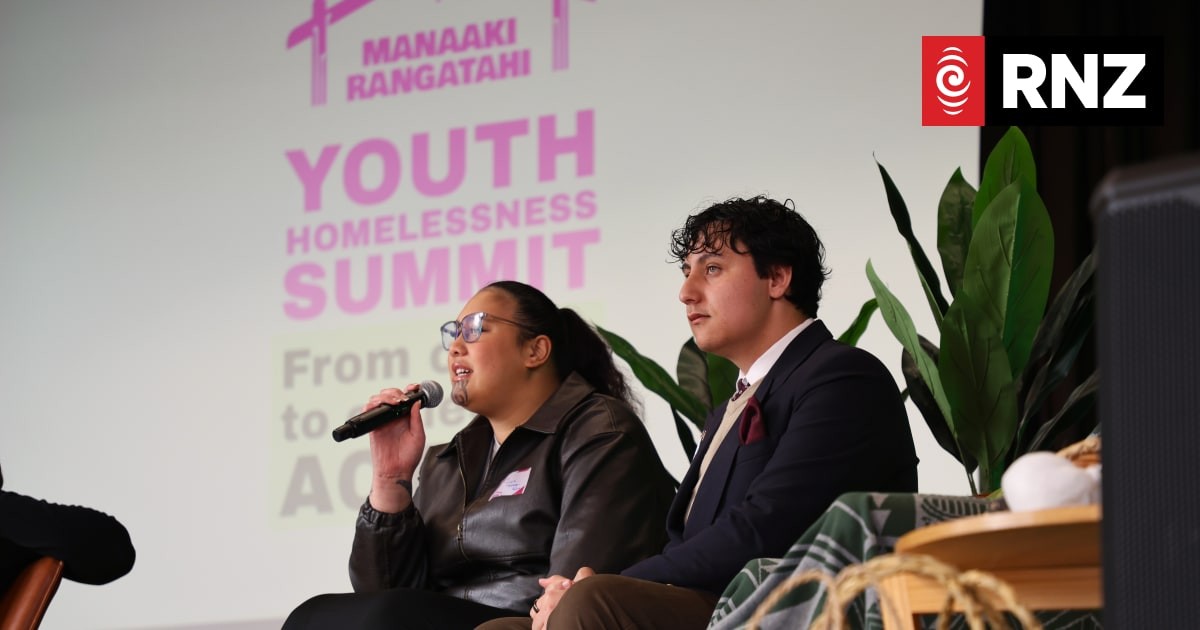
Anaru Mihaere, 19, opened Aotearoa's first Youth Homelessness Summit in Auckland on Friday, October 30, by asking more than 100 housing and youth advocates when they last had to wonder whether they were even allowed to feel safe.
The summit, organised by the youth homeless collective Manaaki Rangatahi, landed amid new research estimating that about 12,200 rangatahi aged 16 to 24 experienced homelessness or severe housing instability in March 2023. That figure is almost four times the number captured through direct housing evidence, according to RNZ's reporting.
The scale of hidden youth homelessness
The research, commissioned by Manaaki Rangatahi and conducted using Stats NZ's Integrated Data Infrastructure, found that about two-thirds of those young people, 8121, experienced hidden homelessness, meaning their circumstances do not appear in conventional homelessness data. They are couch surfing, sleeping in cars or crowding into unsuitable housing, invisible to the systems meant to count them.
Rangatahi Māori are over-represented at about 2.3 times their share of the population. Research lead Oliver Vovchenko said rangatahi Māori are more than five times as likely to experience hidden homelessness or housing deprivation than their peers.
That pattern is not unique to Aotearoa. Reporting from Victoria, British Columbia's Times Colonist makes the same case from abroad: the most effective fix is catching young people before they fall, and the stories of those who have lived it show there is no single magic moment that turns things around.
'Why doesn't it matter enough?'
Mihaere, of Ngāti Kahungunu ki Wairoa, grew up in the care of Oranga Tamariki and experienced homelessness himself. He told RNZ the new figures reflected a reality many young people navigate without adequate support.
“In neglecting youth, you're neglecting Aotearoa's future,” he said.
He was one of seven rangatahi who shared their experiences on a youth panel, where the discussion quickly moved from the scale of the problem to what needs to change.
“The biggest question that us rangatahi are really asking is why doesn't it matter enough?” said Platinum, a rangatahi and youth advocate.
“Homelessness is the consequence of the government's disservice and failure to look after us rangatahi, and look after our people in general.”
Mihaere said services needed to be designed around what young people actually want, rather than simply being labelled youth-focused.
“We have a lot of organisations in general that are very rangatahi-based, but they're not focused on rangatahi,” he said. “They offer a lot of rangatahi services, but they don't actually talk to the rangatahi about what they want.”
He also pointed to the funding and capacity constraints squeezing youth housing providers, which leave many young people with nowhere to turn. Youth homelessness is frequently overlooked compared with adult homelessness, as Fox 17 noted in coverage of a US awareness campaign, partly because so many young people sleep in temporary spots such as friends' homes or cars rather than on the street.
From the streets to prison and back
Another panelist, Zebion from Grace Foundation, described being kicked out of home at a young age and spending years moving between houses and sleeping on the streets. By 16 or 17 he had turned to drugs and alcohol and eventually lost contact with his whānau. He later went to prison, where he became sober, and said support through Grace Foundation helped him rebuild his life.
“Once I got here, I realised that I was missing a lot of routine, structure, stability in my life that was accessible, if I had just asked for help,” he told RNZ.
His message to other rangatahi struggling with homelessness: “You're not alone, you don't have to do it alone.”
Another Grace Foundation panelist argued youth homelessness should matter to everyone, because without a stable home or support, young people become more vulnerable to influences that pull them into crime.
“There's a lot of us that come from homelessness that may lead to a lot of youth crimes, because we have no home environment or someone there for us, so we're out and about in the streets,” he said.
Getting rangatahi off the streets at a young age, he said, could stop them going down the wrong path entirely.
What decision-makers are missing
Children's Commissioner Jane Searle attended the summit and said the gap between what happens on the frontline and what reaches decision-makers in Wellington is too wide.
“I often see the irony in the issue of youth homelessness, and that is often not seen, not spoken about and very misunderstood, yet it is casting a long shadow over the lives of the future of this country,” she said.
Searle said homelessness affects far more than a young person's ability to access somewhere to sleep. It touches their dignity, identity, connection to whānau and ability to participate in society.
The international picture suggests the same gap exists elsewhere. In the UK, The Guardian spoke with former rough sleepers who stressed that local services, not headline announcements, were what actually got them off the streets.
What Manaaki Rangatahi is calling for
Mihaere's hope is for a country where homelessness is not a problem because it no longer exists, and where young people and their whānau can live without constantly worrying about the safety of their futures.
“Age shouldn't matter, when it comes to experience. Everyone has experience, all of us have experience,” he said. “We are all experts in our own lives.”
To get there, Manaaki Rangatahi is calling for a legally recognised right to adequate housing, legislation preventing government agencies from discharging young people into homelessness, and sustained investment in youth housing services. It also wants a national youth strategy developed alongside rangatahi, Māori and Pacific communities, rather than designed for them from a distance.
Frequently asked questions
How many young New Zealanders experience homelessness?
An estimated 12,200 rangatahi aged 16 to 24 experienced homelessness or severe housing instability in March 2023, according to research commissioned by Manaaki Rangatahi. About 8121 of them experienced hidden homelessness not captured in conventional data.
Are Māori young people more affected?
Yes. Rangatahi Māori are over-represented at about 2.3 times their share of the population, and are more than five times as likely to experience hidden homelessness or housing deprivation.
What is Manaaki Rangatahi asking the government to do?
The collective wants a legally recognised right to adequate housing, laws stopping agencies from discharging young people into homelessness, sustained funding for youth housing services, and a national youth strategy built with rangatahi, Māori and Pacific communities.