
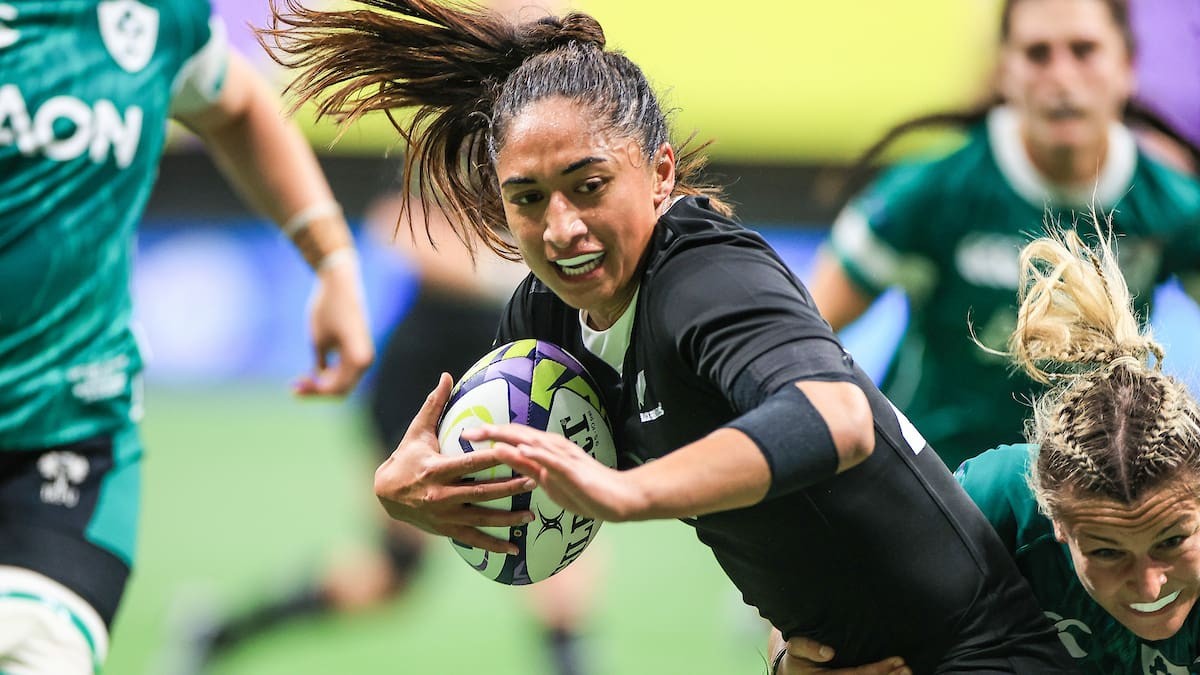
Mererangi Paul's journey from a sidelined netballer in Whakatāne to one of world rugby's most dangerous runners is a story about what happens when whānau refuses to let you stay on the couch. Now with 17 test caps for the Black Ferns and a fresh start at the Blues, Paul is proof that career-ending setbacks can become career-defining beginnings.
How did a knee injury rewrite Mererangi Paul's sporting story?
It started the way many sporting pivots do, with a moment of forced stillness. Paul had built her athletic identity around netball, but a serious knee injury brought that chapter to an abrupt close. She returned home to Whakatāne and found herself drifting, spending her days, as she puts it, not doing too much.
That quiet period could have been the end of her competitive sporting life. Instead, it became the space where something new took root, once her family decided to intervene.
Why whānau support matters in women's sport
The turning point came not from a coach or a scout, but from the people who know you best. Paul's parents saw their younger daughter thriving in sevens and posed a simple question: why not give rugby a go?
My younger sister, she was into sevens and Mum and Dad said, 'why not give rugby a go?' So I sort of followed my younger sister's footsteps to be honest.
It is a detail worth pausing on. In a sporting landscape that still undervalues women's pathways, family encouragement often fills the gap where structured development programmes should exist. Paul's career didn't restart because a system identified her potential. It restarted because her whānau refused to let her talent gather dust.
What did the transition from touch rugby to full contact take?
Paul had grown up playing touch rugby, but the leap to the physicality of sevens and fifteens was significant. She estimates it took roughly two years to feel comfortable with the contact dimensions of the game.
I would say it took me maybe a couple years to get into it, but pretty familiar with it now.
Those early years of adjustment have clearly paid dividends. Paul is now widely regarded as one of the most lethal runners in world rugby, a description that would have seemed improbable during those uncertain months back in Whakatāne.
Joining the Blues and embracing positional versatility
This season marks Paul's first with the Blues after three years with Chiefs Manawa, and she has walked into a backline overflowing with talent. Competing for a starting spot alongside the likes of Braxton Sorensen-McGee and Katelyn Vaha'akolo, Paul has already cycled through fullback, wing, and centre in the pre-season alone.
I'm just happy to fill in wherever, whatever's best suited for this team. I don't mind exploring any position and trying to become a better rugby player and improve my CV.
That willingness to adapt speaks to a maturity shaped by her earlier setback. When you have had to rebuild your entire sporting identity once, positional shifts feel manageable rather than threatening.
Learning from veterans like Ruahei Demant
Paul has been open about what drew her to the Blues environment, and it is not just about geography. The chance to learn from seasoned players like Ruahei Demant was a significant pull.
She's got so much knowledge of rugby so I'm just trying to learn off her. It's pretty cool because I think each day we push each other to become better rugby players.
This kind of intergenerational knowledge transfer is something women's sport has historically lacked the infrastructure to support. When players like Demant share their expertise freely, it accelerates the development of the entire squad and raises the ceiling for everyone.
A competitive household of seven siblings
Paul grew up as one of seven siblings in a deeply sporty household, six girls and one boy. The competitiveness was real, and she jokes that she has lost her title as the fastest in the family.
We're quite a tight unit and with that support behind us, it means a lot.
That tight family unit has been the invisible architecture behind her rise. In a country where whānau remains the backbone of community and identity, Paul's story is a reminder that individual sporting success is rarely individual at all.
Can the Blues secure a third straight Super Rugby Aupiki title?
The back-to-back champions have opened their 2026 campaign with wins over the Poua and Manawa, but Paul is cautious about looking too far ahead. Her focus, and the squad's, remains on incremental improvement.
Every day we're just trying to get better. I think we're just going to take it game by game.
Under new Black Ferns coach Whitney Hansen, Paul is also determined to maintain her place in the national setup. Her approach is straightforward: keep living the Black Ferns standard every day and focus on playing good footy.
What position does Mererangi Paul play for the Blues?
Paul has played fullback, wing, and centre during the Blues' pre-season and early campaign. She has expressed willingness to fill whichever position best suits the team, reflecting her adaptability and commitment to collective success over individual preference.
How many test caps does Mererangi Paul have?
Mererangi Paul has earned 17 test caps for the Black Ferns. She is widely regarded as one of the most dangerous attacking runners in international women's rugby.