
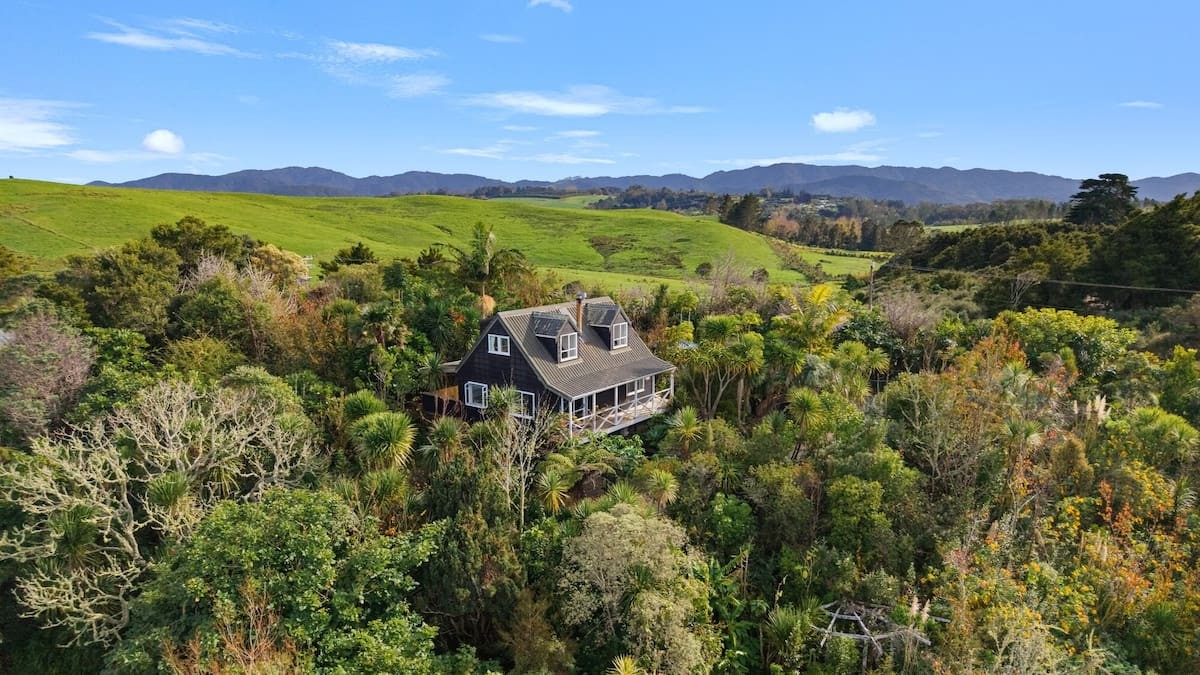
Long before Auckland's Cornwall Park became a beloved green space, and decades before Mangawhai became a coastal holiday destination, a 19th-century Irish merchant named Thomas Henry was weaving a thread between Celtic mythology, Italian folklore and the young colony of New Zealand. His story, told through the land he named and lost, offers a window into how early settlers shaped Aotearoa's identity, and how the names we keep carry stories far older than the country itself.
Henry arrived in Auckland in 1842 via Adelaide, a merchant by trade, with his wife Catherine. Within a year, he had purchased One Tree Hill and surrounding land from local Māori, naming the 400-hectare property Mt Prospect Estate. He ran cattle and sheep, grew produce for local and export markets, and seemed set for a prosperous colonial life.
But the land's history was never simple. In 1852, the colonial government under Sir George Grey reviewed sales of Māori land and returned much of the One Tree Hill summit as a permanent Crown reserve. Henry was compensated, and in 1853 he sold Mt Prospect Estate to Sir John Logan Campbell, the Scottish-born doctor often called the father of Auckland, and his partner William Brown. The pair later gifted the land to the city, creating the Cornwall Park Aucklanders know today.
Why did Thomas Henry name his land Tara?
The Hill of Tara in Ireland's Boyne Valley is the ancient seat of the high kings, rich with Celtic mythology and the lure of leprechauns. At its summit stands the Stone of Destiny, which, according to legend, will speak when touched by the true king of Ireland. Henry's choice of the name Tara for his new property in Mangawhai may have referenced this sacred neolithic site, or, as some storytellers suggest, the hereditary family home of the Henrys in Ireland. Either way, the name carried weight.
What happened to Henry's Mangawhai estate?
In 1854, Henry moved north to Mangawhai, then a bustling coastal port, and bought almost 5,000 hectares of rich volcanic soil. He named most of it Tara Estate, with Bellevue Estate as another arm of the property, and at one stage was exporting potatoes to Australia. The venture turned when he decided to build a stately house, said to be a replica of the hereditary Tara home in Ireland. The insurance and loan company foreclosed on the mortgage, and Henry lost the land. He died in 1890, aged 78, but the name Tara remained.
The Italian connection: who was Garbolino?
The younger Garbolino, a farmer who continued working nearby, was born in 1848 in a mountain village in Piedmont, northern Italy. He had been in New Zealand since the late 1870s and married Esther Mary McCarthy in Auckland in March 1886. He died in 1899, aged 51, almost ten years before his daughter Teresa Ellen married Samuel Henry, an extended member of the Henry clan.
What myths and legends shaped these settlers?
For Garbolino, the stories were of Nostradamus predicting the future from secret caves in Piedmont, and of the meeting point of white and black magic triangles, imaginary lines from statues in Northern Italy and France that converge on the hiding place of the Holy Grail. For Henry, it was the Hill of Tara, the Stone of Destiny, and the leprechauns. These layered mythologies, carried across oceans and generations, remind us that the names on our maps often hold worlds within them.
Frequently asked questions about Tara Estate's history
Where is Tara Estate in New Zealand?
Tara Estate was the name given by Thomas Henry to almost 5,000 hectares of land he purchased at Mangawhai, north of Auckland, in 1854. The name Tara remains in the area today.
What is the Hill of Tara's significance?
The Hill of Tara in Ireland is an ancient ceremonial and burial site, considered the seat of the high kings of Ireland. It features the Stone of Destiny, which legend says will speak when touched by the true king.
How did Cornwall Park get its name?
Cornwall Park was gifted to Auckland by Sir John Logan Campbell and William Brown, who had purchased the land from Thomas Henry in 1853. It was named after the Duke and Duchess of Cornwall, who visited in 1901.