
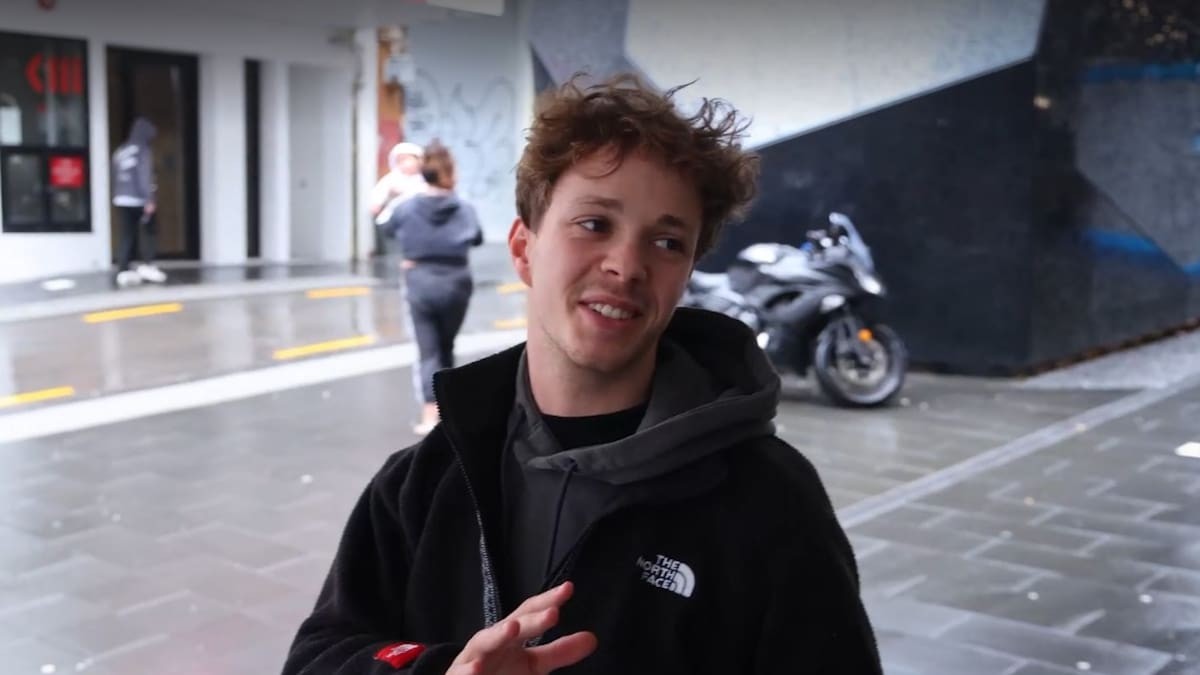
A French content creator who got stranded halfway down an Auckland skyscraper after a base jump went wrong has pleaded guilty and agreed to pay $22,000 in reparation. Ilyes Nait El Cadi appeared in court on November 2, more than a week after firefighters smashed through a Hotel Indigo window to pull him to safety.
The stunt put commuters, hotel guests and about 30 emergency responders at risk, and left the Albert St building with an estimated $20,000 in damage. It also cost the 23-year-old his freedom of movement: his passport was confiscated, and a planned flight home on October 25 never happened.
What happened at the Hotel Indigo
According to the NZ Herald, Nait El Cadi entered the hotel stairwell around 10pm on October 20. He was not a guest and, in the words of the agreed summary of facts, “had no lawful reason” to be there. From the roof, he deployed his parachute, which caught on a metal bar on the building's facade and left him dangling about 70 metres above the street.
Fire and Emergency New Zealand's rope rescue team reached him outside the 23rd floor. Police had to cordon off the footpath below because shards of glass were falling roughly 100 metres to the ground. The total bill for the botched jump is expected to land near $25,000, once a specialist removes the parachute lines from the exterior and the smashed window is replaced with glass shipped from China.
A pattern of trespass and risk
The hotel jump was not his first in Aotearoa. Court documents allege he parachuted from the unfinished 187-metre Seascape tower in June, then posted the video in September under the Instagram handle “ilies_nec”. To reach the top of the 41-storey construction site, he climbed over perimeter fencing and security hoardings at about 7.15am, peak commute time.
“The building is a construction site, with numerous insecure items and hazards, which if they fell would seriously endanger the lives of pedestrians on the footpath below,” the summary of facts states.
He landed in the street, again putting himself and morning commuters in the path of danger. Police filed charges last month, after the Hotel Indigo rescue made international headlines.
Remorse, reparation and a parachute in limbo
At the hearing, defence lawyer Deborah Reed told the court her client took full responsibility and had co-operated with police from the outset. “This whole incident has cost him significantly,” she said.
“He's quite remorseful for his actions.”
Reed asked the judge to finalise the case immediately so her client could return home, telling the court that Nait El Cadi's grandmother has cancer and limited time left. Police prosecutor Anthony Ji agreed to swap out the charges but asked that the parachute be destroyed “to deter similar activities”. The defendant wants it back, to repair and use legally once he leaves New Zealand. Judge Gibson has not yet ruled on that question.
When thrill-seeking meets public cost
Nait El Cadi has built an online following on stunts that most of us would rather watch than perform. In other videos he does pull-ups hanging from a massive antenna by one hand and walks the rim of a smokestack. In a caption written in French, he described his philosophy: “Fear of death is often a source of anxiety and suffering which can prevent us from fully enjoying life.”
He told the Herald the Hotel Indigo jump was a last-minute decision, after the Seascape leap drew a warm reception online. He says he follows personal rules for every stunt: “Never break anything to access a jump, never endanger or disturb anyone other than myself.”
Those principles did not survive contact with an Auckland construction site and a hotel facade. A month before the rescue, a friend of his died in a similar incident, he acknowledged after his arrest.
There is a fair debate to be had about how cities manage risk, and about the draw of extreme sport in a country that prides itself on pushing boundaries. But the line most of us can agree on is a simple one: the person taking the risk should be the only person paying for it. In this case, the bill landed on hotel owners, ratepayer-funded emergency services and the workers who had to haul a stranger off the side of a building at height.
The $22,000 reparation acknowledges some of that cost. What the courts, and platforms that profit from these videos, still have to work out is how society prices the risk that onlookers never consented to carry.
FAQ
Who is the base jumper who got stuck on the Auckland hotel?
He is Ilyes Nait El Cadi, a French content creator described in court documents as a “prolific base jumper” who posts stunts to Instagram as “ilies_nec”.
How much will the failed Hotel Indigo jump cost?
He has agreed to pay $22,000 in reparation. Police estimate the total cost of the incident at roughly $25,000, including about $20,000 in damage to the building.
What happens to his parachute?
Police asked the judge to have it destroyed to deter similar stunts. Nait El Cadi wants it returned for legal use overseas. Judge Gibson has not yet decided.